 Visit Tokyo Guide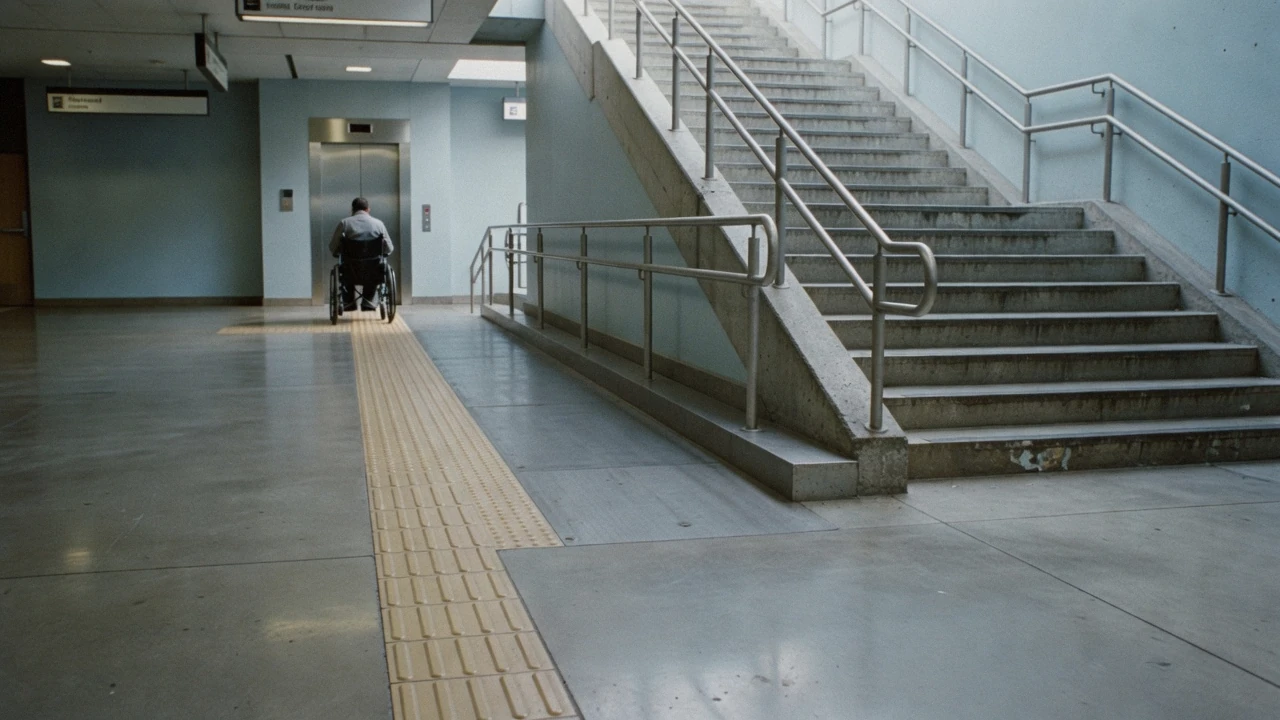
Tokyo Wheelchair Accessible Travel
Tokyo is wheelchair accessible in a way that surprises people who arrive expecting an old city's problems, and frustrating in a way nobody warns them about, and both facts come from the same source: the network was retrofitted station by station, so access is excellent where it exists and absent where it does not. This page collects what the operators and venues actually publish, station lifts first, then the sights, then the toilet network, the loan services and the official portal. Where an operator publishes no figure we say so rather than filling the gap, and the gaps here are real: Toei's own barrier-free page returned nothing but its navigation shell to two separate fetches in Q3 2026, and JR East's English accessibility page has gone. Read it beside getting around Tokyo for the fares and what a day costs for the budget. The rest of the site, from tickets to itineraries, starts on the Tokyo city guide. This page is the practical answer to whether Tokyo is wheelchair accessible on the days you are here, station by station and sight by sight. This page is the practical answer to how far Tokyo wheelchair accessible travel actually gets you, station by station and sight by sight.
Quick answer Lifts, the sights that publish access, and the two hours to avoid
Most Tokyo stations have a lift, and Tokyo Metro lets you check any specific station before you travel against its own definition of a step-free route: one path connecting ground level, ticket gate and platform by lift, slope, stairlift or wheelchair-accessible escalator. What it does not publish is a network-wide percentage, so plan station by station rather than assuming. Staff will bring a ramp to the platform edge on request, and the Metropolitan Government's tourism office names 07:30 to 09:00 and 17:30 to 19:30 as the hours to keep off the trains.
Key takeaways
- Search your own stations first, not the network. The tool and what it can filter for, including accessible toilets inside and outside the gate and mobility-scooter access, are in the station section.
- Some headline sights publish detailed access information and some publish none at all, which changes the shape of a day. The sight-by-sight table prints exactly what each one says, including the blanks.
- The city runs its own accessibility portal with a wheelchair-accessible toilet map, covering accommodation, shopping, leisure, dining, transport and parks in four languages. What it does and does not do is worth reading before you rely on it.
- Where a guided visit removes the route-planning problem, the listings say so in their own words: the Imperial Palace history walk and one of the Senso-ji walks are both marked wheelchair accessible by the operator, while others on the same pages are explicitly not.
Station Lifts, And What One-Route Actually Means
The single most useful accessibility tool in Tokyo is a search box on Tokyo Metro's own site, and it is worth understanding its vocabulary before you use it. Everything in this section is quoted from the operators' own pages, read in Q3 2026.
Tokyo Metro defines a step-free station as One-route, and its own wording is precise: One-route represents a station which assures one or more route connecting the Ground to Gate to Platform using an elevator, slope, stairlift, or a wheelchair-accessible escalator. Read that carefully, because of what it does not say. It does not say every station qualifies, and Tokyo Metro publishes no network-wide percentage anywhere on that page. Any guide that tells you all Tokyo Metro stations are step-free is not quoting the operator.
One route also means one route. A station may be step-free from the street to the platform by exactly one exit, which can be several hundred metres from the exit you wanted, on the far side of a main road. This is the difference between a station that is accessible and a station that is convenient, and it is the reason the search is worth doing the night before rather than at the gate.
| What you can filter for | What it tells you | Why it matters on the day |
|---|---|---|
| Station supporting One-route | There is at least one ground-to-gate-to-platform path without steps | The go or no-go filter. Start here |
| Elevator inside the gate, elevator outside the gate | Which side of the ticket barrier the lift is on | A lift outside the gate and none inside means a step-free street entrance and a platform you cannot reach |
| Wheelchair-accessible escalator, up and down | Escalators that take a chair, in one direction or both | The fallback where a lift is out of service, which happens |
| Stairlift | A staircase platform lift, usually staff-operated | Slower than a lift and needs a member of staff, so allow extra time |
| Wheelchair-accessible toilet, inside and outside the gate; ostomate facilities | Whether the accessible toilet is reachable without paying to enter | The single most useful filter for planning a route across the city |
| Station available with mobility scooter | Scooter access as distinct from wheelchair access | Scooters are larger and are not always covered by the same route |
Staff assistance, and the two hours to avoid
The Metropolitan Government's own tourism office describes the practice plainly: station staff can often assist wheelchair users with ramps and platform access, and it is best to avoid rush hour, which it puts at 07:30 to 09:00 and 17:30 to 19:30. Its own caveat is that you may have to navigate busy platforms and narrow walkways, which is the honest version.
The assistance itself works by relay. You tell staff at your departure station where you are going, they bring a ramp for the gap between platform and train, and they telephone ahead so somebody is waiting with a ramp at the other end. It is unhurried and reliable and it is not something to spring on a station thirty seconds before a train.
One gap in this page's sourcing, stated rather than papered over. Toei, the operator of four subway lines including the Oedo and Asakusa lines, publishes a page titled Guide to the subway's Barrier Free Facilities, and it returned only the site's navigation shell to two separate fetches on two separate passes in Q3 2026. JR East's English accessibility page, which would cover the Yamanote loop, now returns a not-found page. So the operator-published detail below is Tokyo Metro's, and for Toei and JR journeys you are on staff assistance and the city portal rather than a searchable database.
What Each Headline Sight Publishes About Access
This is the table nobody writes, because most of it is blanks. Every cell below is what the venue itself states on its own pages or ticket store, read in Q3 2026, and where a venue publishes nothing the cell says so. A blank is not a claim that a place is inaccessible; it means you should telephone before you build a day around it.
| Sight | What the venue publishes | Discount for a certificate holder | Plan around it |
|---|---|---|---|
| Shibuya Sky | The fullest access statement of any sight here: a multipurpose accessible restroom on level 46, a baby room with a nursing space and two changing tables, free stroller rental for rooftop visits, and lifts with priority routing | Not stated | The rooftop SKY STAGE closes in bad weather, so the indoor level is the guaranteed part of the visit |
| teamLab Borderless | A disability ticket covering the certificate holder plus one companion, with the Mirailo ID app accepted in place of a physical certificate and a certificate from any country accepted | $11.66 (¥1,800), against an adult ticket that runs from $23.30 (¥3,600) | Accepting a foreign certificate is unusual and worth knowing; carry the document itself |
| teamLab Planets | No access statement on the pages fetched, and the venue's own rules require bare feet and warn that you will get wet | $11.66 (¥1,800), against an adult ticket from $23.30 (¥3,600) | The water rooms are the exhibit here, so contact the venue about the floor surfaces before booking |
| Tokyo Tower | Not stated on the pages fetched, beyond the fee page's discount line | A 50% reduction is stated, with the base it applies to not itemised | The Main Deck is reached by lift; the Top Deck Tour is a separate timed product |
| Tokyo Disney Resort | A Barrier Free section exists as its own official area of the site, not itemised on the pages fetched here | Disability One-Day Passport from $46.00 (¥7,100) adult, $38.20 (¥5,900) junior, $27.20 (¥4,200) child | The disability passport is a published price tier, not a discretionary discount, and it is a real saving on the standard from-price of $57.70 (¥8,900) |
| Meiji Jingu | Wheelchairs are available at the entrance, per the shrine's own visitor page. Bicycles and motorcycles must be left in designated parking | Not applicable; the shrine grounds are free | The gravel approach path runs about 10 minutes from the entrance to the main buildings, which is the part to plan for |
| Mount Takao | Access is not stated. The operator does publish that the two-seat chairlift cannot be used with the disability discount | Roughly half fare on the cable car for the holder plus one companion: $1.62 (¥250) one way, $3.24 (¥500) return | The cable car takes chairs where the chairlift cannot, so the two are not interchangeable here |
Sensō-ji, the Imperial Palace guided tour, Ueno Park, Shinjuku Gyoen, Tokyo Skytree, the Tokyo National Museum, the Ghibli Museum, Toyosu Market and Tsukiji Outer Market all publish nothing about access on the pages read for this guide. That is nine of Tokyo's best-known places with no published statement, which is the single most useful finding on this page: assume nothing and call ahead. The Imperial Palace tour is the one where the omission has a consequence, because the Imperial Household Agency does publish the route length, about 2.2 km walked with limited shade, and that is a figure you can plan against even without an access statement.
The Accessible Toilet Network
Tokyo's accessible toilet provision is one of the genuinely good things about travelling here with a disability, and it is mapped rather than guessed at.
The Metropolitan Government runs a dedicated wheelchair-accessible toilet map as part of its Anyone Tokyo portal, searchable by location, and updated its restroom map with additional features in the last year. That map is the citywide layer. Underneath it, Tokyo Metro's station search will tell you whether a given station has a wheelchair-accessible toilet inside the gate, outside the gate, or both, and whether it has ostomate facilities, which is a distinction very few transport operators anywhere publish at all.
The practical version is that in central Tokyo you are rarely more than a station or a department store away from an accessible toilet, and the two reliable categories are subway stations and the large commercial buildings. The Metropolitan Government's own description of the general provision is that most train stations have wheelchair-accessible toilets, which matches what the station search returns.
What is worth checking rather than assuming is which side of the ticket gate it is on. An accessible toilet inside the gate is unusable to somebody walking past the station who has not bought a ticket, and outside the gate is unreachable from a platform without exiting and re-entering. It is exactly the sort of detail the search box answers in ten seconds and a guidebook never mentions.
Not ideal for
- Multipurpose toilets in Japan are generally a single large room with a wide door, grab rails, and often a fold-down adult changing bench and an ostomate basin, rather than a cubicle inside a larger facility. That design is why they are also the changing room for parents and the quiet room for anybody who needs one, and why they are occasionally occupied for a long time.
Wheelchair Loan And Rental, And What Is Not Published
Two different things get called wheelchair rental in Tokyo and they solve different problems.
The first is on-site loan. Individual venues keep chairs for visitors to borrow while they are there. Meiji Jingu states on its own visitor page that wheelchairs are available at the entrance, and Shibuya Sky offers free stroller rental for rooftop visits, which is the same idea in a different direction. The Metropolitan Government's tourism office describes the pattern as being available at some stations, art museums and tourist attractions, and names the Shinjuku Expressway Bus Terminal, Busta Shinjuku, as one of them. These loans are free, short-term and tied to the venue, and none of them replaces your own chair.
The second is trip-length hire delivered to you. The city's official tourism page names one service by name, Wheelchair Rental JAPAN, describing delivery to locations of your choice including airports and hotels, with return before you fly home. That is the model that works for a visitor whose own chair could not travel.
And here is the gap, stated plainly because it is the sort of thing this page exists to say. No official page fetched for this guide publishes rental terms or a price. Tokyo Metro's own material notes only that a customer service centre can be telephoned to check wheelchair availability at major stations, which is not the same as a rental service with published conditions. So there are no hire prices on this page, because there are none on an official page to quote. Budget for it as an unknown, contact the operator directly, and confirm the chair specification in writing before you fly.
Not ideal for
- If you are travelling with your own powered chair, the specification questions to settle before booking anything are the ones Japanese venues most often ask: total weight, width including the wheels, and whether the chair can be manually pushed with the power off. Those three answers unlock most conversations.
The Official Portal, And Its Limits
There is one authoritative accessibility source for Tokyo and it is run by the city itself. This section says what it covers and, just as usefully, what it does not.
Anyone Tokyo, in Japanese Daredemo Tokyo, is the Tokyo Metropolitan Government's own barrier-free portal. It runs in English, Japanese, Korean and Simplified Chinese, and its facility search covers eight categories: accommodation, shopping, leisure, dining, transport, parks, public facilities and its wheelchair-accessible toilet map. It also carries a barrier-free facilities map alongside the toilet map, and equipment icons that tell you which features a given listing has. The site itself offers text resizing, contrast adjustment and a read-aloud function, which is a reasonable sign that somebody thought about who would be using it.
What it does not publish is a count of how many facilities it holds, so there is no way to judge coverage before you search. Treat it as a strong starting point rather than a complete register, and expect the density to be highest in the central wards.
Alongside it the Metropolitan Government's tourism office publishes a set of accessible sightseeing routes, described as thirty-five courses linking sightseeing spots with station exits that have lifts, ramps along the route and the availability of wheelchair-accessible restrooms. If you want somebody else's route rather than your own, that is where to start, and it is the only official product of its kind for the city.
Assistance dogs and guide dogs
Japan's Act on Assistance Dogs for Physically Disabled Persons covers certified guide dogs, service dogs and hearing dogs together, and requires that they be accepted in the places a person needs to go, with a narrow exception where acceptance would cause substantial harm to business operations. Certified dogs wear a marker carrying breed, certification number and date, and handlers are expected to carry the dog's health record and its Assistance Dog Certificate when using facilities.
The honest caveat, and it matters: the Ministry of Health, Labour and Welfare's English assistance-dogs pages returned a not-found error to every direct fetch attempted for this guide in Q3 2026, including the ministry's own English PDF leaflet. The Act's substance above is what those pages state as relayed by the search index, not text this guide read on the ministry's live site, and the arrangements for a dog certified outside Japan are not something we could verify at all. If you are travelling with an assistance dog, confirm the position with the Japanese embassy in your own country and with each venue in advance rather than relying on any web page, this one included.
Sight And Hearing: What Is Provided, And What Nobody Publishes
The city-scale provision for visual impairment is genuinely unusual and easy to see the moment you land. Tactile paving, the raised yellow tiles, runs along an enormous share of Tokyo's pavements and through every station, and the Metropolitan Government describes it exactly that way: many streets in Tokyo have yellow tactile paving to help people with visual impairments walk safely. The pattern is standardised, with dots meaning stop or decide and bars meaning continue, and it runs to platform edges, ticket machines and crossings. Station announcements are made in Japanese and English on most central lines, and platform edge doors, which are now widespread on the subway, remove the single most dangerous feature of an old station.
For hearing, the picture is thinner and mostly undocumented. Visual information is excellent, because Japanese stations run on screens rather than announcements: platform displays carry the next train, the destination, the car count and the delay, in English as well as Japanese, so a journey can be completed without hearing anything. What almost nothing publishes is induction loop coverage, sign-language support or captioned tours, and this guide found no venue in the facts collected for this site that states any of the three.
That is a negative finding rather than an absence of provision, and it is stated rather than guessed at. The right move is the same one the whole page keeps recommending: contact the venue. Japanese museums and theatres answer email in English more reliably than their websites suggest, and a specific question about a specific date usually gets a specific answer.
Not ideal for
- One venue-level detail worth carrying: teamLab Borderless accepts the Mirailo ID app in place of a physical disability certificate and accepts certificates issued by any country. It is the only venue in this guide's sources that states either, and it is the model everywhere else should be judged against.
Taxis, Buses And The Door-To-Door Options
When the station route does not work, the road usually does, and Tokyo's two road options are better than most cities'.
Non-step buses, meaning buses whose floor is level with the kerb, run across the city, and universal design taxis wait at taxi stands at the airports, the major stations and the popular sightseeing spots. The Metropolitan Government's own description is worth quoting because of the last clause: universal design taxis can accommodate not only wheelchair users, but also travellers with strollers or large luggage. That makes them the default answer for a family with a buggy as well as for a chair, which is covered on the page for travelling with children.
You can book one rather than hunt for one. The city names English-language taxi apps, Taxi App GO among them, as a way to select and book a universal design vehicle, and hotel staff will arrange one by telephone. Both routes are worth setting up on arrival day rather than at the moment you need it.
The fare question this page cannot answer is the airport one. Neither Narita nor Haneda publishes its flat-fare chart as text; both render it as an image, so no figures are quoted here. What is published is the late-night surcharge window, 22:00 to 05:00, which applies to metered fares across the city. The train and bus fares that do get published, including the accessible airport routes, are on the transport page and the two airport pages it links.
Not ideal for
- Tour listings are one of the few places where access is stated in writing, because platforms require it. On the tours this guide indexes, the Imperial Palace and Shogun walking tour and two of the Sensō-ji walks are marked wheelchair accessible by the operator, while a second Imperial Palace walk states it is not suitable for wheelchair users unless you are travelling with somebody who can assist on the slopes, and both Tsukiji market walks state stairs and no physical assistance. Read the access line on the listing itself; it is more specific than anything the venue publishes.
The Sights That Publish Access Information, Mapped
The venues from the table above, plotted so a day can be built around the ones that publish detail. Green pins publish an access statement of their own; amber pins publish only a discount; the coordinates are each venue's own or its Wikidata item.
Coordinates from each venue's own page or its Wikidata item, read in Q3 2026. The colour is about what the venue publishes, not about how good the access is.
Where To Go Next
Three pages that carry the parts of the planning this one hands off.
Getting around Tokyo
Which operator runs which line, what a ride costs and where the passes stop covering you, all of which decides which stations you need to check. Read the transport page.
Fares and networksTokyo with kids
A pushchair meets almost exactly the same lifts, gates and rush-hour windows as a wheelchair, and the same universal design taxis solve it. Read the family page.
The buggy versionFree things to do in Tokyo
Parks, riverside walks and the free observation decks are the flattest days in the city, and none of them needs a timed ticket. See what costs nothing.
Ground-level daysAccessible Tokyo Questions
Are Tokyo Metro stations step-free?
Many are, but the operator publishes no network-wide figure. Tokyo Metro's own standard is One-route, meaning at least one path connecting ground level, ticket gate and platform by lift, slope, stairlift or wheelchair-accessible escalator, and it offers a station-by-station search rather than a claim about the whole network. Check your own stations using the search described here.
Can station staff help me board a train in Tokyo?
Yes. Staff bring a ramp for the platform gap and telephone ahead so somebody meets you at the other end. The Metropolitan Government's tourism office advises avoiding 07:30 to 09:00 and 17:30 to 19:30, when platforms are too crowded for it to work comfortably. The station section has the detail.
Which Tokyo sights publish wheelchair access information?
Fewer than you would expect. Shibuya Sky publishes the most detail, teamLab Borderless publishes a disability ticket including a companion, and Tokyo Tower, teamLab Planets, Tokyo Disney Resort and the Mount Takao cable car publish discounts. Nine well-known places publish nothing at all, and the sight-by-sight table prints the blanks alongside the answers.
Where can I find an accessible toilet in Tokyo?
The Metropolitan Government runs a dedicated wheelchair-accessible toilet map inside its Anyone Tokyo portal, and Tokyo Metro's station search tells you whether a station's accessible toilet is inside or outside the ticket gate, and whether it has ostomate facilities. The toilet section covers how to use both.
Can I hire a wheelchair in Tokyo?
Yes, through venue loan or a delivery service, but no official page publishes rental terms or a price, so this guide quotes none. Venues including Meiji Jingu keep chairs at the entrance, and the city's tourism office names a delivery service that brings a chair to an airport or hotel. The loan section explains what is and is not documented.
Are guide dogs allowed in Tokyo?
Japan's Act on Assistance Dogs for Physically Disabled Persons covers guide, service and hearing dogs and requires facilities to accept them, with certified dogs wearing a marker and handlers carrying the dog's certificate. The ministry's English pages returned a not-found error to every fetch made for this guide, so confirm the position for a dog certified abroad with the Japanese embassy in your own country. The portal section records what we could and could not verify.
Tokyo From A Wheelchair, On Film
Three films by wheelchair users travelling in Tokyo, which show the lifts, the gaps and the station staff routine this page describes in a way no paragraph does.
Visiting Japan in a wheelchair! What it's REALLY like!
The station-by-station reality of the One-route system, filmed from chair height.
Video: WHEEL AROUND THE WORLDArriving in Tokyo: Wheelchair Accessibility Adventure Begins
Airport to hotel, which is the leg this page's transport section is really about.
Video: WHEEL AROUND THE WORLDExploring Tokyo After Midnight - In a Wheelchair
The city after the crowds go home, when the lifts are free and the platforms are empty.
Video: Tokyo LensVideos load from YouTube only when you press play.
Reviewed Q3 2026 (July–September 2026); next review Q4 2026. Prices, hours and terms are set by the venue or operator and confirmed at checkout.
We may earn a commission if you book through one of our links, at no extra cost to you. Full affiliate disclosure