 Visit Tokyo Guide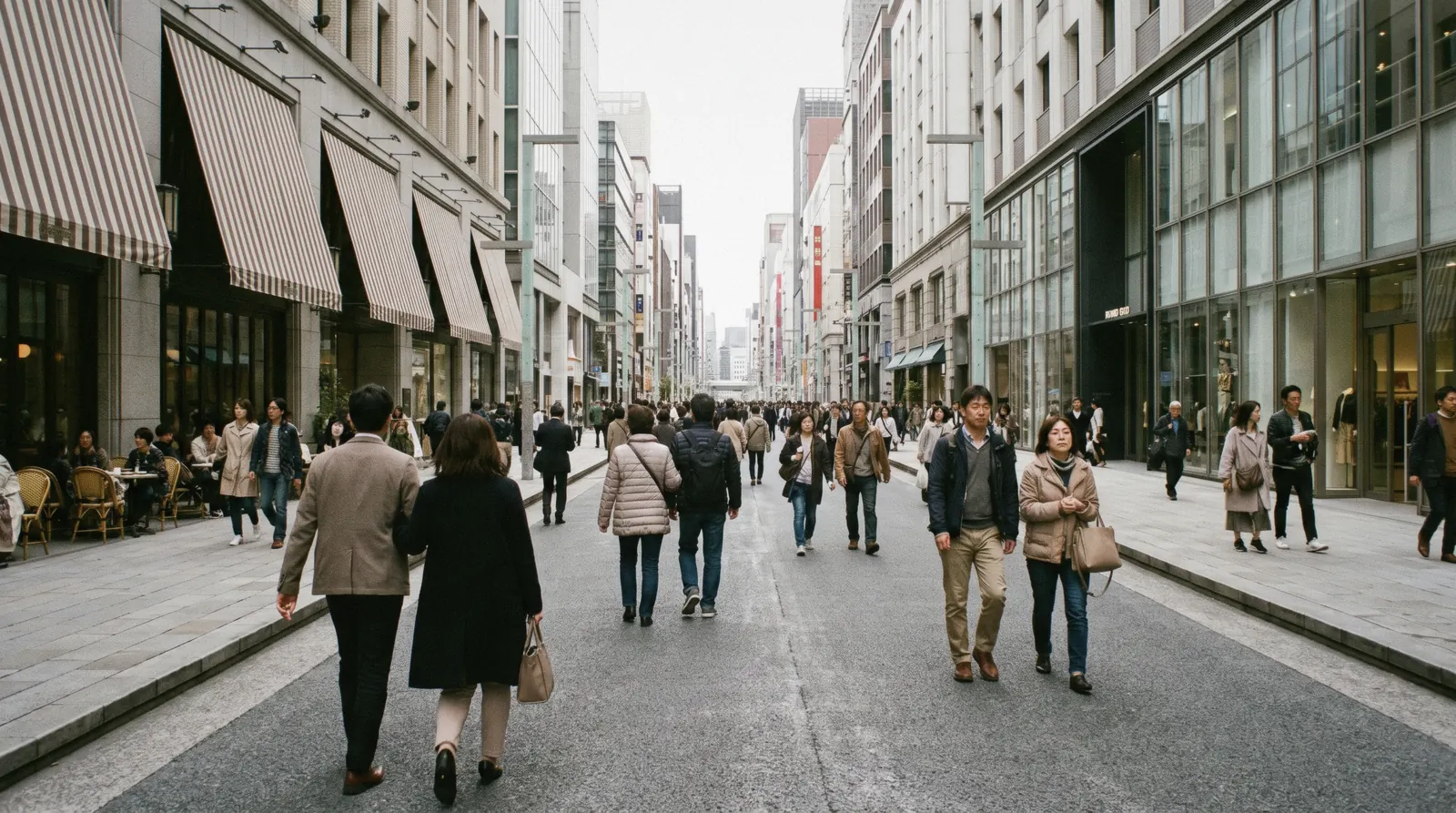
Ginza, Tokyo
Ginza sits 3 minutes from Tokyo Station on the Marunouchi Line and hands its main street over to pedestrians for five or six hours every weekend, which makes it the cheapest good walk in the city and one of the seven districts on this Tokyo guide. It is also Tokyo's oldest luxury shopping district and the one visitors most often write off before seeing, on the assumption that a street of flagship stores has nothing in it for someone who is not buying a handbag. That reading misses what the district actually offers a traveller: a main street handed over to pedestrians every weekend, department-store food halls that function as free museums of Japanese food, free gallery floors inside the shops themselves, a theatre selling single acts of kabuki from about $3.24 (¥500), and a ten-minute walk to the fish stalls at Tsukiji. This page covers the pedestrian hours with their real times, how the price ladder runs from a standing sushi counter to a starred room, what the galleries are and where, and how the district connects to what is around it. Yen figures come from the venues' and the city's own pages, read in Q3 2026; dollars are converted at ¥1,000 = $6.48.
Quick answer The weekend hours, the free things, and what to eat
Come on a Saturday, Sunday or national holiday between noon and 18:00 from April to September, or noon to 17:00 from October to March, when Chuo-dori is closed to traffic and the main street belongs to people on foot. Outside those hours Ginza is a normal, expensive shopping street; inside them it is one of the pleasanter walks in central Tokyo, and it costs nothing.
Key takeaways
- The district is free to walk and most of its art is free too: the gallery floors inside the department stores and the cosmetics and stationery houses charge no admission, and are listed in the galleries section.
- Eat in a basement. Every department store here puts its food hall below ground, and that is where the price ladder starts rather than where it ends. The eating section sets out what a lunch actually costs at each rung, and where to eat in Tokyo widens it to the city.
- The theatre on the corner sells fourth-level seats for a single act from about $3.24 (¥500) plus a small online fee, sold from noon on the day before. It is the cheapest serious cultural hour in central Tokyo.
- Tsukiji is a ten-minute walk from the eastern edge of the district, which makes a morning at the outer-market stalls and an afternoon here a single trip rather than two. A guided walk of the stalls at $12.99 covers the part that is hardest to navigate alone.
When Ginza Is Open, And When The Street Is Closed To Cars
The district's own rhythm, taken from the Tokyo Metropolitan Government's tourism pages, the theatre's official ticketing information and the Tsukiji market association's access page, all read in Q3 2026. The column that decides a visit is the last one: almost nothing here is worth reaching before 11:00.
| What | When it happens | What it costs | Worth timing for? |
|---|---|---|---|
| Chuo-dori closed to traffic | Saturdays, Sundays and national holidays, noon to 18:00 April to September and noon to 17:00 October to March | Free | Yes. This is the single reason to choose a weekend for Ginza |
| Department stores and their basements | Published store by store rather than as a district timetable; most open around 10:00 or 11:00 and the food halls close last | Free to enter | Yes, for the last hour before closing, when prepared food is discounted |
| Single-act theatre seats | Online sales open at noon on the day before the performance; roughly 70 seats online and about 20 more sold for cash at the theatre on the day | About $3.24 to $16.20 (¥500 to ¥2,500) depending on the length of the act, plus a $0.71 (¥110) online system fee | Yes, and it sells out; the exact per-act price is published only a few days ahead |
| Gallery floors in the shops | Shop hours, and each gallery sets its own closed days | Free | No. Walk into whichever is open when you pass it |
| Tsukiji outer market, ten minutes east | Individual shop hours, not centrally published; the visitor information centre runs 08:00 to 14:00 on weekdays and Saturdays, 10:00 to 14:00 on Sundays and holidays | Free to walk; you pay per stall | Yes, in the morning. The stalls wind down early afternoon |
The pedestrian hours and the department-store description come from the city's own guide at gotokyo.org; the single-act ticket mechanics from Shochiku's official English kabuki information channel; the information-centre hours from tsukiji.or.jp. No authority publishes a district-wide shop timetable for Ginza, which is why the second row says what it says.
Guided Options Around The Eastern Edge
No operator on the platforms we compare sells a walking tour of Ginza itself, which is a fair reflection of a district that needs no guide to walk. What is sold nearby is the fish market ten minutes east, where the navigation genuinely is the problem, and an evening sumo show staged in the district. Prices are the platform listings in US dollars as they stood in Q3 2026.
 from $12.99
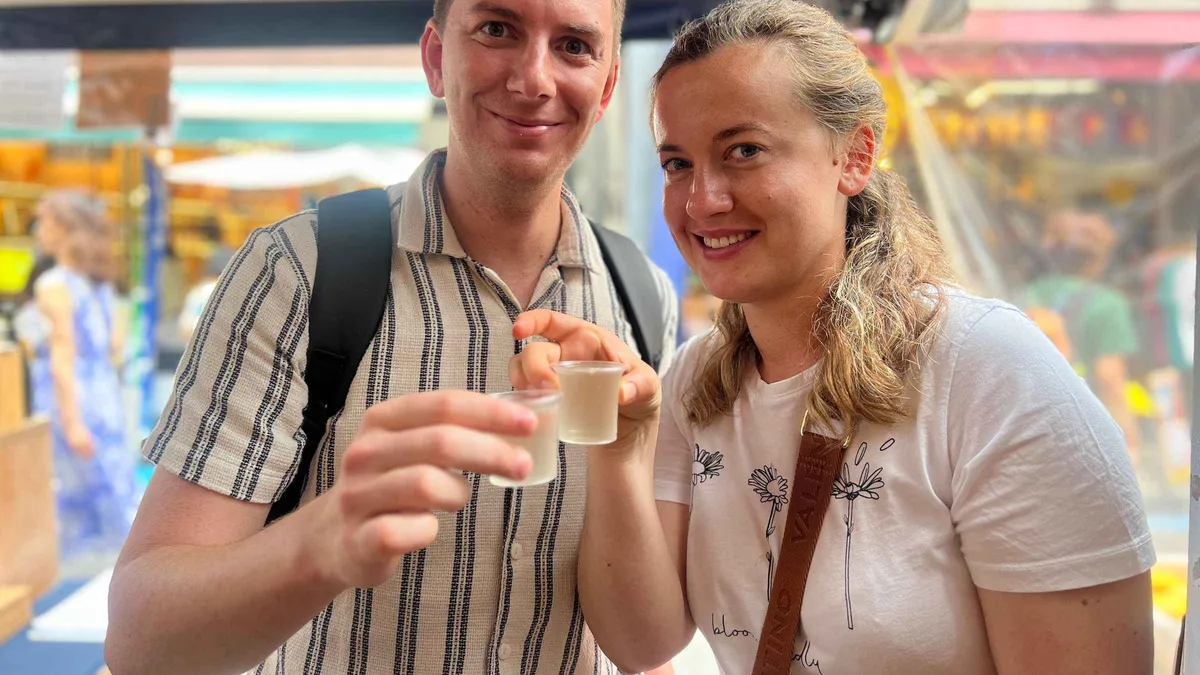
Tokyo: Tsukiji Fish Market Guided Walking Tour
A guided 2-hour walk through Tsukiji Outer Market and Tsukiji Hongan-ji Temple with a small group capped at 10. Food and drinks are extra, so bring cash for tastings along the way.
Check Availability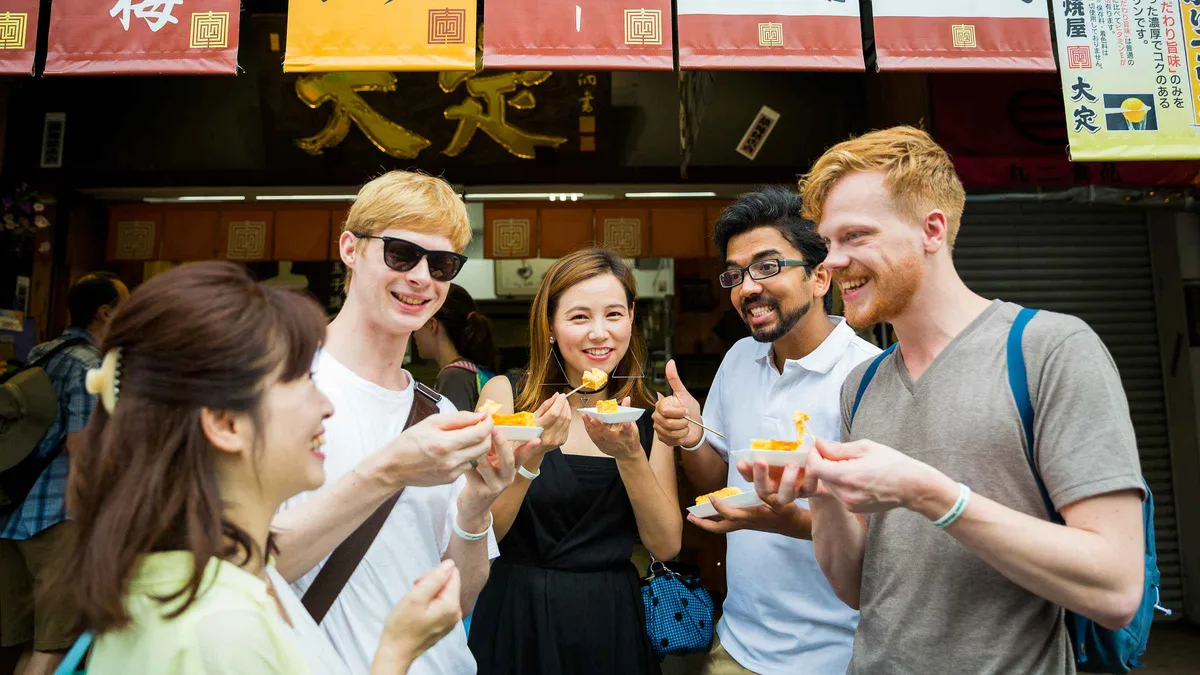 from $97.40
Tokyo: Tsukiji Fish Market Food Walking Tour with 5 Tastings
A 3-hour small-group food walk through Tsukiji Outer Market with five tastings including Wagyu beef skewers and sushi or a seafood bowl. Not suitable for vegetarians, vegans or wheelchair users.
Check Availability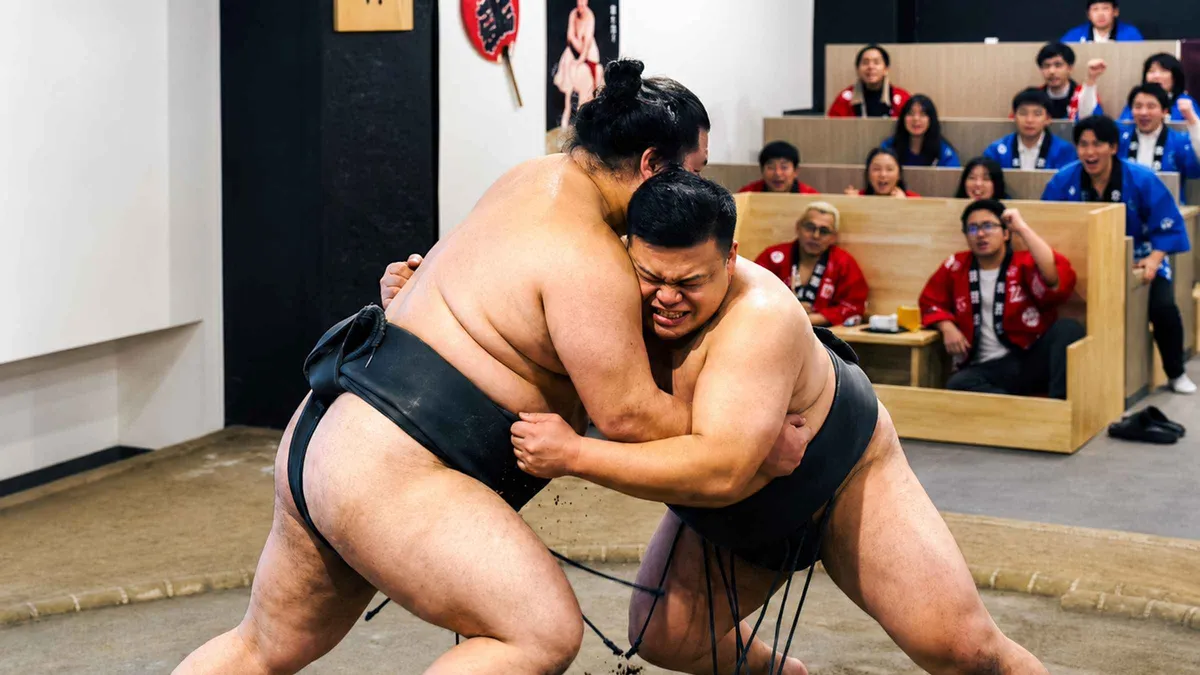 from $38.96
Tokyo Ginza Sumo Show: Live Performance & Photo Experience
A themed sumo entertainment show in central Ginza with retired wrestlers performing ceremonial bouts, salt-throwing and photo moments, plus an optional hands-on training add-on, steps from Yurakucho and Tokyo Station.
Check AvailabilityPrices, ratings and details are the platform's own, checked in Q3 2026; dollar figures are the listed prices — the platform bills in your account's currency.
Pedestrian Paradise: The Hours, And Why They Matter
For most of the week Chuo-dori is a wide, busy road with a lot of expensive glass on either side. On weekend afternoons the police close it, and the character of the whole district changes.
The closure runs on Saturdays, Sundays and national holidays. From April to September it holds from noon until 18:00; from October to March it ends an hour earlier, at 17:00. During those hours the carriageway is open to walkers along its full commercial length, tables and parasols go out into the middle of the street, and the pavement crowding that makes weekday Ginza unpleasant simply stops being a factor.
The custom is old enough to have its own name in Japanese, and Ginza's is the best-known of the several pedestrian streets in the city.
The practical effect for a visitor is that Ginza becomes a place to sit rather than a place to pass through. The photographs everyone takes of the district, the long straight view down the middle of the street with the clock tower at the crossing, are only possible in these hours. It is also the one time the district reads as public space rather than retail frontage, which is worth an hour even if you buy nothing at all.
What to do with the hours
Arrive around 12:30, walk the full length of the closed section from Kyobashi down to the eighth block, and go into whichever galleries and food halls you pass. Have lunch in a basement rather than a restaurant floor. Come back up onto the street for the last hour of the closure, when the light is better and the crowd thins.
If it rains, the closure is generally suspended, and the underground passages that connect the stations and the store basements carry you across most of the district dry.
The Department Stores, And What Is Actually Inside Them
Ginza's department stores are the reason the district exists in its present form, and they are not shops in the sense a visitor expects. They are vertical buildings in which the two most interesting floors are usually the basement and the top.
The long-established houses on the main street are Ginza Mitsukoshi, Matsuya Ginza and Wako, whose clock tower at the four-chome crossing is the district's landmark. Alongside them sit the newer complexes, Ginza Six and Ginza Place among them, built in the last decade to a different formula of international fashion houses over restaurant floors. What they share is a service culture the city's own tourism pages describe as the reason people still come, and a layout in which the ground floor is cosmetics, the middle floors are clothing, and the money for a traveller is elsewhere.
Below ground is the food hall. Each is a run of individual counters, one confectioner, one pickle-maker, one tea merchant, one bakery per stall, most of them long-established businesses with a single specialism and no other branch. Nothing is cooked to order and everything is packaged to carry away.
Prices start at a few hundred yen for a single pastry and run up to figures that make no sense until you understand that a boxed fruit here is a formal gift rather than a snack. Prepared food is discounted in the last hour before the store closes, which is the single best-value meal in the district.
The top floors, and the stationery question
The upper floors of the older stores carry restaurant runs and, in several cases, a gallery. Ginza is also where Tokyo's specialist stationery and craft shops concentrate, which for a lot of visitors turns out to be the actual shopping of the trip: brushes, papers, inks and notebooks made by companies that have made nothing else for a century. None of it requires a budget.
What Tokyo shopping costs across the city, including how the tax-free rules work per store and per day, is on what Tokyo costs.
The Price Ladder: From A Standing Counter To A Starred Room
Ginza carries more starred restaurants than any comparable district in the world, and it also carries standing sushi counters where lunch costs less than a museum ticket. Both facts are true and the ladder between them is the useful part.
At the bottom is the standing counter, where you eat at a rail with no seat and the turnover is measured in minutes. The next rung is the department-store basement, where a made-up bento is bought and eaten elsewhere. Above that come the lunch sets of restaurants that serve a very different price at dinner, which is the single most useful arbitrage in Japanese dining: the same kitchen, the same fish, a shorter course and a fraction of the evening bill.
Then the ordinary neighbourhood sushi and tempura rooms, and at the top the counters that take one sitting a night and are booked months out.
| Rung | What you get | How you get in | When to use it |
|---|---|---|---|
| Standing sushi counter | A short run of nigiri eaten at a rail | Walk in, join the rail, no reservation | A fast lunch on a weekday, or a first taste before committing |
| Department-store basement | A made-up bento, sushi pack or grilled fish, taken away | Walk in, buy at the counter | A picnic during the pedestrian hours, or a cheap dinner in the last hour |
| Restaurant lunch set | The dinner kitchen at a lunch price and a shorter course | Walk in early, or reserve the day before | The best value in the district by a distance |
| Neighbourhood sushi or tempura room | A full evening course at a counter | Reserve, often by phone and often in Japanese | One planned dinner in a trip |
| A starred counter | One sitting, a set course, the chef in front of you | Book months ahead, usually through a hotel concierge | Only if the meal is the point of the trip |
Why the top of the ladder is hard to book
Two things about the top of that ladder are worth stating flatly, because they are what actually stops people. Many of the smallest starred rooms in Ginza seat eight or ten at a counter, take one or two sittings and do not accept reservations from people who have not eaten there before or been introduced. And the prices are frequently not published anywhere, which is not evasion but convention.
If a room does not print a price, assume the evening will cost more than you expect and either go at lunch or go elsewhere.
The cheap version of the district, in full
It is entirely possible to spend a good day in Ginza on the price of a bento and a theatre act. The street is free during the pedestrian hours, the galleries are free, the food halls are free to walk through, and the single-act theatre seat starts at about $3.24 (¥500). Set against a paid observation deck or a museum ticket, that is the least expensive interesting day in central Tokyo, and it is one reason free things to do in Tokyo leans on this district.
The Theatre On The Corner, And The Ticket Most Visitors Do Not Know About
At the eastern end of the district, above Higashi-Ginza Station, stands the home of kabuki in Tokyo. Its full programmes run four to five hours and are priced accordingly, which is why most visitors decide it is not for them. The fourth level exists precisely for the people who decided that.
Single-act seats on the fourth level are sold by the act rather than by the programme. The price varies with the length of the act, running roughly from $3.24 to $16.20 (¥500 to ¥2,500), and the exact figure for a given month is published only a few days in advance. Online sales for a performance open at noon on the day before it, with roughly seventy seats released that way and about twenty more sold for cash at the theatre on the day itself.
Buying online adds a system fee of $0.71 (¥110). There is no interval service, no cloakroom access and no re-entry: you go up, you watch one act, you come down.
| What you pay | Figure | How it is sold |
|---|---|---|
| Single-act seat, fourth level | About $3.24 to $16.20 (¥500 to ¥2,500), by the length of the act | Online from noon the day before, roughly 70 seats |
| Online system fee | $0.71 (¥110) per booking | Added at checkout on the official ticket system |
| Same-day seats at the theatre | The same per-act price, cash only | About 20 more released on the day at the door |
| Full programme seat | Not published as a flat figure; varies by tier and month | Through the theatre company's own ticketing and travel agents |
What that buys is about an hour of the real thing, in the real building, for less than a cinema ticket. Programmes change monthly and there are dark days inside each run, so check the month you are visiting rather than assuming a performance every evening. The full mechanics, including which acts suit a first visit and how the English audio guide works, are on the theatre's own page in this guide.
The Gallery Floors, And Why They Are Free
Ginza has been an art district for as long as it has been a shopping one, and the reason so much of the art is free is that most of it is corporate. Cosmetics houses, printing companies, advertising agencies and department stores all run exhibition spaces here, and none of them charges.
The city's own guide names four in particular: the long-running gallery of a cosmetics company on the western side, the exhibition space of a French luxury house in its own glass-block building, and two graphic-design galleries founded by an advertising firm and a printing company. Between them they cover a range from established painters to first shows by young designers, and they rotate every few weeks. Add the exhibition floors inside the department stores, which frequently host serious touring shows, and the district carries more free contemporary art on any given afternoon than most cities manage in total.
Two things to know. Each space keeps its own closed days rather than following a district pattern, so the reliable method is to walk in when you pass one rather than to plan a route between them. And several occupy a single floor of a working office building, which means finding the right lift bank and pressing a number rather than walking through a door at street level.
If a lobby looks like it belongs to a company rather than a gallery, you are usually in the right place. For the ticketed institutions elsewhere in the city, museums in Tokyo has the comparison.
The Walk East To The Fish Stalls
Ginza's eastern edge is about ten minutes on foot from the surviving outer market at Tsukiji, and the two make a much better single day than either does alone.
The essential point of confusion is worth clearing first: the wholesale market moved to Toyosu, across the water, and the tuna auction goes on there. What remains at Tsukiji is the outer market, the several hundred retail stalls, knife shops, dried-goods sellers and small restaurants that always sat outside the wholesale walls and never went anywhere. That is the part a visitor wants, and it is the part within walking distance of Ginza.
The two are covered separately on the Tsukiji page and the Toyosu page, which is where the auction rules live.
Time it in the morning. The stalls are trading from early and wind down through the early afternoon, which is the opposite rhythm to Ginza, where little opens before 11:00. The market association's information centre runs 08:00 to 14:00 on weekdays and Saturdays and 10:00 to 14:00 on Sundays, holidays and market closure days, and it has English-speaking staff and maps.
Individual stall hours are not published centrally and vary by shop, including which day each closes. A morning at the stalls, lunch there, then the walk west into the pedestrian hours is the sequence that works.
| Station | Line | Walk to the stalls |
|---|---|---|
| Tsukiji | Tokyo Metro Hibiya Line | 1 minute |
| Tsukijishijo | Toei Oedo Line | 1 minute |
| Higashi-Ginza | Toei Asakusa Line and Tokyo Metro Hibiya Line | 3 minutes, and the same station serves the theatre |
If the stalls themselves are the difficulty, and for a lot of people they are, the guided walk of the market at $12.99 is the cheapest way to be shown which counters do what, and the food walk with five tastings turns the same ground into a meal. Neither is necessary; both remove the standing-in-the-middle-of-an-alley problem that a first visit tends to involve.
Why It Is Called Ginza, And Why The Street Is So Wide
The district's two most visible features, the name and the unusual width of the main street, both come from specific events, and knowing them makes the walk read differently.
The name is a job description. In 1603 the new shogunate moved its silver coin mint from Sunpu to what is now the second block of the district, and the office that ran it was called the ginza. The town's official name was something else entirely, but the mint's name stuck to the neighbourhood and survived long after the office itself was moved to Nihonbashi in 1800 following a run of bribery cases.
The gold equivalent stood where the central bank's head office is now, which is why no district in Tokyo is called Kinza.
The width comes from a fire. After the district burned in 1872 the Meiji government rebuilt it as a Western brick town to a design by the British architect Thomas James Waters, widening the main street to twenty-seven metres, more than double what it had been, and separating carriageway from brick pavement for the first time. Gas lamps and street trees went in with it.
The same year the country's first railway opened between Yokohama and Shimbashi, putting Ginza directly in front of a terminus, and the merchants who filled it with imported goods and glass shop windows created the habit of walking the street to look rather than to buy. The word for that habit dates from around 1915 and is still in the dictionary. All of this is set out on the street association's own history pages at ginza.jp.
The willows, briefly
One more detail explains a recurring motif in the district's signage. Willows were planted as the street trees and became the district's emblem, then were removed in 1921 when the road was widened again, over public objection loud enough to reach the city council. They were replanted in 1932 after a campaign, and the willow has stayed the district's symbol ever since.
It is a small thing, and it tells you that Ginza has been arguing about its own street furniture for a century.
Getting To Ginza, And How Long To Give It
Ginza is one of the easiest districts in the city to reach and one of the easiest to underestimate the time for, because the interesting parts are indoors and below ground.
Three subway lines meet at Ginza Station, the Ginza, Marunouchi and Hibiya lines, and their exits open directly onto Chuo-dori. Ginza-Itchome on the Yurakucho Line covers the northern end and Higashi-Ginza on the Hibiya and Toei Asakusa lines the eastern edge. From the JR loop, Yurakucho Station is a five-minute walk and Tokyo Station about fifteen.
The city's own guide puts Ginza at three minutes from Tokyo Station and sixteen minutes from Shinjuku on the Marunouchi Line, which is as central as Tokyo gets. Fares and the pass arithmetic are on getting around Tokyo.
On time: two hours covers the street, one food hall and a gallery. Half a day adds the theatre act and a proper lunch. A full day only makes sense combined with the walk east to the stalls in the morning, which is the pairing this page recommends.
The district is small, roughly eight numbered blocks along one street with a grid either side, and nothing in it is more than fifteen minutes from anything else on foot. Where Ginza sits against the rest of the city is on the Tokyo city guide homepage.
Ginza On The Map: The Street, The Stations And The Walk East
The closed section of the main street, the three stations that reach it and the two places at its edges this page sends you to. Coordinates are the venues' own published positions on the OpenStreetMap base layer, and every distance shown is a walk of fifteen minutes or less.
The whole of the closed section runs roughly north to south through the pins above, from Kyobashi at the top to Shimbashi at the bottom, and takes about twenty minutes to walk end to end without stopping.
Where To Go Next From Ginza
Three pages that pick up where this one stops, in the order a day here usually takes them.
Tsukiji outer market
The surviving retail stalls, what each row sells, which restaurants take a queue and why the wholesale auction is somewhere else entirely. Read the Tsukiji guide.
10 minutes east on footKabukiza
How the single-act system actually works, what an hour of kabuki is like for someone who has never seen any, and which months to check before booking. Read the theatre guide.
1 minute from Higashi-Ginza Exit 3Tokyo neighbourhoods
Where Ginza sits against the other six districts, which of them suit which traveller, and how many can honestly be done in one day. Compare all seven.
The routing pageStaying In Ginza, And What You Are Paying For
Ginza is a business and luxury hotel district rather than a budget one, and the reason people choose it is location rather than price: it is central, quiet at night, and within one short subway ride of most of the eastern half of the city. The two sub-areas below sit either side of that trade-off.
Ginza proper, around Chuo-dori
- Walk to Ginza Station
- 1 to 8 minutes from Ginza Station
- Suits
- Travellers who want the centre, short subway rides everywhere and a genuinely quiet street after the shops shut
The district empties in the evening, which is the point for some people and a disappointment for others: dinner near your hotel means a restaurant rather than a street of them. Prices reflect the address rather than the room.
See stays in Ginza proper, around Chuo-doriHigashi-Ginza and towards Tsukiji
- Walk to Ginza Station
- 5 to 12 minutes from Ginza Station
- Suits
- The same central position at a lower rate, with the fish stalls and the theatre on the doorstep
A block or two east of the flagship street the rates drop noticeably and the buildings turn into ordinary offices and business hotels. The morning walk to the market is the reason to prefer it.
See stays in Higashi-Ginza and towards TsukijiWe do not print nightly rates for Tokyo areas, because they move too far by season and by event for a fixed figure to stay honest; the links above open a live search for your own dates. The full comparison of Tokyo bases, including the cheaper districts, is on where to stay in Tokyo. We take a commission if you book through these links, at no extra cost to you.
Ginza Questions
What day is Ginza pedestrian paradise, and what time?
Saturdays, Sundays and national holidays. The closure runs from noon to 18:00 between April and September and from noon to 17:00 between October and March, and it is normally suspended in bad weather. Those hours are the whole argument for choosing a weekend here, and the pedestrian section explains what to do with them.
Is Ginza too expensive to visit if I am not shopping?
No, and the assumption costs people a good day. The street is free, the gallery floors in the shops are free, the food halls are free to walk through, a basement lunch is cheaper than most restaurant meals in Tokyo and a single act at the theatre starts at about $3.24 (¥500). The price ladder section shows where the money actually starts, and free things to do in Tokyo puts the district in the wider context.
Is Ginza the Beverly Hills of Tokyo?
It is the comparison people reach for, and it is only half right. Ginza is the flagship-store address and carries the highest retail rents in the country, so the Beverly Hills reading holds for the shop windows. What it misses is that the street is public in a way Beverly Hills is not: it is handed over to pedestrians every weekend, the galleries inside the shops are free, the food halls are open to anyone and a theatre on the corner sells an hour of kabuki for about $3.24 (¥500). The price ladder shows how low the floor actually is.
Where should I eat sushi in Ginza without booking months ahead?
At lunch. The same kitchens that run a booked-out evening counter frequently serve a shorter set at midday for a fraction of the price, walk-in or reserved a day before. Below that sit the standing counters, where you eat at a rail in minutes, and the department-store basements, where sushi is sold packed to carry away. All three rungs are in the price ladder, and where to eat in Tokyo covers the city.
How long does Ginza take to see?
Two hours for the street, a food hall and a gallery. Half a day if you add a theatre act and a proper lunch. A full day only if you pair it with a morning walk east to the outer market stalls, which is the combination this page recommends, since the two districts run on opposite clocks.
What is the difference between Ginza and Tokyo's other shopping districts?
Ginza is the oldest and the most formal: flagship stores, long-established department houses, and a street built wide in the 1870s to hold them. Shinjuku is bigger and cheaper, Harajuku is youth fashion, and Akihabara is electronics and pop culture. If you want one shopping afternoon that is also a walk worth taking, this is the one. The neighbourhoods hub compares all seven.
Is Ginza worth visiting on a weekday?
Less so, and it is worth being blunt about it. Without the traffic closure the main street is a wide road with narrow pavements, most shops open around 10:00 or 11:00, and the galleries and food halls are the only reasons to be there before lunch. If your dates only allow a weekday, come in the afternoon, put the theatre in it and treat the shopping as incidental.
Ginza On Film: The Closed Street And The Shop Floors
Three walk-throughs that show the district in both of its states, the weekend street with the cars gone and the ordinary evening shopping strip, which is the comparison this page is built on.
銀座歩行者天国散歩 |【4K】 Walking Ginza Pedestrian Paradise Tokyo Japan (August 2026)
The traffic closure itself, filmed during the hours described above, with the street in full use.
Video: Tokyo Fan[4K] Ginza Shopping District in Tokyo Japan 🇯🇵 Chuo-Dori Street Night Walking Tour Travel Vlog
The same street after dark on a normal evening, which is what Ginza looks like the rest of the week.
Video: Wind Walk Travel VideosInside GINZA SIX - Tokyo's Most Luxurious Shopping Mall | FULL Walking Tour [4K]
A full walk through one of the newer complexes, including the basement food floor this page recommends.
Video: Attractions AtlasVideos load from YouTube only when you press play.
Reviewed Q3 2026 (July–September 2026); next review Q4 2026. Prices, hours and terms are set by the venue or operator and confirmed at checkout.
We may earn a commission if you book through one of our links, at no extra cost to you. Full affiliate disclosure