 Visit Tokyo Guide
Shibuya Crossing
Shibuya Crossing is the ten-lane scramble intersection outside the Hachiko exit of Shibuya Station, where five crosswalks release at once and, on the count Japanese newspapers have used for years, as many as 3,000 people cross on a single green. It costs nothing, it is never closed, and it is the free half of an evening in this district. This page covers the light cycle, where to watch it from at street level and from above, what the Hachiko statue queue is actually like, how the intersection behaves after the last train, and the honest size of the thing: five minutes of watching, plus a district around it. It is also, on our wider reading of Tokyo, the most over-planned twenty minutes a first visit contains. The rooftop that looks straight down on it is on the Shibuya Sky page, and the streets that radiate off it are on the Shibuya area guide.
Quick answer What it costs, when to come, where to watch from, how long it takes
It is free, always open, and the lights release about every two minutes with up to 3,000 people crossing at once. Come out of the Hachiko exit of Shibuya Station and you are standing on it; the whole experience takes about twenty minutes unless you stay for the streets around it.
Key takeaways
- For a photograph from above, the free options are a window seat upstairs in the cafe on the north corner, which costs a coffee, and the station's own connecting walkways. The paid one that beats them both is the rooftop deck, 229 metres straight up from the same block
- The Hachiko statue is thirty seconds away on the station side, and there is usually a queue to photograph it. Come in daylight if you want it without the crowd; the evening belongs to the crossing itself
- A ninety-minute walking tour at $12.99 turns the intersection into an orientation for the district, and a go-kart hour drives it, which needs an international permit and no fear of an audience
Key facts
Opening hours
| Daily, a public street with no gate | 00:00–24:00 |
|---|---|
| Busiest, our reading | 18:00–20:00 |
| Quietest, our reading | 05:00–09:00 |
Closed None. It is a working intersection, not an attraction, and it has never been closed to pedestrians on any published schedule
Admission
- Adult
- Free
- Reduced
- Free
- Free
- Everyone, at every hour. The only money spent here is on a window seat, a rooftop ticket or a guide
Planning it
- Time needed
- Not stated by any authority. Our routing: 20 minutes to cross it, watch a cycle from a corner and photograph it; an evening if you stay for the district
- Book ahead
- Optional — walk-up usually fine
- Address
- Hachiko-mae crossing, outside the Hachiko exit of Shibuya Station, Dogenzaka, Shibuya City, Tokyo
The four ways people actually experience this intersection, with what each costs. The free rows are our own reading of what is open to anyone; the paid rows come from the operators' pages, read in Q3 2026.
You are not buying entry here. You are deciding whether to pay for height, for a guide, or for nothing at all.
| Option | Price | What you get | Cancel | Book |
|---|---|---|---|---|
| Walk it yourself from the Hachiko exitEveryone. There is no ticket to buy and no reason to buy one before you have stood on it | Free, at any hour | The crossing, the Hachiko statue and the corner views | Nothing to cancel | Official site |
| Ninety-minute guided walk of the districtA first afternoon, when you want the streets behind the intersection explained | From $12.99 | The crossing, the back streets, a viewpoint, no attraction ticket | Free up to 24 hours before | Check Availability |
| Two-hour night walk with rooftop admissionAnyone who wants the crossing and the view above it on one evening | From $101.16 | Guide, the crossing on foot, rooftop deck ticket, Miyashita Park | Free up to 24 hours before | Check Availability |
| One-hour street kart drive through the crossingConfident drivers with an international permit who want to be part of the spectacle | From $71.42 | Kart, fuel, costume, guide, photographs; over-18s only | Free up to 7 days before | Check Availability |
The kart row carries conditions the others do not: an International Driving Permit or an approved translation, your passport on the day, and the operator states it is unsuitable for anyone pregnant, for wheelchair users and for people with back or hearing problems. Nobody sells tickets to the crossing itself, and anyone offering you one is selling a tour, a viewpoint or nothing.
Guided ways to see the crossing
Three cards, each linking to the operator's own calendar. Ratings, review counts and prices are the platform's own figures as listed in Q3 2026.
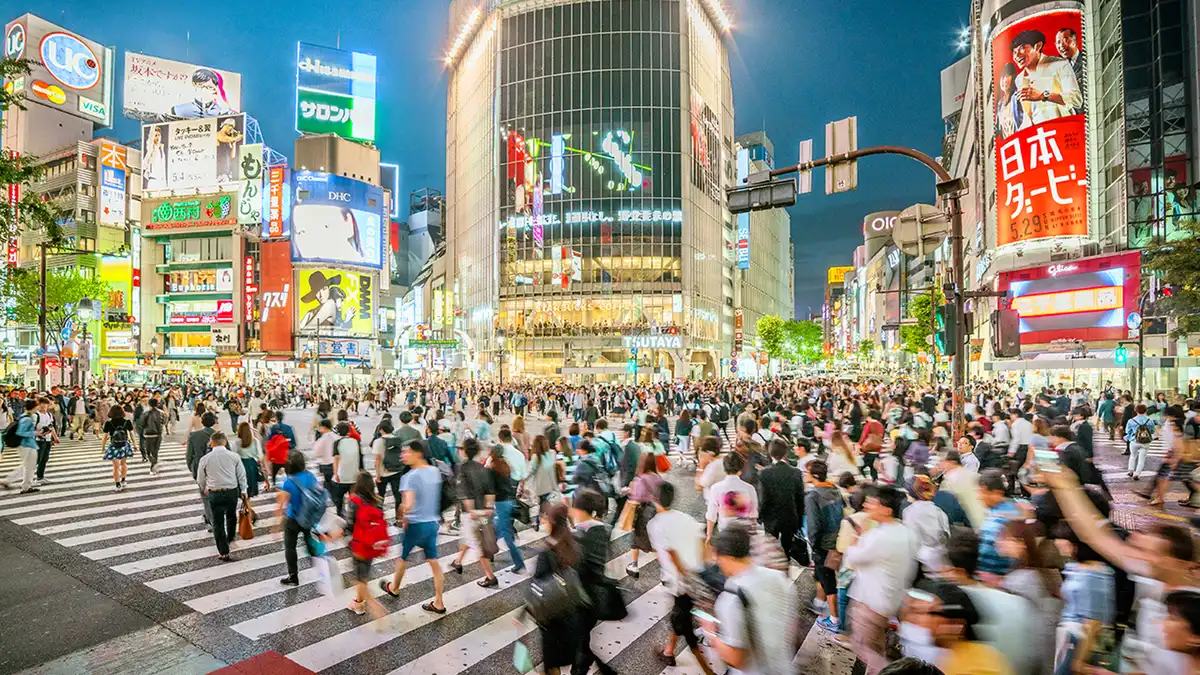 from $12.99
Tokyo: Shibuya Highlights Walking Tour & Secret View Spot
Ninety-minute walking tour of Shibuya covering the Scramble Crossing, Miyashita Park and Center Gai with a local guide, no attraction tickets included. One of the cheapest guided ways to get oriented to the district.
Check Availability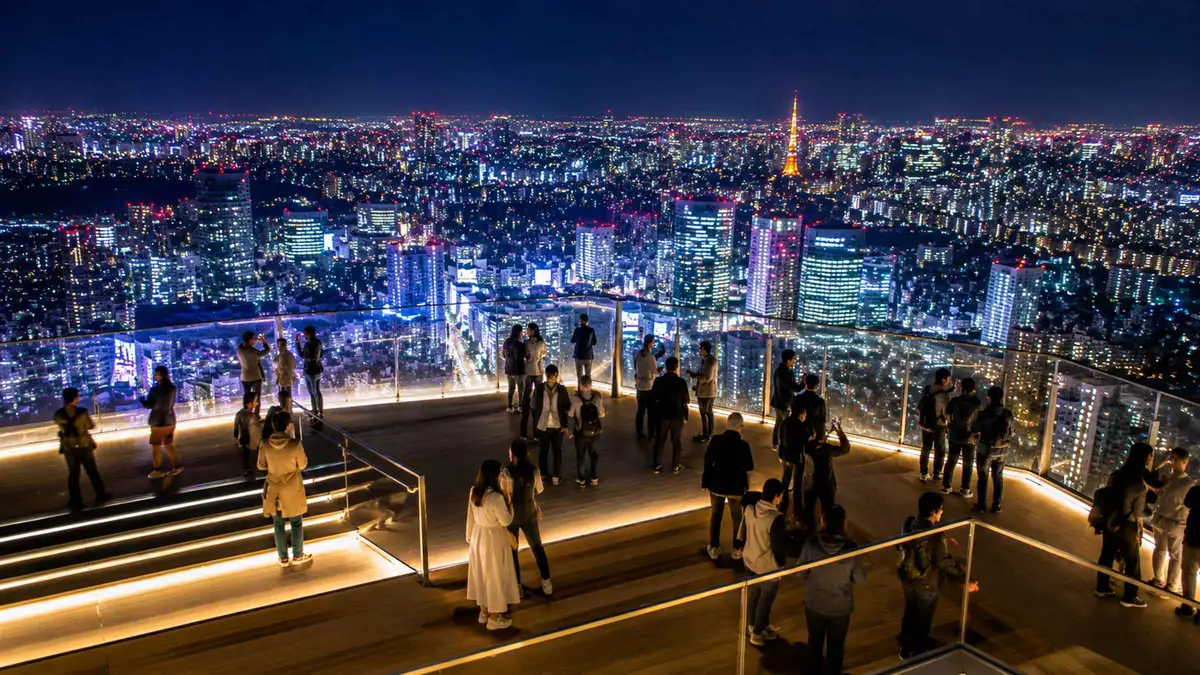 from $101.16
Tokyo: Shibuya Sky Night View, Crossing & Local Vibe Tour
Two-hour night tour combining a Shibuya Sky observation deck visit, ticket included, with a walk across Scramble Crossing and a stop in Miyashita Park's food alley. Suits a first night out in Shibuya.
Check Availability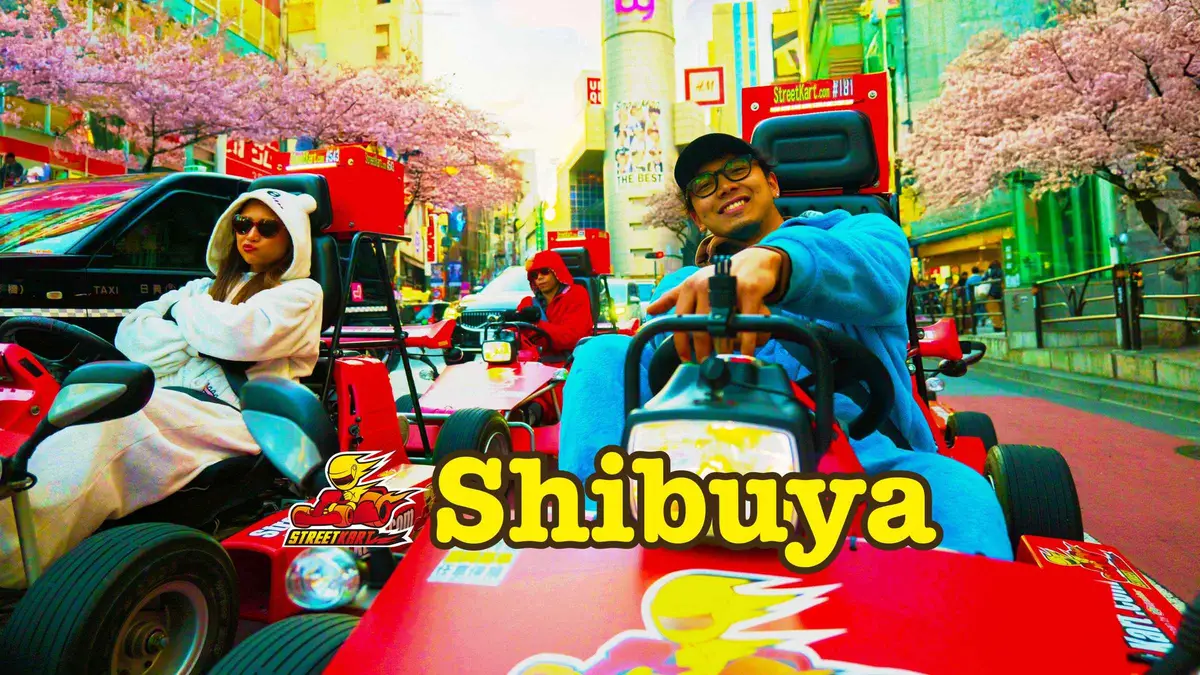 from $71.42
Tokyo: Street Kart Experience in Shibuya
Self-drive, one-hour go-kart route through Shibuya Crossing and the Harajuku and Omotesando fashion streets, costumes included. Requires an International Driving Permit; not suitable for under-18s or wheelchair users.
Check AvailabilityPrices, ratings and details are the platform's own, checked in Q3 2026; dollar figures are the listed prices — the platform bills in your account's currency.
The Numbers, And Which Of Them Are Actually Measured
Every guide to this intersection quotes a figure. Only some of them come from a count, so here is where each one comes from.
The most-quoted number, up to 3,000 people on a single green light, comes from Shibuya Center Street via an Asahi Shimbun piece, with the lights releasing roughly every two minutes. The daily totals come from a flow survey by the Shibuya Redevelopment Association, which estimated 260,000 pedestrians on a weekday and 390,000 on a non-working day. A separate outdoor-media survey put weekly traffic at about 1.5 million, and the widely repeated half-million-a-day figure is an estimate for the busiest days rather than a count.
| Figure | What it counts | Who measured it | How solid it is |
|---|---|---|---|
| Up to 3,000 people | One green light, at peak | Shibuya Center Street, reported by Asahi Shimbun | A cited count, widely reproduced |
| Every two minutes | The interval between releases | The same reporting | Matches what you see standing there |
| 260,000 on a weekday | Pedestrians crossing per day | Shibuya Redevelopment Association flow survey | A survey estimate, not a turnstile |
| 390,000 on a non-working day | Pedestrians crossing per day | The same survey | Same basis |
| Up to 500,000 | The busiest days | Third-party estimates | An estimate on an estimate; treat with care |
| Ten lanes, five crosswalks | The geometry | Rakuten Travel's Shibuya guide | Countable from any photograph |
What the figures add up to is a claim you can test yourself in four minutes: this is routinely described as the busiest pedestrian crossing in the world, and traffic here barely thins even at midnight or in the early morning. Road traffic, oddly, rarely jams, because the scramble phase gives the vehicles a long clean run of their own. The 1973 opening date is the other fact worth carrying, because it makes the intersection younger than the Hachiko story that shares its square.
Where To Stand, And Which Views Cost Money
Three questions decide this: do you want to be in it, above it, or looking at it with a drink. The overlooks below are compared on what each one costs and what it actually shows.
Street level first, because it is the version most people remember. Come out of the Hachiko exit, cross once diagonally with everyone else, then stop on the far corner and watch a full cycle build: the corners fill, the crowd spills towards the kerb, the lights change and the whole square empties into the middle at once.
| Viewpoint | Cost | What it shows | The catch |
|---|---|---|---|
| The crossing itself, on foot | Free | The diagonal, the noise, the screens overhead | You cannot photograph the pattern from inside it |
| The corner by the Hachiko exit | Free | A full cycle side-on, and the crowd building | Crowded with other people doing the same |
| Upstairs window seats in the cafe on the north corner | The price of a drink | The classic head-on view down onto the diagonal | One of the busiest branches in the world; the counter seats turn over slowly |
| The station's connecting walkways and building entrances | Free | A raised, partial angle over one arm of the crossing | Standing still in a moving crowd is discouraged |
| Shibuya Sky, the rooftop deck | $17.50 (¥2,700) online, more from 15:00 | The whole intersection from 229 metres, plus the district around it | Timed entry, sold only 14 days ahead, closes in bad weather |
| Mag's Park, the rooftop of the MAGNET by SHIBUYA109 building | Not stated by the operator on the pages we read | A direct plan view through plexiglass screening, rated the best overlook by Lonely Planet | The operator publishes no fee or hours we could confirm |
The rooftop garden on the seventeenth floor of Shibuya Fukuras, over the west side of the station, looks across the crossing from a restaurant terrace, and the ground floor of the same building holds the tourist information centre with English-speaking staff, free wifi and the airport bus terminal. If you are choosing between the cheap options and the deck, the honest answer is that the cafe window gives you the photograph everyone recognises and the rooftop gives you the one nobody at home will believe.
The Light Cycle, And When To Come
This is a two-minute machine, and the whole visit is a question of which two minutes.
A cycle runs to roughly two minutes end to end: vehicles move, the corners fill, the scramble phase opens all five crosswalks together and the square clears. Crossing on the diagonal takes most people between thirty and forty-five seconds at a normal walk, which is our own timing rather than a published figure, and it is why photographers set up before the lights change rather than during.
For the picture with neon behind it, the early evening rush between 18:00 and 20:00 is the window, and it is the busiest hour of the day. For a crossing with room to move, arrive early on a weekend morning, before about 09:00. Friday and Saturday nights are thickest of all, when the crowds pouring out of the station meet the ones going in, and that is the version the films use.
The intersection also has a season of its own. At Halloween and at the New Year countdown, the ward has spent years discouraging people from gathering here at all, and the countdown itself has been suspended repeatedly on safety grounds. If your trip lands on either, read the events calendar before you build an evening around this square.
Hachiko: The Statue, The Queue And The Exit That Moved
The other reason people stop in this square, and the source of most of the standing-around you see on the station side.
Hachiko was an Akita who came to the station for his owner every day from 1923 and went on coming after the man died, until 1935. The bronze stands beside the exit named after him, and the square around it is one of the most-used meeting points in the city, which is exactly why photographing it takes patience. Rakuten Travel's own guide gives the practical advice: come in daylight if you want the statue without the crowd, because the evenings are solid.
One recent change catches returning visitors. The railway rebuilt and moved the Hachiko exit in January 2025, so the walk from the ticket gates to the square now runs about a minute along a signposted passage rather than dropping you straight onto the pavement. If you are meeting somebody, agree on the statue rather than the exit, and if the statue is mobbed, the quieter alternative on the other side of the station is the Moyai figure, which nobody photographs.
What to do with the ten minutes it costs you
The statue, a full light cycle and a walk to the far corner add up to about twenty minutes. After that the square gives you nothing more, and the district starts: Center Gai straight ahead, Miyashita Park three minutes north, the record shops in Udagawacho behind the crossing. All of them are on the Shibuya area guide, which is the page to read next if you are staying for the evening.
How Much Time To Give Shibuya Crossing
It is a landmark you experience rather than visit, so the useful question is what you attach to it. Three routings, timed from the station gates.
Nobody publishes a recommended duration, for the obvious reason that it is a road. Ours below is what the three common versions actually take, including the walk from the platforms.
| Routing | Door to door | What you skip | Best for |
|---|---|---|---|
| Cross it and photograph it | About 20 minutes | The statue queue and everything behind the square | A change of trains, or a stop between two other places |
| Crossing, Hachiko, a cafe window and Center Gai | About 1 hour 30 | The rooftop and the far side of the district | A first afternoon in this part of the city |
| The evening version: crossing, the deck above it, the food alley | About 4 hours | Nothing, but it needs a rooftop slot booked two weeks ahead | The night this district is actually built for |
The honest framing, and the reason this page will not pad the visit: the crossing itself is five minutes of watching. What makes it worth the journey is that everything else in the district is within a ten-minute walk of it, and that the one thing the intersection cannot show you, the pattern from above, is directly overhead at the rooftop deck. Treat the square as an arrival point rather than a destination, and it never disappoints anyone.
The Crossing In Eight Dates
A road, a dog, a film and a series of ordinances, which between them explain why the square looks and behaves as it does.
-
1923 to 1935
Hachiko waits at the station
The Akita comes to meet his owner daily, and goes on coming for years after the man's death. The story becomes a national one and the bronze follows.
-
1973
The scramble crossing is inaugurated
The five-crosswalk, ten-lane layout that visitors photograph today dates from this year, not from the prewar station.
-
2003
Lost in Translation puts the crossing on cinema screens worldwide
The large screen on the QFRONT building becomes the shorthand image of the city; it was later removed and returned to service in July 2013.
-
2016
The Rio closing ceremony uses the crossing to trail the Tokyo games
The intersection is used as the country's visual signature in front of a global audience.
-
June 2019
The ward passes its first safety ordinance for the station area
Aimed at Halloween and the New Year countdown, after years of crowding, litter and disorder in this square.
-
September 2023
Nightly patrols begin under a ward-wide declaration on nuisance street drinking
The ward states that street drinking around the station has become routine and that the resulting rubbish and noise are no longer tolerable.
-
1 October 2024
Drinking in the street is banned here year-round, 18:00 to 05:00
The revised ordinance also enlarges the restricted zone. Ward-backed events can apply for an exemption a month ahead.
-
January 2025
The Hachiko exit is rebuilt and moved
The walk from the ticket gates to the square now takes about a minute along a signposted passage.
Dates from Shibuya City's own ordinance pages and its nuisance-drinking declaration, read in Q3 2026, from the Wikipedia article on the crossing for the 1973 opening, the screen and the Rio ceremony, and from the station and exit details recorded in this guide's own research pack.
At The Crossing: What To Do, And What Not To
Short list, because this is a road. Every line is a decision you make in the two minutes you are standing there.
Do
- Cross it once on the diagonal before you photograph it, so you know what you are looking at from the corner
- Buy something upstairs in the cafe on the north corner if you want the head-on shot, and treat the seat as rented, not owned
- Come before 09:00 at a weekend for a version with room in it, or 18:00 to 20:00 for the version with the neon
- Book the rooftop above it two weeks ahead if the picture you want is the pattern from overhead
- Meet people at the statue rather than at the exit, which moved in the station rebuild
Don't
- Do not stop in the middle of the scramble to set up a shot; the cycle is short and the crowd behind you is not stopping
- Do not drink in the street here between 18:00 and 05:00. The ward bans it year-round in this zone and runs nightly patrols
- Do not plan an evening here at Halloween or on New Year's Eve. The ward has repeatedly asked people not to gather and the countdown has been suspended
- Do not climb the railings or the subway entrances for a better angle, which is what the ward's patrols are out here about
- Do not budget an afternoon for the intersection alone. It is twenty minutes and a district
Five Things Most Visitors Do Not Know
Each of these changes what you do in the square, and each comes with where it was found.
- Drinking in the street around this station is banned year-round between 18:00 and 05:00, not only at Halloween. The ward extended the old event-only rule to every night from 1 October 2024 and enlarged the zone at the same time. [Source: Shibuya City's own ordinance page, read in Q3 2026]
- Ward-backed events, local shopping streets and neighbourhood associations can have the drinking rule lifted for a specific date, time and area, if they apply about a month ahead, which is why you will occasionally see a legal street party here. [Source: the same ordinance page]
- The famous 3,000-people figure is per green light, not per minute, and it comes from Shibuya Center Street via a newspaper report rather than from a traffic authority. [Source: Wikipedia's citation of Asahi Shimbun, read in Q3 2026]
- The intersection barely quietens at midnight or before dawn, and vehicle traffic here rarely jams even at rush hour, because the scramble phase hands the roads a long clear run. [Source: Wikipedia's summary of the Asahi and CNN Japan reporting]
- Every building around the square runs its own filming permission desk, and one of them bans commercial filming outright: the rooftop deck's own rules forbid photography, recording and interviews for commercial purposes. We found no published rule covering a phone in your hand on the pavement. [Sources: the SHIBUYA109 and Miyashita Park filming-enquiry pages and the rooftop deck's own entry rules, read in Q3 2026]
Shibuya Crossing map: the exit, the statue and the views over it
The intersection, the station exit that feeds it, the statue beside it and the two overlooks worth walking to.
The crossing coordinate is the one recorded on its Wikidata item; the statue, the tower and the park are placed from the walking times published by the venues themselves and read in Q3 2026.
Next stop from the crossing
Walk minutes are ours, measured from the Hachiko exit. All three of these are within five minutes, which is the argument for treating the square as a starting point.
Shibuya Sky
The rooftop 229 metres directly above the intersection, and the only place you see the pattern rather than stand in it. Entry is timed, sells two weeks ahead and starts at $17.50 (¥2,700) online; the buying rules are on the ticket page, which is worth reading before you pick an evening.
2 min walkCenter Gai and the Shibuya streets
The pedestrian street straight off the far side of the crossing, the spine of the district and the way into the record shops, the department stores and the food alleys. Everything about how the area works at different hours is on the Shibuya area guide.
1 min walkShibuya Crossing questions
Why is Shibuya Crossing so famous?
Two reasons, one physical and one cultural. Physically it is routinely described as the busiest pedestrian crossing in the world, with as many as 3,000 people crossing on one green light and about 260,000 a day on a weekday. Culturally it has been the shorthand image of the city since Lost in Translation, and it turns up in Tokyo Drift, Alice in Borderland, Jujutsu Kaisen and half a dozen video games, as well as in the Rio closing ceremony that trailed the Tokyo games. A guided walk will point out which corner each of those was shot from.
Is Shibuya Crossing worth seeing, or is it a tourist trap?
It is worth seeing and it is not a trap, because there is nothing to sell you: no ticket, no queue, no gate. The fair criticism is one of scale. The crossing itself is about five minutes of watching and one walk across, and anybody who tells you to give it an afternoon is padding. Treat it as the arrival point for the district, spend twenty minutes here and the rest on the streets behind it, and the visit is honest. If you want more from the same block, the rooftop deck is what turns it into an evening.
What is the best view of Shibuya Crossing, and is it free?
The free view most people mean is from the upstairs window counter of the cafe on the north corner, which costs the price of a drink and looks straight down the diagonal. Lonely Planet rates the rooftop of the MAGNET by SHIBUYA109 building higher, screened in plexiglass so you can shoot over the edge, though the operator publishes no fee or hours on the pages we read. The paid view that beats both is the deck above the station at 229 metres, from $17.50 (¥2,700) online. Ground level, the corner by the Hachiko exit is free and shows a full cycle building.
What time of day is best at the crossing?
Between 18:00 and 20:00 for the version with the screens lit and the crowds at their thickest, and before 09:00 at a weekend if you want to cross without a scrum. Friday and Saturday nights are the densest of the week. After the last train the square empties fast, which is worth knowing if you are relying on that train yourself; the network's own late-night limits are on the getting around page.
How long do the lights take, and how long does it take to cross?
The scramble phase comes round roughly every two minutes, which is the interval reported alongside the 3,000-person count. Crossing the long diagonal takes most people thirty to forty-five seconds at a normal walk, which is our own timing rather than a published figure. That is short enough that stopping mid-crossing for a photograph is genuinely unhelpful to the people behind you, and long enough that a full cycle watched from a corner is the better shot.
Where is the Hachiko statue and how busy is it?
Beside the station exit named after it, about thirty seconds from the crossing on the station side, and it is busy at almost every hour because it is one of the city's standard meeting points. Rakuten Travel's guide recommends daytime if you want a photograph without a crowd in it. Note that the railway rebuilt and moved that exit in the station works, so the walk from the ticket gates now runs about a minute along a signposted passage rather than straight out onto the pavement.
Can I film here, and are there rules about drinking?
We found no published rule against filming from the pavement with a phone, but every building around the square runs its own filming permission process, and the rooftop deck bans commercial photography, recording and interviews outright. Drinking is the rule that catches visitors: Shibuya City bans it in the street around this station year-round between 18:00 and 05:00, with nightly patrols, after extending an event-only ordinance to every night, and publishes the rule and the restricted zone itself. The wider ground rules are on the safety and scams page.
Where The Crossing Fits In A Tokyo Day
It is the hinge between an afternoon and an evening rather than a stop of its own.
The version that works: come out of the station in daylight, cross it once, photograph a cycle from the corner, then walk north through Center Gai and up Cat Street towards Harajuku while the shops are open. Come back at dusk, when the screens are on and the trains are emptying, for the version everybody photographs, and either book a rooftop slot for half an hour before sunset or take the free corners and put the money into dinner.
Because it never closes, this is also the reliable piece of a Monday, when much of the city's museum stock is shut; the Monday openings page has the rest of that list. It sits in the evening of both the two-day and three-day itineraries for the same reason, and the free things it sits beside are indexed on the free things to do page.
The Crossing On Film: Cycle, Night Walk And Timelapse
Three films that show what the square is actually like at street level, which no photograph from above manages.
Shibuya Crossing to Harajuku Takeshita Street Walking Tour
The walk this page recommends, filmed end to end, from the crossing north through the back streets to Harajuku.
Video: Wind Walk Travel VideosWalking Shibuya Crossing at Night, Binaural City Sounds in Tokyo
The evening version at street level with the sound intact, which is half of what standing here is like.
Video: Nomadic AmbienceShibuya Crossing Timelapse
The light cycle compressed, so you can see the pattern of the release that a single visit only half shows.
Video: Aron ÅkessonVideos load from YouTube only when you press play.
Reviewed Q3 2026 (July–September 2026); next review Q4 2026. Prices, hours and terms are set by the venue or operator and confirmed at checkout.
We may earn a commission if you book through one of our links, at no extra cost to you. Full affiliate disclosure