 Visit Tokyo Guide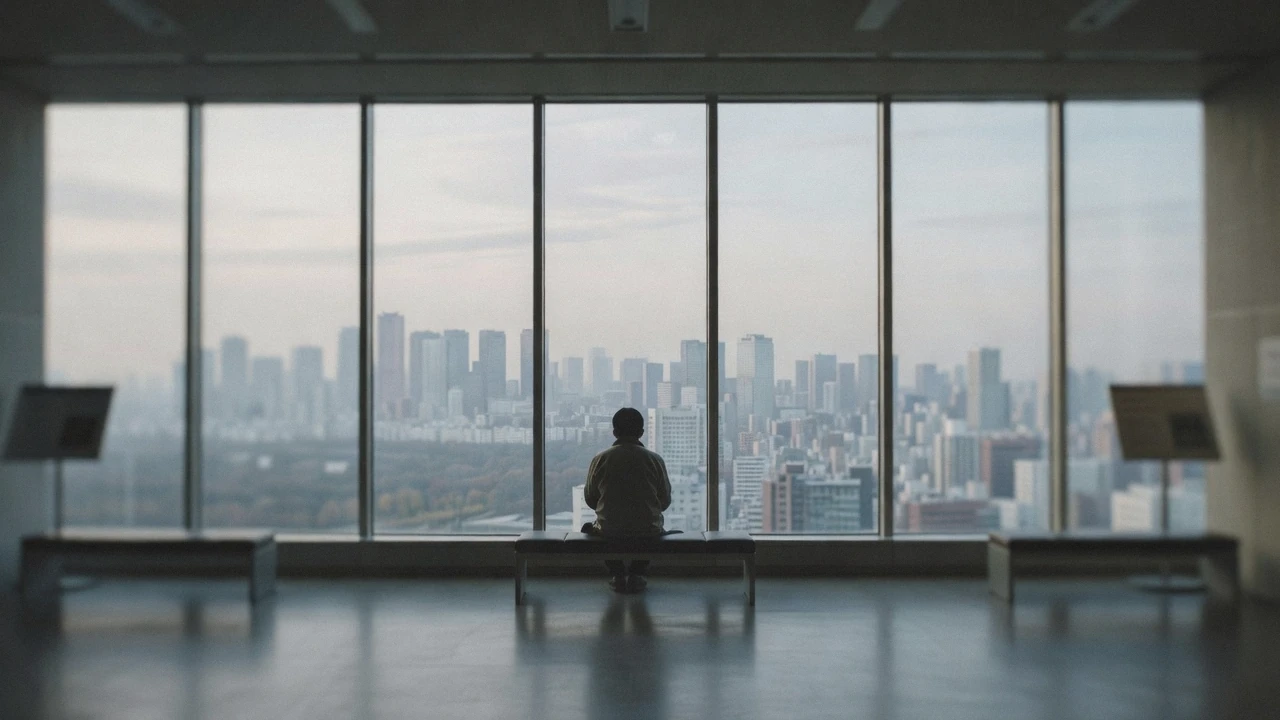
Tokyo for Free
The most useful thing to know about free things to do in Tokyo is that the free version is often the better version rather than the consolation prize. The city's best-known free viewpoint is a working government building whose windows sit 202 metres up; its greatest park never closes and has no gate; its two most famous religious sites charge nothing to walk into. What free does not mean is always available, and that is the trap this page is built to solve: nearly everything below has a closed day, a seasonal hour or a rule about which entrance is open, and all of them are published in different places. Each section prints the hours and the closed day beside the thing itself, sourced from the venue or the operating authority. Read it beside what Tokyo costs for the parts of a day that are not free, and what is open on Monday for the closures that reshape an itinerary. The paid half of the city is on the Tokyo city guide.
Quick answer Free decks, free parks, free shrines, and the closed days that catch people
A day in Tokyo can cost nothing but the train fare. The Tokyo Metropolitan Government building's two observation decks are free, walk-in and 202 metres up, the greatest park in the city has no gate and no closing time, and both of Tokyo's most famous religious sites charge nothing to enter. The only real planning problem is closed days, and they are not the ones you would guess: the two free decks close on different days from each other, and the Imperial Palace East Garden closes on Mondays and Fridays.
Key takeaways
- The free deck is a genuine alternative to the paid ones rather than a downgrade, and the deck comparison puts the height, the hours and the price of all four side by side.
- Ueno Park has no admission and no fixed closing time on the park authority's own page, which makes it the most flexible free day in the city. What is inside it is on the park page and in the gardens section.
- Shrine and temple grounds are free and their hours move with the season, not with a timetable. Meiji Jingu opens with the sunrise and its closing time changes every month.
- If one paid thing is going to break the budget-free day, make it a view at the right hour rather than a museum: Shibuya Sky before 15:00 is the cheaper tier, and a guided walk of Asakusa costs less than most museum tickets.
The Free View Against The Paid Ones
Tokyo has four well-known high viewpoints and one of them is free. This is what each charges, how high it puts you and when it is open, from each venue's own pages read in Q3 2026, converted at ¥1,000 to $6.48. Read the closed-day column before the price column, because it is what most often decides the evening.
| Viewpoint | Adult price | How high | Hours | Closed |
|---|---|---|---|---|
| Tokyo Metropolitan Government Building, South deck | Free | 45th floor, about 202 metres | 09:30 to 22:00, last entry 21:30 | First and third Tuesday of the month |
| Tokyo Metropolitan Government Building, North deck | Free | 45th floor, about 202 metres | 09:30 to 17:30, last entry 17:00 | Second and fourth Monday of the month |
| Shibuya Sky | $17.50 (¥2,700) online to 14:59, $22.00 (¥3,400) from 15:00 | Rooftop of Shibuya Scramble Square, open to the sky | Published on the venue's own hours page, with last admission before closing | The rooftop closes in bad weather, at no notice |
| Tokyo Skytree Tembo Deck | From $11.66 (¥1,800) online, $500 more per ticket at the counter | Tembo Deck at 350 metres, Galleria at 450 metres for a further $9.07 (¥1,400) | Standard hours with a date-based calendar that varies by day | No weekly closed day; hours change per calendar date |
| Tokyo Tower Main Deck | $9.72 (¥1,500), and $3.89 (¥600) for ages 4 and up | Main Deck at 150 metres; the Top Deck Tour reaches 250 metres | Published on the venue's English site | No weekly closed day published |
Two honest points about the free deck. It looks out through the windows of a working government building, so there is no open-air terrace and no bar, and the two towers have separate lifts, separate hours and separate closed days, which means a Tuesday visit and a Monday visit want different towers. What it does have is the height, the same city, no timed ticket and no queue at opening, plus a free projection-mapping show on the building's own facade after dark. Against a $22.00 evening ticket elsewhere, that is a serious proposition rather than a fallback.
Parks And Gardens That Charge Nothing
Tokyo's free green space is its most underrated asset and the closed days are its only complication. Every figure here comes from the managing authority's own page, read in Q3 2026.
The pattern to notice: the parks with no gate never close, and the ones with a gate close on a specific weekday. That single distinction decides which one belongs on which day of a trip.
| Where | Admission | Hours | Closed | Nearest station |
|---|---|---|---|---|
| Ueno Park | Free | Always open, no fixed closing time on the park authority's own page | No closed days for the grounds; paid facilities inside close for New Year | Ueno, 2 minutes; Keisei Ueno, 1 minute |
| Imperial Palace East Garden | Free | 09:00 to 16:30 in March and early April and again in September and October, to 17:00 from mid-April to August, to 16:00 from November to February | Mondays and Fridays, 28 December to 3 January, and Imperial Court event days | Nijubashi-mae, Otemachi or Tokyo Station |
| Meiji Jingu grounds | Free | Sunrise to sunset, set month by month: 05:00 to 18:30 in June, 06:40 to 16:00 in December | Open every day of the year | Harajuku, 1 minute to the entrance path |
| Shinjuku Gyoen | $3.24 (¥500) adult, free for junior high and under | 09:00 to 16:00 in winter, to 17:30 in spring, to 18:30 from mid-June to July | Mondays, or the next weekday when a Monday is a holiday; 29 December to 3 January | Shinjuku-gyoenmae on the Marunouchi line |
Ueno Park is the one to build a free day around, and the reason is structural rather than aesthetic. Because there is no gate and no closing time, it is the only major green space in the city that is available at seven in the morning and at ten at night, which makes it the natural bookend to a day that has to fit around a hotel check-in or a late flight. It also contains the highest concentration of museums in Japan, several of which have free entry for under-18s, and a zoo at $3.89 (¥600), so the same park scales from a free hour to a paid day. What is inside it is a page of its own.
The Imperial Palace East Garden is the free half of the palace, and it is the correct answer for anybody who wanted to see the palace grounds but does not want to commit to the guided tour. It is a walk-in through the Ōte-mon, Hirakawa-mon or Kitahanebashi-mon gates with no booking, no ticket and no fixed duration, on the site of the shogun's castle keep. The closed days are the catch and they are unusual: Mondays and Fridays both. One caveat we will state rather than hide: the Imperial Household Agency's own English page for the garden returned a not-found error to every fetch made for this guide, so the hours above are sourced indirectly from material citing that same official page. Check the agency's site for your own date before building a morning around it. The guided tour of the palace proper, which is also free but needs an application, is on the palace page.
Shinjuku Gyoen is on this list despite charging, because $3.24 is less than a coffee and because children up to junior-high age enter free, which makes it effectively free for a family. It is also the only one of the four with real shade, which matters between June and September more than anything else on this page.
Shrines And Temples: Free To Walk Into, Every One
Almost every shrine and temple in Tokyo is free to enter, and the two most famous are no exception. This is the largest category of free things to do in the city and the one that most rewards going early.
Sensō-ji in Asakusa charges nothing for the precincts or the Main Hall, and the official site publishes no admission fee anywhere. The Main Hall opens at 06:00 from April to September and 06:30 from October to March, closing at 17:00 year-round, and the grounds and the Nakamise approach street are accessible outside those hours. No closed days are published for the grounds at all. The temple receives about 30 million visitors a year, which is the number to hold in mind when deciding what time to go: at seven in the morning the approach is a wide stone street and at two in the afternoon it is a queue. The temple page has the full picture, and a short guided walk is one of the cheapest paid things in this guide if you want the history rather than only the buildings.
Meiji Jingu is free, open every day of the year, and its hours track the sun rather than the clock. The shrine publishes them month by month: 06:40 to 16:20 in January, 05:00 to 18:30 in June, 05:40 to 16:40 in October, 06:40 to 16:00 in December. Individual facilities inside the grounds keep shorter hours, mainly 09:00 to 16:00, and the Inner Garden and Treasure Museum charge admission that the shrine does not publish on its English pages, which is a gap we could not fill from an official source. What is free is the thing most people come for: a broad gravel path through 70 hectares of planted forest, about ten minutes from the entrance to the main buildings.
The general etiquette costs nothing and takes ten seconds: bow once at the torii gate, keep to the sides of the path rather than the centre, rinse hands at the water pavilion if there is one, and at the shrine itself bow twice, clap twice, bow once. Nobody will correct you and everybody notices. The temples and shrines page sets out the rest.
Not ideal for
- One category that is free but not always open: the smaller neighbourhood shrines that make Tokyo interesting rarely publish hours at all, and their offices and charm sellers keep short daytime hours even where the grounds do not close. Walking into an empty shrine at nine in the evening is normal and unremarkable; expecting to buy anything there is not.
Markets, Crossings And Streets That Are The Attraction
A significant share of what people travel to Tokyo to see is a street, and streets do not charge admission. This is the section that fills the hours between the timed things.
Shibuya Crossing is the obvious one and it is free by definition: it is a public intersection, with no venue, no ticket and no hours. What is worth knowing is where to stand, because being in the crossing and seeing the crossing are different experiences, and the elevated views over it range from free to the price of a coffee upwards. The crossing page covers the vantage points in order of cost.
Tsukiji Outer Market is free to walk through and is not the same place as Toyosu. When the inner wholesale market moved to Toyosu, the outer market of small shops and food stalls stayed where it was, and that is the part visitors actually want: a dense grid of knife shops, dried-fish sellers, tamagoyaki stands and standing sushi counters. There is no venue-wide entry fee and no single published address, because it is a shopping district rather than a building, and individual shop hours are not published centrally. The practical rule is that it is a morning place and much of it has shut by early afternoon. The market page has the detail.
Toyosu Market, the working wholesale market, is also free to visit, and this is where the confusion usually starts. Its visitor areas, the PR corner, the visitor passage above the trading floors and the rooftop green plaza, are open to the public at no charge. What is not simply walk-in is the tuna auction: viewing from the closest deck runs on a lottery pre-application rather than a queue, so turning up at five in the morning is not a strategy. The market's closed days are set annually per commodity and published only as calendar files rather than a fixed weekly pattern, so check the operator's calendar for your date. The Toyosu page explains which viewing option is which.
And then there are the districts themselves, which is the honest answer to how to spend a free afternoon: Akihabara's electronics floors, Harajuku's Takeshita-dori, Ginza's pedestrian weekends, Asakusa's back streets behind the temple. Walking them costs the train fare. The neighbourhoods page sets out which is which.
Not ideal for
- The one thing to budget for in this section is food, because every street on it is a food street and none of it is expensive individually. A morning in the Tsukiji outer market can quietly cost more than a museum ticket, one skewer at a time, which is a good problem and worth knowing about in advance.
Museums With Free Floors, Free Ages And Free Days
Very few Tokyo museums are free outright, but several are free for the people most likely to be dragged around them, and a handful of small specialist museums charge nothing at all. Prices are each venue's own, read in Q3 2026.
The pattern worth exploiting is the age band rather than the free day. Japanese museums routinely admit school-age children and over-70s at no charge, which makes a museum afternoon much cheaper for a family or a grandparent than the headline price suggests.
| Museum | Who gets in free | What everybody else pays | Notes |
|---|---|---|---|
| Tokyo National Museum, Ueno | High school age and under, and anyone aged 70 and over | $6.48 (¥1,000) general, $3.24 (¥500) university student | Special exhibitions are priced separately, and a special-exhibition ticket also admits you to the permanent collection the same day |
| Sumo Museum, Ryōgoku | Everybody, all year | Nothing | On the ground floor of the Kokugikan. During a tournament you need a tournament ticket to get in, which is the one restriction |
| Ad Museum Tokyo | Everybody | Nothing | Advertising history back to 1700s woodblock prints, with a searchable archive of the last thirty years of commercials |
| Sumida Edo Kiriko Museum | Everybody, for the exhibits | Nothing to look; the glass-cutting workshop is paid and needs a reservation | Cut-glass craft, and one of the few places to see it being made |
| Ueno Zoo | Up to sixth grade, and Tokyo-resident junior-high pupils with ID | $3.89 (¥600) general, $1.94 (¥300) at 65 and over | Also free for everybody on Opening Day, 20 March, Greenery Day, 4 May, and Tokyo Citizens' Day, 1 October |
Two of the entries above come from the Metropolitan Government's own tourism listing of free places rather than from the venues' own sites, which is the weaker of the two sourcing standards this guide uses, so confirm opening hours with the museum before travelling across the city for one. The two Ueno entries and the sumo museum's tournament restriction are from the venues' own pages.
The free-day mechanic is worth understanding because it is generous and almost entirely unadvertised in English. Ueno Zoo alone waives admission on three fixed dates a year, adds free entry for everyone aged 60 and over plus one companion during Senior Citizens' Week from 15 to 21 September, and admits junior-high pupils free on Children's Day, 5 May. Those dates move relative to weekends, so check the current year's list rather than assuming. The full picture of what opens and closes when is on the Monday openings page.
What is not free, and is worth saying plainly so nobody plans around it: the big-name paid attractions have no free day. Neither teamLab venue, the Ghibli Museum, Tokyo Disney Resort nor either paid observation deck publishes one. If the budget is the constraint, the free view and the free park are the substitutes, not a discounted version of the paid thing.
Public Buildings That Let Visitors In
Two of the best free experiences in Tokyo are inside government buildings, which is not a sentence that works in many cities.
The Tokyo Metropolitan Government Building in Nishi-Shinjuku is the first, and it is the free observation deck from the table above. It is a walk-in with no booking, one minute from exit A4 at Tochomae station on the Toei Ōedo line, with lifts running to the 45th floor of each tower. The South deck stays open until 22:00 with last entry at 21:30 and closes on the first and third Tuesday of the month; the North deck closes at 17:30 with last entry at 17:00 and shuts on the second and fourth Monday. Both close for periodic building inspections and over New Year. On a clear day the view reaches Mount Fuji, and after dark the building's own facade carries a free projection-mapping show.
The second is the Imperial Palace guided tour, which costs nothing at all. The Imperial Household Agency runs two tours a day, morning and afternoon, on a route of about 2.2 km walked in roughly an hour with limited shade. There are three ways to get on one: apply online, which opens at 05:00 Japan time on the first day of the month before your visit month and closes four days before the date, apply in person at the Tour Office, or take a same-day numbered ticket handed out at the Kikyo-mon gate, one per person. Capacity is 200 people per tour. It does not run on Sundays, Mondays or national holidays, except when the holiday falls on a Saturday, and it runs afternoons only from 1 July to 30 September. You need photo ID, and a photocopy will not do. Under-18s must be accompanied by an adult. Everything about it is on the Imperial Palace page.
One more free public service worth naming, because it removes a real cost from a budget trip: TOKYO FREE Wi-Fi, run by the Metropolitan Government itself. Its own terms of use state in Article 4 that no fee is charged for the service, registration takes about two minutes with a Google, Apple or LINE account, no session time limit is stated, and it is available at facilities and phone booths marked with a green sticker. The wider connectivity question, including whether to bother with a SIM at all, is on the staying connected page.
Not ideal for
- The Imperial Palace tour is free but it is not casual. It is a fixed hour on a fixed route with 200 people, no leaving early and no shade in July, which is a real consideration in a Tokyo summer and the reason the family page suggests the East Garden instead for anybody travelling with small children.
What A Free Day Actually Costs
No day in Tokyo is entirely free, because the city is large and you have to cross it. This is what the free day actually comes to.
Transport is the whole cost. The shortest subway ride on an IC card is $1.15 (¥178) and the longest band on the Tokyo Metro ladder is $2.10 (¥324), so a day built around three or four journeys costs somewhere between four and eight dollars a person. A 24-hour Tokyo Subway Ticket at $6.48 (¥1,000) only wins on a day with five or six subway rides, which a walking-and-parks day rarely has. The full arithmetic is on the transport page.
The geography helps more than a pass does. A free day that stays inside one part of the city has almost no transport cost at all: Ueno Park, the Tokyo National Museum and the streets around them are one station; Meiji Jingu, Harajuku and Omotesandō are a single walk; Asakusa's temple, its back streets and the riverside are another. The expensive free day is the one that crosses the city three times to tick off a list.
Food is the other line and it is genuinely controllable. Convenience stores sell a real lunch for a couple of dollars, department store food halls sell prepared dishes that scale to a family, and the parks above all permit eating in them. That combination is what makes a free day comfortable rather than austere, and it is covered properly on the costs page and the food page.
And one thing to spend money on rather than avoid. If you are giving the trip one paid experience, the highest-value option is not another view but a couple of hours with somebody who can explain what you are looking at: a guided Asakusa walk is cheaper than most museum tickets and it changes how the free half of the day reads.
Not ideal for
- The one hidden cost of a free day is water in summer. Between June and September the Environment Ministry's heat index regularly reaches the level at which it advises against exercise, vending machines are on every corner and each bottle is small. Budget for more of them than you think, and read the heat guidance before planning a walking day in August.
The Free Sights, Mapped
Everything on this page that charges nothing, plotted so a walking day can be built from it. Green pins never close; amber pins have a closed day or a seasonal hour you need to check first.
Coordinates are each venue's own or its Wikidata item, read in Q3 2026. The colour is about the closed day, not the quality.
Where To Go Next
Three pages that take the free day further in the directions it usually goes.
What Tokyo costs
Transport, food and the paid tickets that a free day is measured against, priced out per day. See the budget.
The daily budgetWhat is open on Monday
The closed days in this page's tables belong to a citywide pattern, and Monday is the day it bites hardest. Read the closures page.
The closure mapTokyo with kids
Free ages at every paid venue, the parks that work with small children, and the famous sights that do not. Read the family page.
Free for childrenQuestions About Doing Tokyo For Nothing
Is there a free observation deck in Tokyo?
Yes, two of them, in the north and south towers of the Tokyo Metropolitan Government Building in Nishi-Shinjuku, both on the 45th floor at about 202 metres, both walk-in with no ticket. They keep different hours and close on different days, which the deck comparison sets out beside the paid alternatives.
Which Tokyo parks are free?
Ueno Park is free with no fixed closing time on the park authority's own page, and the Imperial Palace East Garden is free but closes on Mondays and Fridays. Shinjuku Gyoen charges $3.24 (¥500) for an adult and admits junior high and under free. Hours and closed days for all three are in the gardens table.
Do you have to pay to enter Tokyo's temples and shrines?
Almost never. Sensō-ji publishes no admission fee at all for its precincts or Main Hall, and Meiji Jingu's grounds are free and open every day of the year. Charges appear only for specific inner gardens and treasure museums inside the grounds. The shrines section has the hours, which move with the seasons.
Are any Tokyo museums free?
A few small ones are free to everybody, including the Sumo Museum at Ryōgoku and the Ad Museum Tokyo. The bigger saving is the age bands: the Tokyo National Museum admits high-school age and under and anyone aged 70 or over at no charge. The museum table lists who gets in free where.
How much does a free day in Tokyo actually cost?
Train fares and food, which comes to a few dollars each if the day stays inside one part of the city. The shortest subway ride is $1.15 (¥178) on an IC card, and a 24-hour subway pass at $6.48 (¥1,000) only pays off after five or six rides. The budget section works it through.
Can you see Mount Fuji for free from Tokyo?
On a clear day, from the free observation decks of the Tokyo Metropolitan Government Building, which the city's own listing names as the best free view in Tokyo. Visibility is a weather lottery rather than a season, and it is far better in winter than in summer. The deck comparison has the hours to aim for.
Tokyo For Nothing, On Film
Three films that walk the free places on this page, which is the fastest way to work out which of them you actually want a morning for.
Top 10 FREE Things to Do in TOKYO
A tight run through the free viewpoints, parks and shrine grounds covered in the sections above.
Video: THE POOR TRAVELERTop 54 FREE things to do in TOKYO: JAPAN TRAVEL GUIDE
The long version, useful for the neighbourhood walks this page groups under markets and streets.
Video: Julie in Japan101 Things to Do in TOKYO
Mostly free and mostly street-level, and the best film here for deciding which district to walk.
Video: Abroad in JapanVideos load from YouTube only when you press play.
Reviewed Q3 2026 (July–September 2026); next review Q4 2026. Prices, hours and terms are set by the venue or operator and confirmed at checkout.
We may earn a commission if you book through one of our links, at no extra cost to you. Full affiliate disclosure