 Visit Tokyo Guide
Mount Fuji Day Trip From Tokyo
A Mount Fuji day trip from Tokyo is not a visit to a mountain. It is a trip to the places the mountain can be seen from, which is a different thing to plan and a different thing to fail at. The lake shore at Kawaguchiko, the pagoda above Fujiyoshida and the ropeway on Mount Tenjo are all about two hours from Shinjuku, all reachable without a car, and all worth nothing at all on the wrong morning: the City of Fuji has been checking three times a day since 1990 and the mountain is fully visible on well under half of the 8am checks. This page covers the odds, the viewpoints, the fares, the passes and the honest version of what a cloudy day looks like. The climb itself is a different trip in a different season and is not sold here. If Fuji is only one item on a longer list, the day trips hub ranks it against the others, and our Tokyo guide covers the city itself, and the ropeway and lake at Hakone are the usual alternative when the forecast turns.
Quick answer The odds, the route, the cost, how long the day runs
Two hours from Shinjuku by train or bus puts you at Lake Kawaguchi, the closest place a day-tripper can stand and look at Mount Fuji. The mountain is the part nobody can book: the City of Fuji's own observation record puts full visibility at 36.6% of its 8am checks and 22.5% by four in the afternoon, so a morning arrival is not a preference, it is the whole plan.
Key takeaways
- Go early and go in the cold half of the year. The city's record shows visibility highest from autumn through spring and worst in summer, and falling through each day as haze builds, which is why the coach tours leave Tokyo between seven and eight in the morning.
- Self-guided costs less and takes longer: the JR Chuo Line to Otsuki then the Fujikyu Railway at $7.58 (¥1,170) for the last 26.6 kilometres, or a Fujikyu highway bus from Shinjuku in about 100 minutes from $14.26 (¥2,200). Getting around Tokyo covers the IC cards these fares are paid with.
- A 10-hour coach day trip with entry fees included removes every transfer for $64, and the cheapest of the three is $56.10 and swaps the lake for a ropeway over a volcanic valley. Neither refunds anything if the mountain stays hidden.
- Climbing is not this trip. The official trails open in July and close on 10 September, carry a hiking fee and require advance registration; everything on this page happens at the bottom, in ordinary shoes.
Key facts
Opening hours
| Mt. Fuji Panoramic Ropeway, Kawaguchiko | 08:30–17:00 |
|---|---|
| Ropeway, 20 July to 31 August | 08:30–18:00 |
| Chureito Pagoda and the shrine grounds | open–no closing time published |
Closed None published for the pagoda or the lake shore. The ropeway suspends service in high wind and for maintenance, announced on its own site
Admission
- Adult
- Mt. Fuji Panoramic Ropeway $6.48 (¥1,000) return, $3.89 (¥600) one way; Chureito Pagoda free
- Reduced
- Ropeway child $3.24 (¥500) return, $1.94 (¥300) one way
- Free
- The pagoda, the shrine grounds, every lakeside viewpoint and the whole north shore of Lake Kawaguchi
Planning it
- Time needed
- Not stated by any operator; our routing: 10 to 11 hours door to door from Tokyo, of which about 4 hours is travel
- Book ahead
- Recommended — a few days
- Address
- Arakura Fuji Sengen Shrine, 2-4-1 Sengen, Fujiyoshida, Yamanashi 403-0031 (Chureito Pagoda); Lake Kawaguchi north shore, Fujikawaguchiko
The four realistic ways to spend a day looking at Mount Fuji, with the do-it-yourself option first and priced from the operators' own fare pages, read in Q3 2026. Yen figures come from Fujikyu Railway, Fujikyu Bus and the Mt. Fuji Panoramic Ropeway; dollar figures are converted at ¥1,000 to $6.48. The tour prices are what GetYourGuide listed on the same day.
Are you paying for the view, or for somebody else to do the four hours of driving and the three transfers?
| Option | Price | How long | What it covers | Book |
|---|---|---|---|---|
| Do it yourself: JR to Otsuki, Fujikyu Railway to KawaguchikoAnyone comfortable with two transfers and a Japanese-language bus stop, who wants to stay at the lake until the light is right. | $7.58 (¥1,170) for the Fujikyu leg, plus the JR fare and any bus you take at the far end | About 2 to 2.5 hours each way | Nothing but the seat. Every viewpoint at the lake is free; the ropeway is $6.48 (¥1,000) return if you want it | Official site |
| Fujikyu highway bus, Shinjuku to Kawaguchiko StationThe cheapest single-vehicle route, and the only one that puts you at the lake without changing trains. | From $14.26 (¥2,200) one way; from $14.90 (¥2,300) from Tokyo or Ueno | About 100 minutes from Shinjuku, about 130 from Tokyo | One seat, no transfers, reserved. Expressway traffic is the risk on the way home | Official site |
| Guided coach day trip: 5th Station, Oishi Park, the pagoda, Oshino HakkaiFirst-timers who want four viewpoints in one day and no timetable to read; the listing states no refund if the mountain is not visible. | $64 | 10 hours | Coach from Shinjuku or Tokyo Station, entry fees at every stop, a guide in English, Mandarin or Cantonese; rated 4.5 from 5,285 reviews | Check Availability |
| Guided coach day trip with a ropeway over a volcanic valleyThe lowest price on the page, and the only card that refunds the ropeway portion when the ropeway is shut. | $56.10 | 10 hours | One-way ropeway fare included, lakeside shrine, Oshino Hakkai; the boat cruise is extra and self-paid; 4.6 from 7,932 reviews | Check Availability |
| Coach out, bullet train home, with cable car and lake cruiseTravellers who want the train ride as part of the day and would rather not sit in Sunday expressway traffic on the way back. | $117.91 | 10 to 11 hours | Ropeway and cruise tickets included, non-reserved shinkansen seat back to Tokyo; 4.2 from 1,664 reviews | Check Availability |
Nobody sells a ticket to Mount Fuji, because there is nothing to enter. Every price above buys transport, a guide or a cable car, and the mountain is thrown in or it is not. The two tours that cross into the volcanic valley are covered in more detail on the Hakone page, which is where that half of the itinerary sits.
Mount Fuji day trips from Tokyo compared
Three coach day trips, all ten hours or more, all leaving central Tokyo early. Ratings and review counts are GetYourGuide's own figures for these cards as listed in Q3 2026; the price on each card is what the operator showed then.
 from $64
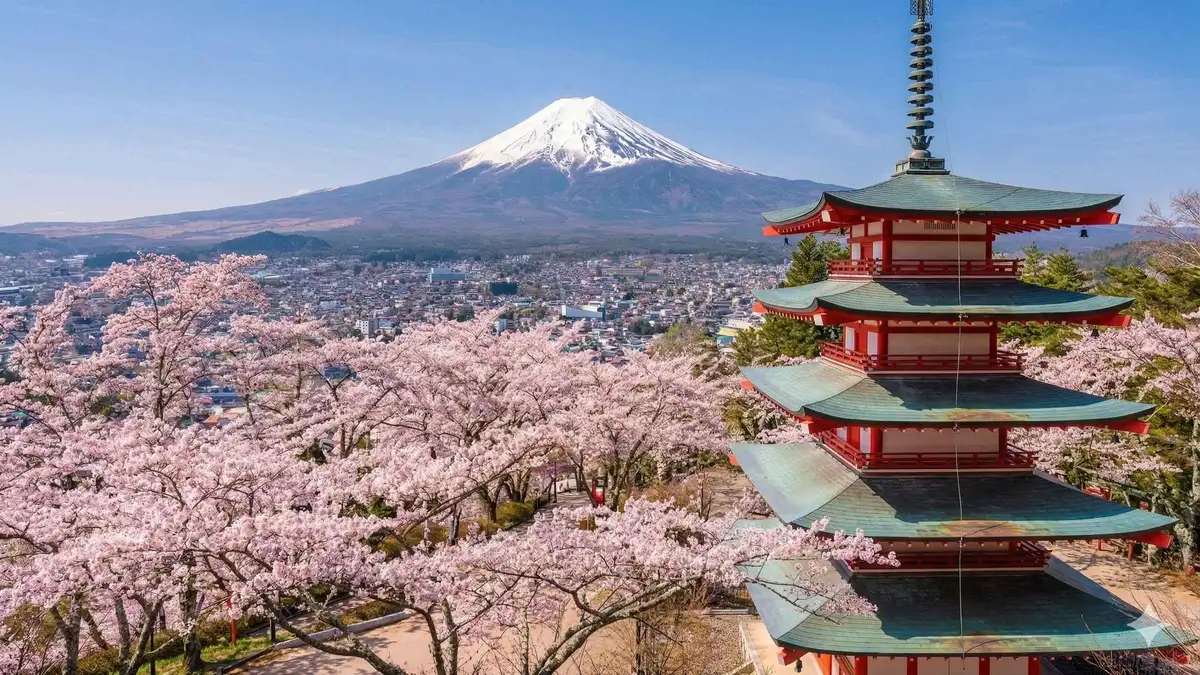
From Tokyo: Mount Fuji Full-Day Highlights Sightseeing Trip
A 10-hour coach day trip from Tokyo to Mount Fuji's 5th Station, Lake Kawaguchi's Oishi Park, Chureito Pagoda and Oshino Hakkai's spring-fed ponds, with entry fees and a multilingual guide included.
Check Availability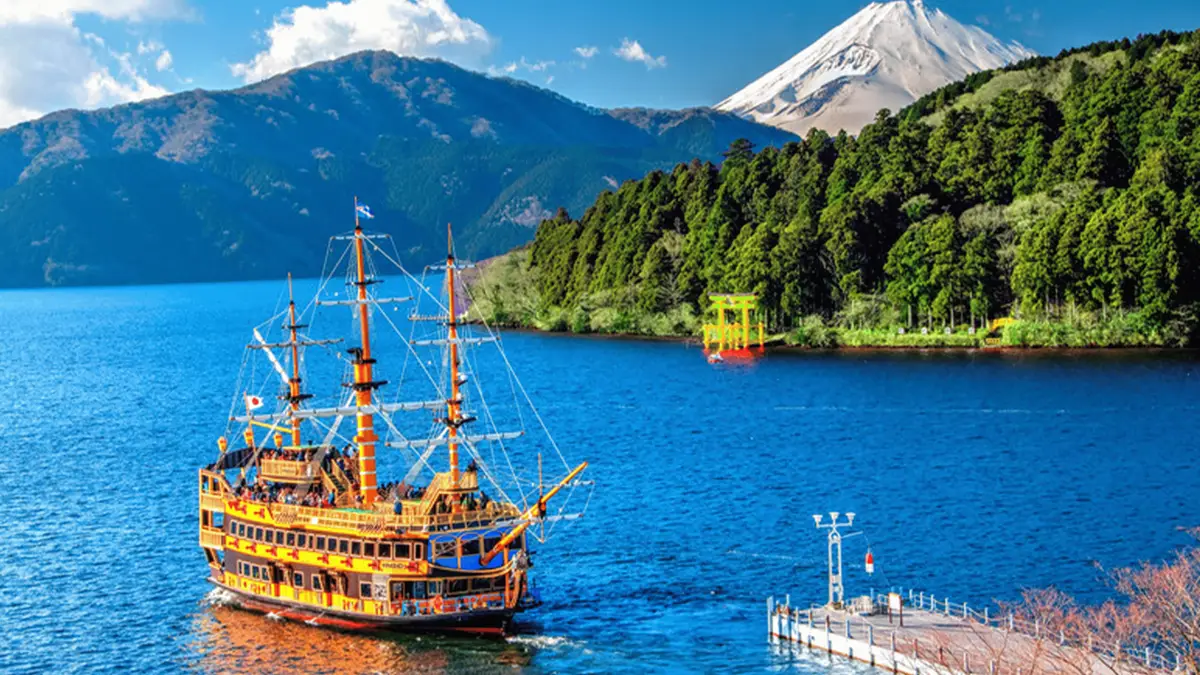 from $56.10
Tokyo: Mt. Fuji Tour, Hakone Ropeway, Owakudani, Lake Ashi
A 10-hour bus day trip from Tokyo pairing Hakone Shrine's lakeside torii gate with the Hakone Ropeway over Owakudani's volcanic valley and views toward Mount Fuji, with a multilingual guide.
Check Availability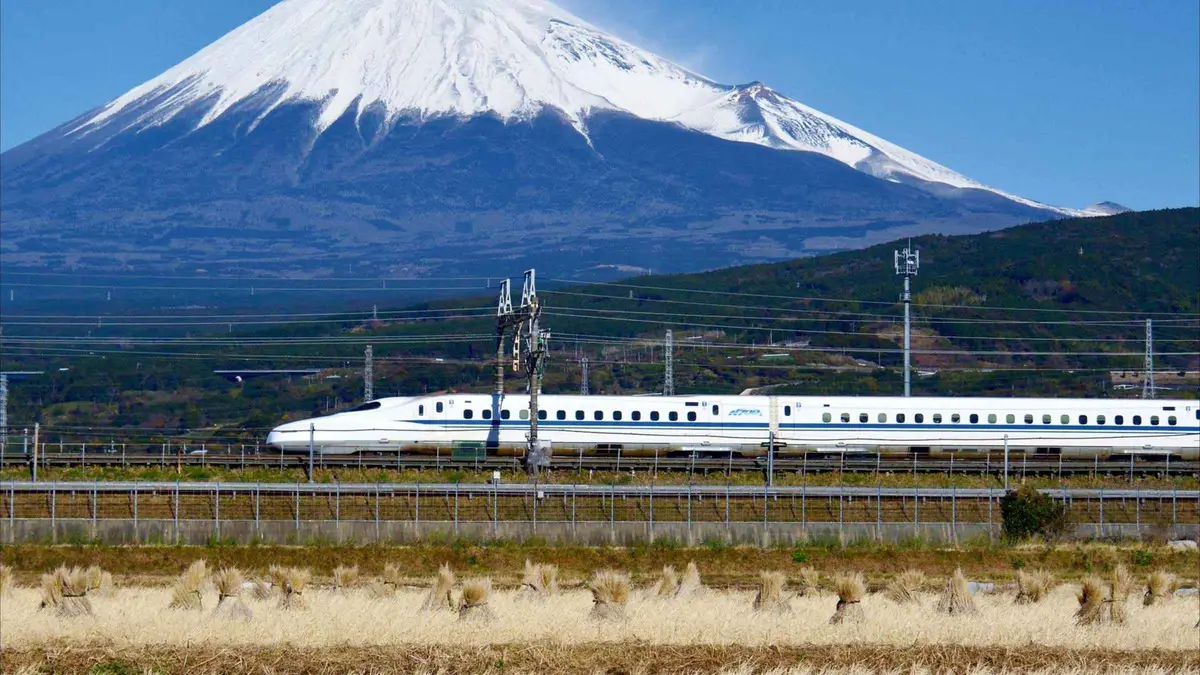 from $117.91
From Tokyo: Mt. Fuji & Hakone Tour w/ Return by Bullet Train
A 10 to 11 hour day trip covering Mount Fuji's 5th Station, the Hakone Ropeway over Owakudani and a Lake Ashi cruise, returning to Tokyo by non-reserved bullet train instead of the bus.
Check AvailabilityPrices, ratings and details are the platform's own, checked in Q3 2026; dollar figures are the listed prices — the platform bills in your account's currency.
The Odds The Mountain Shows At All
One authority has actually counted, and the numbers are the most useful thing on this page. The City of Fuji, on the mountain's southern side, has recorded whether Fuji is visible three times a day since May 1990.
The method is published in full. From the eighth floor of the city hall, by fixed camera or by eye, an officer records the mountain at 08:00, 12:00 and 16:00 every day and files it in one of three categories: fully visible, partly visible, not visible at all. The observation began because the city's 1991 landscape plan had no baseline data on the view it was written to protect, which is a better reason for a dataset than tourism.
Over 35 years the mountain was fully visible at the 8am check on 4,684 days out of 12,784, a rate of 36.6%. By midday that had fallen to 23.3%, and by four in the afternoon to 22.5%. Averaged out, the whole mountain shows itself early on about 134 days a year. Visibility is highest from autumn through spring and lowest in summer, when the air is thick and the cloud sits on the peak all day.
Two honest caveats. The count is taken from Fuji City at the mountain's base on the Shizuoka side, not from Kawaguchiko where you will be standing, so treat it as a seasonal and hourly pattern rather than a forecast for your viewpoint. And a partly visible mountain still photographs well: the categories the city uses are stricter than most visitors would be.
What the numbers mean for your day
Go early, go in the cold months, and do not spend the morning shopping. Every hour after eight is a worse bet than the one before it, which is why an 07:30 departure from Shinjuku is not tour-operator theatre. If the forecast is bad the day before, the honest move is to switch the plan rather than travel two hours in hope: Hakone gives you a lake, a ropeway and hot springs whether or not the mountain appears, and Kamakura is an hour away and indifferent to cloud.
Where Fuji Is Actually Visible From On A Day Trip
Four places do almost all of the work, and they sit in a rough line between Otsuki and Lake Kawaguchi. Walking and travel times below are ours, read off the distances and the operators' own timetables.
The mountain is 35 kilometres from the lake shore, which is close enough to fill a frame and far enough that anything in front of it matters. That is the whole argument for these four spots: each puts something in the foreground that the postcards need, water, a pagoda, a rope of gondolas or a village of spring-fed ponds.
| Viewpoint | Getting there | Cost | Why it is on the list |
|---|---|---|---|
| Chureito Pagoda, Arakura Fuji Sengen Shrine | Shimo-Yoshida Station on the Fujikyu Railway, then about 400 steps up through the shrine grounds | Free; no admission is published by the shrine | The five-storey pagoda with the mountain behind it. The shrine's own site calls the site the best Fuji view in Japan, and the steps are the price |
| Lake Kawaguchi north shore and Oishi Park | Bus or the Red Line sightseeing bus from Kawaguchiko Station | Free | The reflection shot. Water in the foreground, the mountain across it, and lavender or kochia in the park beds depending on the month |
| Mt. Fuji Panoramic Ropeway, Mount Tenjo | 3-minute ride from the lake shore near Kawaguchiko Station | $6.48 (¥1,000) return, $3.89 (¥600) one way; child $3.24 (¥500) return | Height. You see the lake and the mountain in one frame, which nothing at ground level gives you |
| Oshino Hakkai | Fujikko-go sightseeing bus from Kawaguchiko Station, 11 departures a day | Free to walk the village; some buildings charge | Eight spring-fed ponds fed by Fuji's snowmelt, with thatched roofs and the mountain over them. The most crowded of the four |
| The 5th Station, Fuji Subaru Line | Coach or seasonal bus, road conditions permitting | Included on the coach tours; the road closes in winter | Standing on the mountain rather than looking at it. In cloud it is the one stop that shows you nothing at all |
The pagoda, and the 400 steps nobody mentions
Chureito Pagoda is not an old monument to Fuji. It is a war memorial completed in the 1960s in the grounds of Arakura Fuji Sengen Shrine, above Fujiyoshida, and it earns its fame from one thing: the angle. From the platform above the steps, pagoda, cherry trees and mountain stack into a single frame.
The practical points the photographs leave out are the stairway, which runs several hundred steps up the hillside with a switchback ramp for anyone who needs it, and the queue on the platform in cherry-blossom weeks and autumn colour weekends, when people wait their turn for the same two square metres. The shrine currently hands out its goshuin seal pre-written on paper rather than brushed on the spot, stating on its own site that this is to ease congestion, which tells you what the crowd there has become. Nothing at the shrine or the pagoda charges admission.
The ropeway, and what it is called now
The cable car by the lake was the Kachi Kachi Yama Ropeway and now trades as the Mt. Fuji Panoramic Ropeway. It climbs Mount Tenjo in about three minutes and runs 08:30 to 17:00, with the last descent at 17:20, extended to 18:00 with a last descent at 18:20 between 20 July and 31 August. A return ticket is $6.48 (¥1,000) for an adult and $3.24 (¥500) for a child, one way $3.89 (¥600) and $1.94 (¥300).
Buy the one-way and walk down if the summit view has already given you what you came for; the path is signposted and the queue for the descent is worse than the queue to go up on a busy afternoon. The operator suspends the line in high wind, and posts it on its own site rather than at the bottom station, so check before you commit the afternoon to it.
Bus Or Train From Tokyo, And What Each One Costs
Three routes, one destination. Fares below come from Fujikyu Railway's own distance-fare table and Fujikyu Bus's own route pages, read in Q3 2026; the JR legs are the part nobody publishes cleanly for foreign visitors.
The decision is simpler than the forums make it. The bus is the cheapest single vehicle and lands you at Kawaguchiko Station; the train is faster and more reliable in traffic but usually needs a change at Otsuki; the through limited express removes the change and costs about twice the bus.
| Route | One-way fare | Time | Booking |
|---|---|---|---|
| Fujikyu highway bus, Shinjuku to Kawaguchiko | From $14.26 (¥2,200) | About 100 minutes | Reserved seat, sold on the operator's site and at the terminal |
| Fujikyu highway bus, Tokyo or Ueno to Kawaguchiko | From $14.90 (¥2,300) | About 130 minutes | Reserved seat |
| JR Chuo Line to Otsuki, then Fujikyu Railway to Kawaguchiko | $7.58 (¥1,170) for the Fujikyu leg alone, JR fare on top | About 2 to 2.5 hours in total | No reservation needed on the local trains |
| Fuji Excursion through limited express, Shinjuku to Kawaguchiko | Reported at ¥4,200, about $27.20, base fare plus express fee | Around 2 hours, no change | All seats reserved; sells out on autumn weekends |
What we could not verify, and why it matters
The Fujikyu Railway leg is solid: $7.58 (¥1,170) adult and $3.83 (¥590) child over 26.6 kilometres, taken straight from the operator's own fare table. The Fuji Excursion total is not. JR East's fare pages refused every automated request we made, and the ¥4,200 figure above comes from a summary of the through service rather than from a JR page we read ourselves. Treat it as the right order of magnitude and confirm it at the machine.
The same applies to the limited-express supplement on the Fujikyu leg, quoted elsewhere at around ¥400 but absent from the fare table we did read. Where an official page prints a number, this page prints it; where it does not, you get this paragraph instead of a confident invention.
Getting around once you are there
Kawaguchiko Station is the hub for everything on the lake. Three sightseeing bus lines run from it, Red for the Kawaguchiko shore, Green for Lake Sai and Blue for Lakes Shoji and Motosu, and the Fujikko-go runs eleven times a day towards Fujiyoshida, Oshino and Lake Yamanaka. Fujikyu Bus does not print the fares for those loops on the pages we could read, so budget for them at the counter rather than from a blog.
One planning point that catches people out: the pagoda is not on the lake. Shimo-Yoshida is a separate stop on the Fujikyu Railway, one station short of Kawaguchiko, so doing both in a day means a train back down the line rather than a bus around the shore.
The Passes, And When They Stop Paying
Two passes cover this corner of the country and neither is an obvious buy for a single day. Prices and coverage are from Odakyu's own pass pages, read in Q3 2026.
The Fuji Hakone Pass is $71.90 (¥11,100) for an adult and $23.30 (¥3,600) for a child, valid three consecutive days. It covers the discounted Odakyu round trip from Shinjuku to Odawara, eight networks around the volcanic valley, the entire Fujikyu Railway line and Fujikyu buses in designated Mount Fuji areas.
What it excludes is what breaks it for a day trip. The JR Chuo Line from Shinjuku to Otsuki is not covered, the Chuo Expressway highway bus from Shinjuku to Kawaguchiko is not covered, and the Romancecar needs its own limited-express ticket on top. It is also sold only over the counter at the Odakyu Sightseeing Service Centers at Shinjuku West and Odawara, not online and not from a machine, which means an errand before your first train.
The arithmetic is straightforward: on one day at the lake you would spend roughly $14 to $28 on transport each way and $6.48 on the ropeway. The pass earns its keep over three days when you cross from the Fuji side to the Hakone loop and back, and it loses money on a single out-and-back.
The cheaper answer for one day
Buy the bus. A return on the Fujikyu highway bus from Shinjuku is around $28.50 (¥4,400) at the from-price, the ropeway is $6.48 (¥1,000), and the pagoda and every lake viewpoint are free. That is a day under forty dollars in transport and tickets, which is why the guided coaches at $56.10 and $64 are competing on convenience and a guide, not on price.
The cost of a day in Japan sets that against what the rest of the trip runs to.
Mount Fuji In Eight Dates
The mountain a day-tripper photographs is a working volcano with a documented life. These are the dates that still change what you can do there.
-
1707
The Hoei eruption
The last eruption of Mount Fuji opened a new crater on the south-east flank and dropped ash on Edo, the city that is now Tokyo. The volcano has been quiet since, which is a statement about the past three centuries and not a forecast [Wikipedia, Mount Fuji].
-
1868
The first recorded foreign ascent by a woman
Lady Fanny Parkes, wife of the British minister, climbed to the summit at a time when the mountain was formally closed to women, and the ban was lifted the following year [Wikipedia, Mount Fuji].
-
May 1990
Fuji City starts counting the view
The city begins recording visibility three times a day from the eighth floor of its city hall, because its own landscape plan had no data on the view it was written to protect [city.fuji.shizuoka.jp, observation record page, read in Q3 2026].
-
1964
The Fuji Subaru Line opens to the 5th Station
The toll road put a coach park at 2,300 metres and made the mountain a day trip rather than an expedition. It closes to private traffic in winter and during the summer regulation period [Wikipedia, Fuji Subaru Line].
-
22 June 2013
UNESCO lists Fuji as a cultural site, not a natural one
The inscription covers the mountain and 24 associated sites as a sacred place and a source of artistic inspiration. The Sengen shrines below the mountain, including the one under the pagoda, are part of that story [UNESCO World Heritage List, Fujisan].
-
1991 to 2023
Thirty-three years of daily records become a calendar
With Numazu College of Technology, the city publishes the percentage of those years in which the mountain was visible on each individual calendar day, updated most recently in May 2025 [city.fuji.shizuoka.jp, visibility calendar].
-
2024
Yamanashi puts a gate on the Yoshida Trail
The prefecture introduces a booking and payment system for climbers on its side of the mountain, the first hard cap in the modern era of the climb [fujisan-climb.jp, the prefectures' joint official site].
-
2026 season
Trails open in July and shut on 10 September
Yoshida and Subashiri run 1 July to 10 September; Fujinomiya, Gotemba and the crater rim trail open on 10 July. A hiking fee applies on every trail, with advance registration through each prefecture's system [fujisan-climb.jp, read in Q3 2026].
Season dates, the hiking fee and the trail list come from fujisan-climb.jp, the joint official site of Shizuoka and Yamanashi prefectures, read in Q3 2026. The observation record and visibility calendar are from the City of Fuji's own pages. The 1707 eruption, the 1868 ascent and the Subaru Line are from the Wikipedia articles on the mountain and the road, which we name rather than dress up as our own research.
How Much Time To Give A Fuji Day
No operator states a visit length, because there is no venue to be inside. These three routings are ours, built from the published timetables and the distances between the viewpoints, and the door-to-door figures start and end in central Tokyo.
The constraint is the travel, not the stops. Four hours of the day are spent moving, so the question is how many viewpoints you can reach with the six that are left and how much of that time you are prepared to spend in a queue at the pagoda.
| Routing | What you get | What it skips | Door to door |
|---|---|---|---|
| The single-viewpoint day | Bus to Kawaguchiko, the north shore and Oishi Park, lunch by the water, an unhurried afternoon and a bus home | The pagoda, the ropeway, Oshino Hakkai and the 5th Station | About 8 hours, most of it at the lake |
| The full self-guided day | Train to Shimo-Yoshida and the pagoda first thing, back down the line to Kawaguchiko, the ropeway, the lake shore, a late bus home | The 5th Station, and any margin for a missed connection | 11 to 12 hours, with three transfers |
| With a guided coach | Four stops in one vehicle with entry fees paid and a guide, or the ropeway and volcanic valley version at a lower price | Choosing your own light, and staying for sunset; the coach leaves when it leaves | 10 hours, fixed |
The Day The Mountain Does Not Appear
Two thirds of morning checks in the city's record are not a full mountain, so this is the likeliest version of the day rather than the unlucky one.
Nothing refunds a cloudy sky. The listing on the most-booked coach day trip states plainly that visibility depends on the weather and that no refund applies if the tour runs and the mountain is not visible, and the operators are right to say so: they sold you a coach, a guide and entry fees, all of which you received. The one weather clause worth having is on the ropeway version of the tour, which refunds that portion if the cable car itself is closed.
What is left on a grey day is still a real day out. The lake shore is beautiful in its own right, Oshino Hakkai's ponds are startlingly clear whatever the sky is doing, the ropeway still climbs Mount Tenjo, and Fujiyoshida's old main street frames the mountain that is not there. The failure mode to avoid is the 5th Station in cloud, which is a coach park at 2,300 metres with a view of the inside of a cloud.
If the forecast is settled and bad the night before, change the destination rather than the hope. Hakone has a lake, a ropeway over a volcanic valley and hot water at the end of it; Kamakura has temples and a coastline an hour from Tokyo; Yokohama is twenty-odd minutes away and mostly indoors.
Five Things Most Visitors Do Not Know About A Fuji Day Trip
All five change something practical about the day, and each one carries the source it came from.
- Somebody publishes the odds, day by day. The City of Fuji prints the percentage of 33 years in which the mountain was visible on each calendar date, so you can look up your own date before you book anything [city.fuji.shizuoka.jp, visibility calendar, updated May 2025, read in Q3 2026]. - The pagoda is a war memorial, not an ancient monument. It stands in the grounds of Arakura Fuji Sengen Shrine and dates from the 1960s; the shrine, not the pagoda, is the old thing on that hillside [arakurafujisengen.com, the shrine's own site, read in Q3 2026]. - The shrine has stopped brushing its seal by hand. The goshuin is issued pre-written on paper, and the shrine says on its own site that this is to ease congestion, which is a fair measure of what the crowd on those steps has become [arakurafujisengen.com, notices page]. - The three-day pass does not cover the fast way to Fuji. The Fuji Hakone Pass excludes the JR Chuo Line from Shinjuku to Otsuki and the Chuo Expressway bus from Shinjuku to Kawaguchiko, and is sold only over the counter at two Odakyu offices [odakyu-global.com, Fuji Hakone Pass page, read in Q3 2026]. - The climbing season is 72 days long, and this is not it for most visitors. The Yoshida and Subashiri trails run 1 July to 10 September 2026, the other three from 10 July, all with a hiking fee and advance registration [fujisan-climb.jp, the two prefectures' official site, read in Q3 2026].
A Fuji Day: What To Do, And What Not To
Each line is a decision argued above, in the form you can act on the night before.
Do
- Take the earliest departure you can stand: the city's own record has visibility falling from 36.6% at eight to 22.5% by four
- Check your date on the City of Fuji visibility calendar before you commit money to a tour
- Put the pagoda first if you want both it and the lake, because Shimo-Yoshida is a station short of Kawaguchiko and doubling back eats an hour
- Buy the ropeway one way and walk down if the queue at the top has built
- Switch to Hakone or Kamakura the night before if the forecast is settled cloud, rather than travelling two hours in hope
- Carry cash for the lakeside buses and the small places at Oshino Hakkai
Don't
- Don't expect a refund for a hidden mountain: the tour listings state that visibility is not guaranteed
- Don't buy the three-day Fuji Hakone Pass for a single day at the lake, and don't assume it covers the JR line or the expressway bus
- Don't plan the 5th Station into a cloudy day, or into winter, when the toll road is shut
- Don't confuse this trip with the climb; the trails are open for about ten weeks and need registration and a fee
- Don't leave the pagoda steps to the last hour of daylight in autumn, when the platform queue is at its longest
- Don't rely on a blog's figure for the through limited express: JR does not publish it where we could read it, so confirm at the machine
Mount Fuji day trip map: the viewpoints and the stations
The four viewpoints a day-tripper can realistically reach, the two stations they hang off, and the mountain itself for scale. Positions are read at street level and are good enough to plan by, not to navigate with.
Coordinates for the mountain are the ones recorded on its Wikidata item, Q39231; the rest are read off the map and rounded.
Instead of Fuji, or after it
Travel times are the operators' own; the judgement is ours.
Hakone
The other volcano day, and the one that works in cloud: a lake, a ropeway over a steaming valley and hot springs at the end. Two of the tours on this page cross into it, and the ropeway version is the cheapest card here.
About 80 minutes from ShinjukuMount Takao
A forested mountain inside Tokyo with a cable car and, on a clear winter day, its own view of Fuji from the summit. Half the travel time and none of the transfers.
Under an hour from ShinjukuThe rest of the day trips
Every destination within two hours, compared on travel time, cost and what a bad-weather day looks like at each, including Kamakura an hour south and Yokohama twenty minutes away.
One to two hours outMount Fuji day trip questions
Is a Mount Fuji day trip from Tokyo worth it?
It is, on the right morning and with the right expectations. You are paying about four hours of travel for a view that the City of Fuji's own record puts at fully visible on 36.6% of 8am checks, so book the early departure, prefer the autumn-to-spring months, and pick a day where the lake shore, the ropeway and the ponds at Oshino Hakkai would still make a decent day if the summit stayed hidden. If you want a guaranteed day out, the comparison of every day trip will point you somewhere else.
Can I get from Tokyo to the mountain and back in one day by train?
Yes. The usual route is the JR Chuo Line to Otsuki and the Fujikyu Railway on to Kawaguchiko, whose 26.6 kilometre leg costs $7.58 (¥1,170) for an adult from the operator's own fare table. There is also a through limited express from Shinjuku with all seats reserved, reported at around ¥4,200 one way, a figure JR does not publish anywhere our tools could read. Either way the total is two to two and a half hours each way, which is why the 10-hour guided coach exists.
How much does a day at Kawaguchiko cost if I do it myself?
Under forty dollars in transport and tickets for most people. A Fujikyu highway bus from Shinjuku starts at $14.26 (¥2,200) each way and takes about 100 minutes, the ropeway is $6.48 (¥1,000) return, and the pagoda, the lake shore and Oshino Hakkai charge nothing to look at. Add lunch and the lakeside buses, whose fares Fujikyu does not print on its English pages. The guided coach at $56.10 is buying you the transfers, not the view.
Where is the best view of the mountain from the Fuji Five Lakes?
It depends on what you want in front of it. Water and a reflection means the north shore of Lake Kawaguchi and Oishi Park; the postcard with a pagoda means the platform above the steps at Arakura Fuji Sengen Shrine; height and both lake and mountain in one frame means the ropeway up Mount Tenjo at $6.48 (¥1,000) return. All three are free or nearly free, which is unusual for a famous view.
Is Chureito Pagoda free, and how many steps are there?
Free. The pagoda stands in the grounds of Arakura Fuji Sengen Shrine and neither the shrine nor the pagoda publishes an admission charge. The climb is several hundred steps from the shrine gate, with a longer switchback ramp for anyone who needs it. Go for it early: the shrine now issues its goshuin seal pre-written on paper and says on its own site that this is to relieve congestion.
What happens if the mountain is not visible on the day I go?
Nothing, financially. The tour listings state that visibility depends on the weather and that no refund applies if the trip runs, and the only weather clause we found is on the ropeway tour, which refunds that portion if the cable car is closed. Practically, the lake, the ponds and the ropeway are all still there. The failure to avoid is the 5th Station in cloud, which is a car park at altitude.
Can I climb to the summit on the same trip?
No, unless you are here in high summer and planning a separate overnight. The prefectures' official site gives the 2026 season as 1 July to 10 September for the Yoshida and Subashiri trails and 10 July to 10 September for Fujinomiya, Gotemba and the crater rim, with a hiking fee and advance registration on every trail. A day trip from Tokyo reaches the fifth station at best, and this page does not sell the climb.
Is the Fuji Hakone Pass worth buying for one day?
No. At $71.90 (¥11,100) for three days it is built for a two-region trip, and it excludes the JR Chuo Line from Shinjuku to Otsuki and the Shinjuku expressway bus, which are the two ways most people actually travel. It is also sold only over the counter at two Odakyu offices. It starts to make sense when you cross from the lakes to the Hakone loop and back across three days.
Where a Fuji day fits in a Tokyo trip
It is the one day out that a forecast can ruin, so it should be the day you keep flexible rather than the day you book first.
Put it on the clearest morning of your stay, not on a fixed date in the middle. If you are here for three or four days, keep the Fuji day loose and fill the others from the three-day plan, which is built around things that do not depend on the sky. Then book the coach or the bus a day or two ahead, once the forecast has settled.
The pairing that works is Fuji early and nothing ambitious afterwards: you will be back at Shinjuku between six and eight in the evening with the appetite of someone who has been awake since five. The pairing that does not work is Fuji and a timed evening ticket on the same day, because the expressway home is the least predictable hour of the trip. If the sky is wrong, the swap is Hakone for a similar day at similar cost, or Yokohama if you want to salvage the afternoon rather than the day.
The Fuji Day Trip On Film: Routes, Viewpoints and Costs
Three run-throughs that show what the travel actually looks like, and how much of the day the transfers eat. Between them they cover the self-guided route, the bus and train comparison and the viewpoints on the ground.
What to Do Around Mt. Fuji - Kawaguchiko Day Trip Guide
A ground-level tour of the lake, the ropeway and the viewpoints this page recommends.
Video: Tokyo CheapoTokyo to Mt. Fuji Day Trip: 3 Ways Compared (Train, Bus, Private Tour)
Sets the train, the highway bus and a guided tour against each other, which is the decision the table above makes.
Video: Howzit JapanMount Fuji Day Trip From Tokyo - Costing, How to Self Plan, Is group trip worth it and More
Works through the self-planned version with costs attached, useful before you decide against the coach.
Video: Wandering MindsVideos load from YouTube only when you press play.
Reviewed Q3 2026 (July–September 2026); next review Q4 2026. Prices, hours and terms are set by the venue or operator and confirmed at checkout.
We may earn a commission if you book through one of our links, at no extra cost to you. Full affiliate disclosure