 Visit Tokyo Guide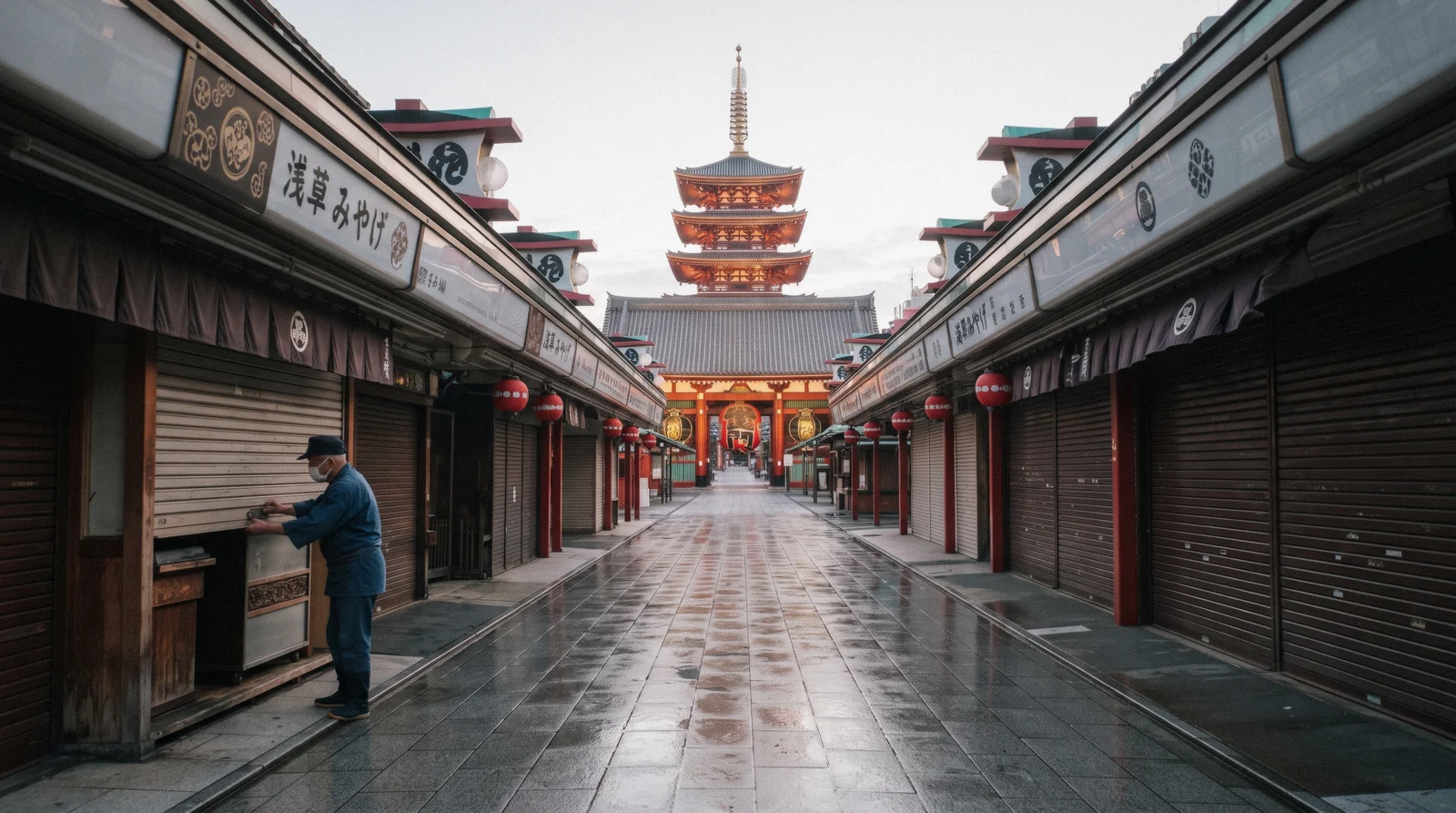
Senso-ji Temple
Senso-ji is Tokyo's oldest temple, a Buddhist foundation dedicated to Kannon that the temple itself dates to a statue pulled from the Sumida River in 628. It costs nothing to enter, it keeps no closed days, and by its own count it draws about 30 million visitors a year. This page covers the hours, what stands behind each gate, how long to give it and which station exit puts you at the lantern; the streets, shops and food around it belong to the district guide, and the etiquette that applies at every hall and shrine in the city sits on the temples and shrines hub. The rest of the city, and where this temple sits in a first trip, is on the Tokyo city guide.
Quick answer Free entry, the hours, how long to allow, which exit
Senso-ji is free. There is no ticket, no reservation and no gate charge. The Main Hall opens at 06:00 from April to September and at 06:30 from October to March, closes at 17:00 all year, and the temple publishes no closed days.
Key takeaways
- The gates, the courtyards and the shopping approach stay open when the Main Hall is shut, which is why the precinct is worth walking before breakfast and again after dark; the streets that surround it are covered on the district guide.
- Nothing needs booking here, so a guide is the only thing money buys: a two-hour walk of the temple grounds runs under fifteen dollars a head, and the most-reviewed of the walks is a few dollars more.
- Allow 45 minutes for the two gates and the Main Hall, two hours if you want the pagoda, the side halls and the garden view. The tower on the far bank is the one thing in sight that does need a timed ticket, and that is the Tokyo Skytree.
Key facts
Opening hours
| Main Hall, April to September | 06:00–17:00 |
|---|---|
| Main Hall, October to March | 06:30–17:00 |
| Daily, grounds and gates | open–no closing time published |
Closed None published. The temple lists no closed day for the grounds or the Main Hall, in any season
Admission
- Adult
- Free
- Reduced
- Free, all ages
- Free
- Everyone. The grounds, the Main Hall, the gates and the pagoda carry no admission charge at all
Planning it
- Time needed
- Not stated by the temple; our routing: 45 minutes for the gates and the Main Hall, 2 hours to walk the whole precinct properly
- Book ahead
- Optional — walk-up usually fine
- Address
- 2-3-1 Asakusa, Taito-ku, Tokyo 111-0032
Four ways to see the temple, with the free walk-in first. The admission line comes from the temple's own site, read in Q3 2026; the guided prices are the figures GetYourGuide listed for those cards on the same day, converted at ¥1,000 to $6.48. Nobody sells a ticket to Senso-ji, because there is no ticket to sell.
Entry is free, so the only real question is whether you want somebody to explain what you are looking at.
| Option | Price | How long | What it adds | Book |
|---|---|---|---|---|
| Walk in through the gateAlmost everyone. There is no queue to skip and no line to join, at any hour of any day. | Free | As long as you like | Nothing is behind a barrier: the gates, Nakamise Street, the Main Hall and the pagoda are all open ground | Official site |
| Guided walk of the temple and the old streetsFirst-timers who want the legend, the layout and the etiquette in one pass, at the lowest price on the page. | $12.99 (about ¥2,000) | 2 hours | A guide through the gates and halls, rated 4.9 from 863 reviews | Check Availability |
| History walk with street foodAnyone who would rather eat their way along the side streets than stand in front of another hall. | $12.99 (about ¥2,000) | 2 hours | The same price with the food stalls built in, 4.9 from 239 reviews | Check Availability |
| Temple walking tour, Thunder Gate to the Main HallVisitors who want the reassurance of the biggest review count rather than the lowest price. | $18.18 (about ¥2,800) | 2 hours | The most-reviewed of the three walks, 4.8 from 1,934 reviews | Check Availability |
| Morning bus tour that stops hereShort-stay visitors who want three sights in a morning and no navigating; you get less time here than you would alone. | $40.91 (about ¥6,300) | 4 hours | Adds the Imperial Palace grounds and Tokyo Tower to one half-day, with transport between them | Check Availability |
The free row is not a formality. Senso-ji has never sold an admission ticket, so any product describing itself as temple entry is selling a guide, transport or a costume, not access. Guided prices move with the date and the group size; treat the figures above as the ones listed when we read the cards, and the checkout as the price you pay.
Guided walks at Senso-ji compared
Five cards, all of them guides or transport rather than entry, since entry is free. Ratings and review counts are the platform's own figures for those cards as listed in Q3 2026; the price on each card is what the operator showed then.
 from $12.99
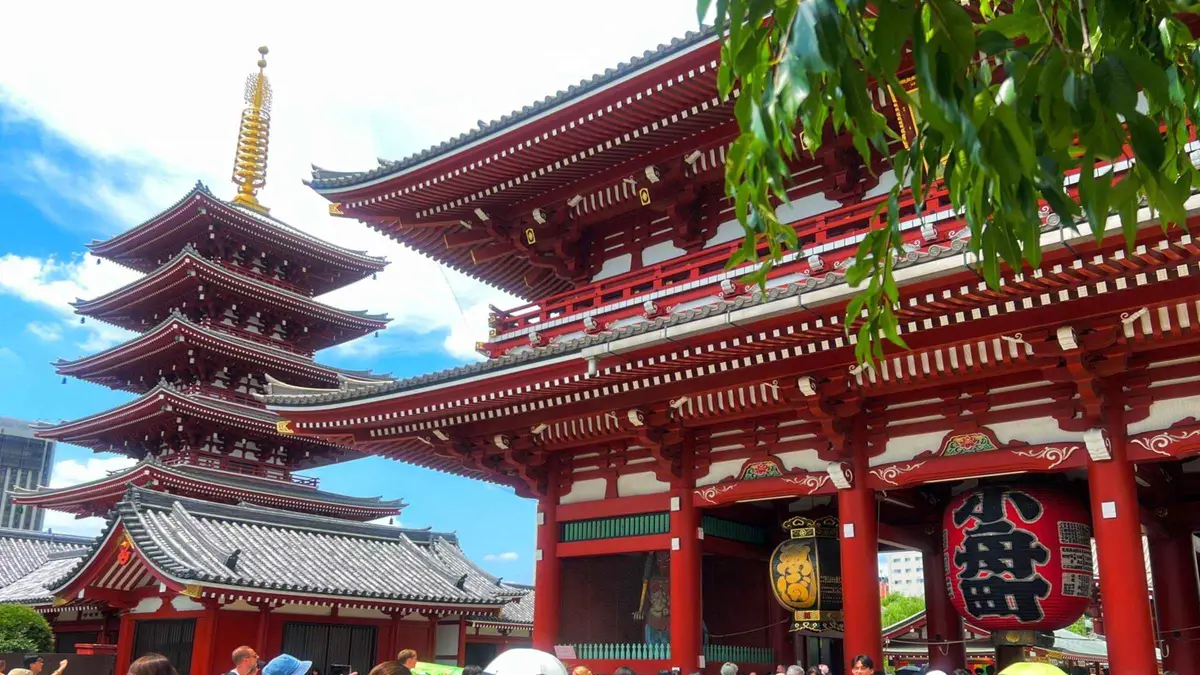
Tokyo: Asakusa and Sensoji Walking Tour
A small-group walking tour of Asakusa's oldest temple, Edo-era alleys and Nakamise Street, with history and local stories from a guide, capped at 10 participants for a closer experience.
Check Availability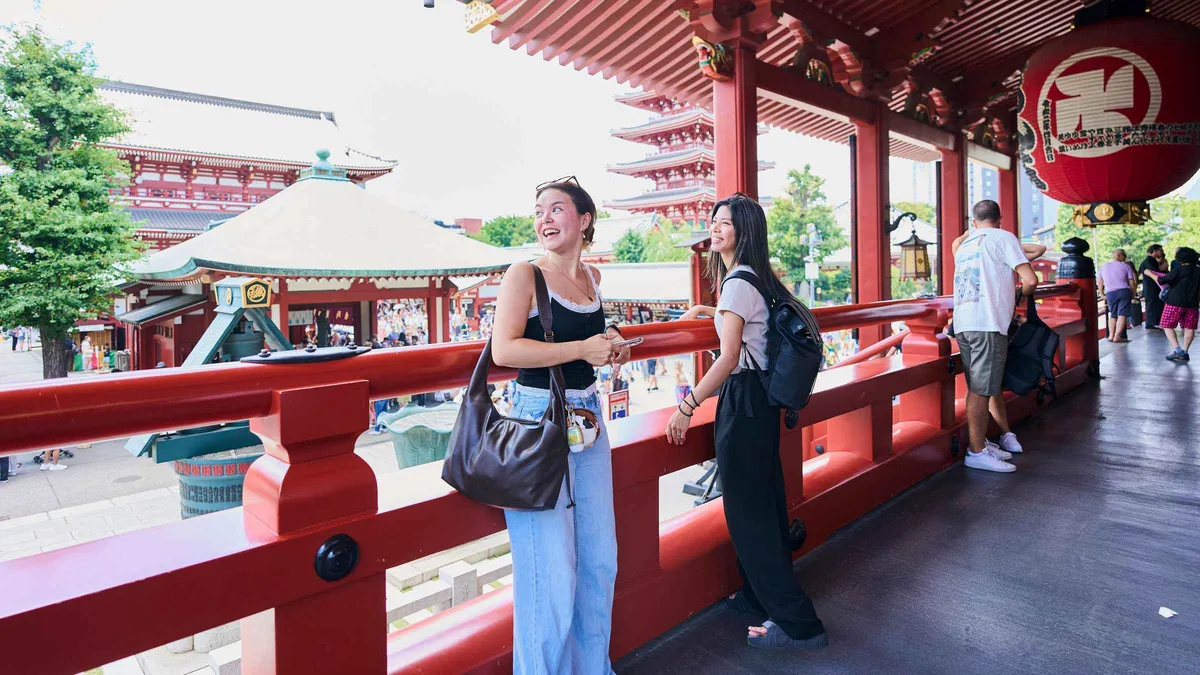 from $12.99
Tokyo: Asakusa & Sensoji ー Oldest Temple Walking Tour (2hrs)
A two-hour Asakusa walk pairing Senso-ji Temple and neighboring Asakusa Shrine with local street food tastings and stops at a knife shop and souvenir stores, guided in English.
Check Availability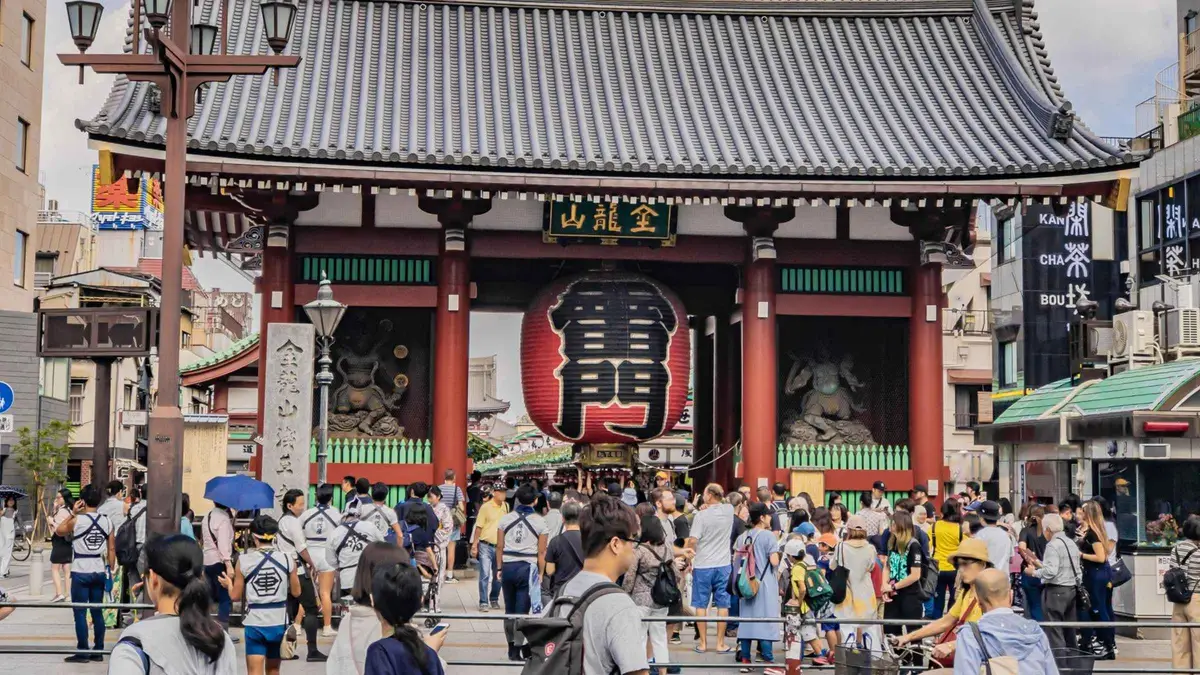 from $18.18
Tokyo: Asakusa Walking Tour with Sensoji Temple Visit
A two-hour guided walk through Asakusa covering Senso-ji Temple, the Thunder Gate and Nakamise Shopping Street, with historical and cultural context from a local guide.
Check Availability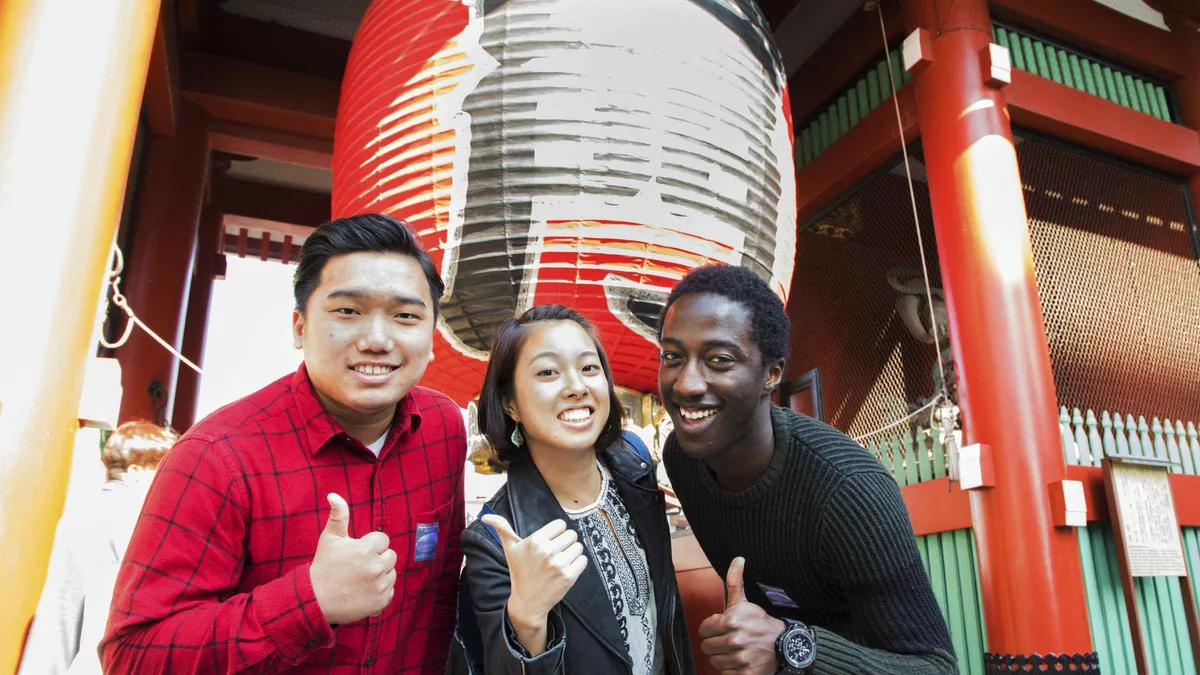 from $40.91
Tokyo: Morning Bus Tour Imperial Palace, Asakusa,Tokyo Tower
A half-day hybrid-bus tour of the Imperial Palace's outer grounds, Tokyo Tower's Main Deck and Asakusa's Senso-ji, with an English-speaking guide and Tokyo Tower admission included.
Check Availability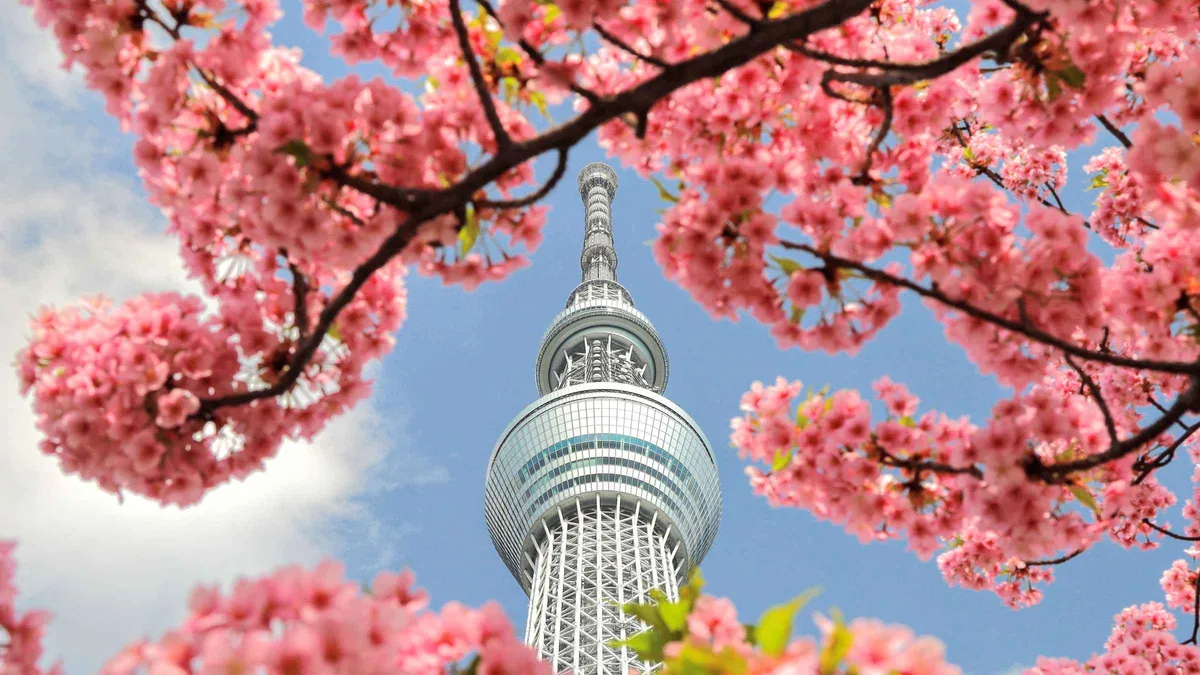 from $123.37
Tokyo: Meiji Shrine, Asakusa, Skytree Bus Tour and Cruise
A full-day coach circuit through Meiji Shrine, Asakusa, Tokyo Skytree and a Tokyo Bay cruise, with skip-the-line Skytree entry, a matcha tasting and an optional Japanese lunch included.
Check AvailabilityPrices, ratings and details are the platform's own, checked in Q3 2026; dollar figures are the listed prices — the platform bills in your account's currency.
What Senso-ji is: a fishing net, a hidden statue and thirteen centuries
The temple tells its own origin story on its own site, and it is unusually specific: a date, two named brothers and a village headman.
628: the statue in the net
Early on 18 March 628, when the capital was still at Asuka in what is now Nara Prefecture, the brothers Hinokuma Hamanari and Hinokuma Takenari were fishing in the Sumida River and brought up a small statue of Kannon, the bodhisattva of compassion. Haji no Nakatomo, the headman of the village that is now this district, recognised what it was, turned his own house into a temple and spent the rest of his life in front of it.
In 645 a priest named Shokai built a proper hall for the image and, following a dream, hid it from view. It has been a hibutsu, a concealed image, ever since. The statue in the middle of the Main Hall is inside a locked miniature shrine that not even the temple's own chief priests open. What visitors bow to is a substitute image, carved in the ninth century by Ennin, head priest of Enryaku-ji, precisely so that there would be something to show.
The shoguns adopt it, and Edo grows around it
In 1590 Tokugawa Ieyasu designated Senso-ji the temple where the shogunate's prayers would be offered and granted it 500 koku of land. Successive Tokugawa shoguns kept up the connection, and belief in this particular Kannon spread through the city with them. Fire took the buildings twice under the shogunate, in 1631 and 1642; the third shogun, Tokugawa Iemitsu, paid for the rebuilding, and the five-storied pagoda went up again in 1648 and the Main Hall in 1649.
In 1685 the temple gave its neighbours permission to trade on the approach in exchange for cleaning the grounds, and the row of stalls that became Nakamise Street was born. By the middle of the Edo period the ground behind the temple, known as Okuyama, held street performers; in the 1840s the city's three licensed theatres moved into the district; and by the Meiji era this was the entertainment quarter of Tokyo, with an amusement park and a twelve-storey tower to prove it.
10 March 1945, and everything you see
The Great Kanto earthquake of 1923 flattened much of the district but spared most of the temple, thanks to a bucket brigade organised inside the grounds. The firebombing raid of 10 March 1945 did not. The Main Hall, a designated national treasure, and the pagoda both burned.
What stands now is a postwar reconstruction paid for by donations: the Main Hall in 1958, the Kaminarimon in 1960, the Hozomon in 1964 and the pagoda in 1973. The temple also left the Tendai school in 1950 and has been the head temple of its own Sho-Kannon sect since. The one building that survived is the Nitenmon on the east side, built in 1649 and now an Important Cultural Property, which is why so few visitors notice the oldest thing on the site. The temple still holds a memorial service in the Main Hall every 10 March for those killed in the raid.
Senso-ji In Ten Dates
Every line below is argued somewhere on this page. The list exists so that the buildings read in order, because almost nothing you can see is as old as the story attached to it.
-
18 March 628
Two fishermen bring up a statue of Kannon
The Hinokuma brothers net the image in the Sumida River and the village headman Haji no Nakatomo turns his house into a temple. The temple still marks the day with the Golden Dragon Dance every 18 March.
-
645
The image is hidden, and stays hidden
The priest Shokai builds a hall and, after a dream, seals the statue from view. It has never been displayed since, which makes the object at the centre of the temple the one thing no visitor has ever seen.
-
Mid-ninth century
Ennin carves the substitute image
The head priest of Enryaku-ji makes a copy so that worshippers have something in front of them. That is the figure the Main Hall shows on the rare occasions anything is shown at all.
-
942
Taira no Kinmasa builds the first gates and pagoda
The military commander is credited by the temple with the original Kaminarimon, the original Hozomon and the first five-storied pagoda. Nothing of that campaign survives.
-
1590
Tokugawa Ieyasu makes it the shogunate's prayer temple
With the grant comes 500 koku of land and three centuries of shogunal patronage that turn a riverside temple into the devotional centre of Edo.
-
1648 and 1649
Iemitsu rebuilds after the fires of 1631 and 1642
The third shogun pays for the pagoda in 1648 and the Main Hall in 1649. The Nitenmon, built in 1649 as the east gate, is the only building from this campaign still standing.
-
1685
The shops on the approach are licensed
Neighbours are allowed to trade on the temple's approach in exchange for cleaning the grounds. Nakamise Street has been a commercial street with a religious landlord ever since.
-
10 March 1945
The firebombing raid destroys the Main Hall and the pagoda
Both were national treasures. The Nishinomiya Inari torii and the shrine buildings moved out of the precinct in 1868 burned the same night.
-
1958
The Main Hall reopens
Rebuilt on donations from across Japan, with a titanium-tiled roof fitted later that keeps the historic profile at a fraction of the weight.
-
1960 to 1973
The gates and the pagoda come back
Kaminarimon in 1960, paid for by Konosuke Matsushita, the founder of what is now Panasonic; Hozomon in 1964 on a single private donation; the pagoda in 1973, holding relics presented by a royal temple in Sri Lanka.
Dates from the temple's own history and precinct pages at senso-ji.jp, read in Q3 2026, cross-read against the Wikipedia article on the temple for the 1631 and 1642 fires and the postwar reconstruction sequence. The two sources name different donors for the 1964 Hozomon rebuild: the temple credits Yonetaro Otani, founder of Otani Heavy Industries and the Hotel New Otani, while Wikipedia names Yonetaro Motoya and puts the sum at 150 million yen. We print the temple's version and flag the disagreement rather than pick a winner.
What to see, gate by gate
The precinct reads as a straight line from the river end: an outer gate, a shopping street, an inner gate, the Main Hall. Everything worth a detour sits a few metres off that axis, which is why most visitors miss all of it.
Kaminarimon, the Thunder Gate
The outer gate is 11.7 metres tall and 11.4 metres wide, and the lantern hanging in the middle of it is the single most photographed object in this half of Tokyo: 3.9 metres tall, 3.3 metres across and about 700 kilograms. The current lantern is the fifth, built in 2013, and its base carries a plate reading Matsushita Denki, the old name of Panasonic, whose founder paid for the gate's 1960 reconstruction after the previous one burned in 1865.
Fujin, the god of wind, stands in the alcove on the east side and Raijin, the god of thunder, on the west; their heads are the originals, saved from the 1865 fire, on bodies restored for the rebuild. The two figures on the back of the gate, Tenryu and Kinryu, were donated in 1978. During the district's big festival the lantern is folded up so that portable shrines can pass underneath.
Nakamise Street, and why the shops shut early
Nakamise Street runs about 250 metres from the Thunder Gate to the inner gate, with roughly 72 shops along it selling fans, prints, sweets, rice crackers and a great deal that has nothing to do with the temple. The trade is licensed, not incidental: the shops have been here since 1685 on the temple's permission.
The street is also the reason the temple looks so different at different hours. The stalls have their own opening times, most of them from mid-morning to early evening, and when they are shuttered the painted panels on the shutters turn the approach into a picture gallery. Two things to know before you eat: the vendors expect you to eat where you bought, not while walking, and the rubbish goes back to the stall that sold you the food, because street bins are close to nonexistent.
Hozomon, the Treasure-House Gate
The inner gate is the big one: 22.7 metres tall, 21 metres wide and 8 metres deep, with two Nio guardians 5.45 metres high on the south face. Its upper storey is a strongroom, which is the point of the name. The temple's copy of the Lotus Sutra, a national treasure, and a complete Buddhist canon in 5,428 scrolls are kept in the fireproof structure built in 1964.
Walk through and turn around. On the back face hang two straw sandals, 4.5 metres long and 1.5 metres wide, weighing 400 kilograms each. The lantern under the centre of the gate is smaller than the famous one at the front but not by much, at 3.75 metres and 400 kilograms, and it was paid for in 2003 by the people of the Kobunacho district whose name it carries.
The Main Hall, the pagoda and the incense
The Main Hall of 1958 is the tallest-roofed thing in sight, and the roof is the detail: dramatically sloped, and retiled in titanium so that the postwar concrete underneath carries less weight. Inside, the hall divides into an inner and outer sanctum, with the hidden Kannon in a locked miniature shrine in the middle of the inner one and two Edo-period calligraphies by Noguchi Sekko flanking the offertory box. Photography of the interior is restricted at the doors, and the signs are the authority, not this page.
The five-storied pagoda opposite went up again in 1973 and holds relics of the Buddha presented by a royal temple in Sri Lanka. Between the two stands the great incense burner, the jokoro. People waft the smoke towards whatever hurts. That is folk practice rather than doctrine, and nobody will mind either way, but do not stub anything out in it and do not lean over it for a photograph while somebody is praying.
The four things almost nobody walks to
The Nitenmon on the east side is the oldest building on the site, put up in 1649 as the temple's east gate and restored to its original form in 2010; it is an Important Cultural Property and it is usually empty of people. Bentendo, on the small mound called Bentenyama, holds a bell recast in 1692 that Basho put in a haiku and that is still rung at midnight on 31 December. Awashimado, moved to its present spot in 1994, served as the temporary Main Hall after the war. And Denboin, the head priest's residence, has a pond garden laid out in the early Edo period and designated a place of scenic beauty. It is closed to the public except for occasional special openings, and appointments to see it are no longer possible; if you find a claim online that you can book it, that claim is out of date.
One building often mistaken for part of the temple stands immediately to the east: Asakusa Shrine, a Shinto shrine that survived the 1945 raid and that runs the district's May festival. It is a separate institution with different manners at the front, and the difference is set out on the temples and shrines hub.
How Much Time To Give Senso-ji
The temple states no visit length anywhere on its site. These three routings are ours, built from the layout of the precinct and the order the halls stand in, and the door-to-door figures include the walk from the station.
The variable is not the temple, it is the approach. The 250 metres of Nakamise Street can take four minutes or forty, and once the shops open in mid-morning the crowd on that street is the crowd people remember from the whole visit. If you are tight for time, walk up the parallel side street to the west, do the halls first and shop on the way back out.
| Routing | What you get | What it skips | Door to door |
|---|---|---|---|
| The short visit | Thunder Gate, the approach at a walking pace, Hozomon, the incense burner and the Main Hall | The pagoda close up, the side halls, the Nitenmon, the garden view and the shrine next door | About 45 minutes from the station barrier and back |
| The full precinct | All of the above plus the pagoda, Bentenyama, Awashimado, the Nitenmon, the Denboin wall and Asakusa Shrine, with time to buy an omikuji | Nothing inside the walls; the rest of the district is a separate walk | Two hours, three if you stop for food on the approach |
| With a guide | A two-hour guided walk covers the gates, the halls and the etiquette, and usually the side streets as well | Whatever the group does not stop at; you can stay on afterwards, since there is no ticket to expire | Two hours with the group, plus as long as you want after it |
Hours, the early morning and the temple after dark
One set of hours governs the Main Hall. Everything else on the site keeps its own, and the temple says so in as many words: hours for the other halls are available on request only. Figures below come from the temple's own site, read in Q3 2026.
There is no closed day. Not one is published for the grounds or for the Main Hall, in any month, which makes this the obvious thing to do on a day when the museums are shut. That day in this city is Monday, and it catches out more visitors than any other planning mistake: the Monday closures page lists what shuts and what does not.
| What | Opens | Closes | Notes |
|---|---|---|---|
| Main Hall, April to September | 06:00 | 17:00 | The doors, not the grounds; the precinct around it is open ground |
| Main Hall, October to March | 06:30 | 17:00 | The half-hour later start is the only seasonal change the temple publishes |
| Grounds, gates and the approach | No stated opening | No stated closing | Walkable at any hour; the buildings are floodlit in the evening |
| Other halls in the precinct | Not stated | Not stated | The temple asks you to phone for them, on 03-3842-0181 |
| Telephone enquiries | 09:00 | 16:30 | Closed Sundays and public holidays |
The two hours that are worth setting an alarm for
Between the Main Hall opening and the shops opening there is a window with no queue at the incense burner, no crowd in front of the lantern and enough light for photographs. In summer that window starts at six. Worshippers use it, so keep out of the line in front of the offertory box and keep your voice down; nobody will object to a camera, but the morning belongs to them.
The other quiet stretch is after the day-trippers go. The gates and the pagoda are lit, the approach is shuttered, and the temple stands almost alone. The temple's site carries a lighting notice page, so the schedule is theirs to change, and we do not print a switch-off time we cannot source.
How to pray here, and what the small things cost
This is a Buddhist temple, not a shrine, and the difference decides what you do with your hands. The full set of manners, including what changes fifty metres east at the shrine, is on the temples and shrines hub.
At the water pavilion, take the ladle in your right hand, rinse the left, swap and rinse the right, then pour a little into a cupped hand for your mouth and finally stand the ladle up so the handle rinses itself. Nothing goes back in the basin, and the ladle never touches your lips.
At the Main Hall, drop a coin in the offertory box, put your palms together and bow. The temple's own instruction is to chant Namu Kanzeon Bosatsu, "I place my trust in Bodhisattva Kannon". Do not clap. Clapping belongs at a Shinto shrine, and half the visitors in front of this hall do it because they did it that morning somewhere else.
Omikuji: the paper fortune, and the famous bad one
The omikuji stalls take a suggested donation of ¥100, about $0.65, for which you shake a numbered stick out of a metal cylinder and pull the matching drawer, one of a hundred. Senso-ji has a reputation for handing out kyo, the bad fortune, more often than most temples, and it does not publish the ratio, so the reputation stays a reputation. It also does not matter: a bad fortune gets folded and tied to the rack beside the stall, which leaves the luck with the temple rather than with you.
English translations are printed on the reverse of the slips.
Goshuin, amulets and the one price we could not source
The temple's calligraphed seal, the goshuin, is issued at Yogodo Hall, which the temple confirms on its precinct pages. What it costs is not published anywhere on the official site, and we are not going to repeat the figure that gets quoted on aggregator blogs; carry small change and ask at the counter. You will need a goshuin book to receive it, which the hall sells.
Amulets are listed by type on the temple's own omamori pages, again without prices in the English material. The rule of thumb that does hold is practical rather than financial: seal counters and amulet counters keep shorter hours than the grounds, generally closing well before the Main Hall does, so leave these for the middle of the day rather than the evening walk.
The dates the temple itself publishes
Senso-ji prints a full annual calendar of services and dances on its own site, which is unusual and useful, because several of these turn an ordinary visit into a spectacle. Dates below are copied from that calendar, read in Q3 2026, and are fixed to the day rather than to a weekend unless the temple says otherwise.
Two of these are worth planning a day around if you are in the city anyway. The Golden Dragon Dance on 18 March and 18 October puts a long gold dragon through the precinct, and the Hozuki market on 9 and 10 July fills the grounds with stalls selling potted lantern plants on the two days when, by tradition, a single visit counts as 46,000.
| Date | What happens | Where |
|---|---|---|
| 31 December to 6 January | New Year services, with the bell rung at midnight on the 31st | Main Hall and Bentenyama |
| Setsubun, early February | Bean-throwing, but without the usual shout of "demons out": the temple's line is that there are no demons near Kannon | Main Hall |
| 10 March | Memorial service for those killed in the 1945 firebombing raid | Main Hall |
| 18 March | Golden Dragon Dance, marking the day the Kannon image was found in 628 | Main Hall and grounds |
| Second Sunday in April, and 3 November | White Heron Dance, a costumed procession through the precinct | Grounds |
| 9 and 10 July | Shiman-rokusen-nichi and the Hozuki market, the days a visit is said to count as 46,000 | Main Hall and grounds |
| 17, 18 and 19 December | Hagoita market, the decorated battledore fair that closes the temple's year | Grounds |
The May festival is the shrine's, not the temple's
The district's biggest event, the three-day portable-shrine festival in mid-May, belongs to Asakusa Shrine next door rather than to Senso-ji, even though it swamps both. The shrine has not published its dates for the following year at the time of writing, and the aggregator dates going around are not confirmed on the shrine's own site, so check with the shrine before booking a trip around it. The streets close to traffic from dawn until late, which is either the reason to come or the reason to stay away.
Five Things Most Visitors Do Not Know About Senso-ji
All five change something practical about the visit, and every one carries the source it came from.
- The statue at the centre of the temple has not been seen since 645. It is a hibutsu, a concealed image, locked in a miniature shrine that the temple states even its own chief priests have not opened; the figure worshippers face is a ninth-century substitute carved by Ennin for exactly that reason [senso-ji.jp, history and principal image pages, read in Q3 2026]. - The oldest building on the site is a side gate most people walk past. The Nitenmon of 1649 survived the 1945 raid and is an Important Cultural Property; the Main Hall, the pagoda and both famous gates are all postwar reconstructions between 1958 and 1973 [senso-ji.jp precinct pages]. - The temple left its own school of Buddhism. Associated with the Tendai school for most of its history, Senso-ji became independent in 1950 and now heads its own Sho-Kannon sect [Wikipedia, Senso-ji, citing the temple's postwar reorganisation]. - Its national treasure is not on the premises. The Hokke-kyo sutra scrolls, a set of ten from the eleventh century, are on loan to the Tokyo National Museum in Ueno, so the temple's single most valuable object is a train ride away [Wikipedia, Senso-ji, cultural properties; Agency for Cultural Affairs listing]. - Nobody publishes what the seal or the amulets cost. The temple names the hall that issues the goshuin but prints no price for it, and its amulet pages list types rather than figures; every number circulating online for either is somebody's memory of a counter, not a published rate [senso-ji.jp, precinct and omamori pages, read in Q3 2026].
At Senso-ji: What To Do, And What Not To
Each line is a decision argued above, in the form you can act on at the gate.
Do
- Arrive before the shops open if you want the approach to yourself, from 06:00 between April and September
- Walk up the parallel side street west of the approach when the crowd on it is three deep, then rejoin at the inner gate
- Turn around after the Hozomon to see the two 400-kilogram straw sandals on its back face
- Eat where you buy on the approach, and hand the wrapper back to the stall that sold it
- Cross to the shrine and the side halls on the east before you leave, where almost nobody goes
- Come on a Monday if the rest of your plan collapsed, since nothing here closes and most museums do
Don't
- Don't clap in front of the Main Hall: this is a temple, and clapping belongs at the Shinto shrine next door
- Don't pay for anything calling itself Senso-ji entry, because the temple has never sold a ticket
- Don't walk and eat along the approach, and don't leave a wrapper on a wall because there are no bins
- Don't lean across the incense burner for a photograph while somebody is using it
- Don't count on seeing the Denboin garden: it is closed to the public and appointments are no longer taken
- Don't plan the visit around the May festival dates you found on an aggregator; the shrine has not confirmed them
How to get there, and which exit
Four separate railways serve the same station name, and all four leave you about five minutes from the Thunder Gate. The lines and the walking figure come from the temple's own access page, read in Q3 2026; fares are the operators' published bands.
The Tokyo Metro Ginza Line, the Toei Asakusa Line, the Tobu Skytree Line and the Tsukuba Express all stop at Asakusa Station, though the Tsukuba Express platform sits several hundred metres west of the others. From the Toei line, exit A4 puts you on the corner nearest the gate. From the Ginza Line, follow the exits signed for the temple rather than for the river, or you will surface on the wrong side of a six-lane road.
What it costs depends on how far you have come, not on which door you use. Tokyo Metro's published single fares run from ¥180 by ticket, ¥178 with an IC card, for the first six kilometres, up to ¥330 by ticket for the longest journeys on the network. Toei's own table starts at the same ¥180 and runs to ¥430. Travel across both operators in one journey and the fares are added together, minus a ¥70 discount for an adult, which is the single most useful fare fact in this city and is buried in a table on the Toei site.
| Ticket | Price | Covers | Worth it when |
|---|---|---|---|
| Tokyo Metro single, 1 to 6 km | $1.17 (¥180), or $1.15 (¥178) on an IC card | One ride within Tokyo Metro | You are coming from anywhere in the central wards |
| Tokyo Metro single, 12 to 19 km | $1.68 (¥260), or $1.63 (¥252) on an IC card | One longer ride within Tokyo Metro | You are crossing the city, for example from the western sub-centres |
| Toei Subway single, 1 to 4 km | $1.17 (¥180), or $1.15 (¥178) on an IC card | One ride on the Toei network, including the Asakusa Line | You are already on a Toei line and not transferring |
| Tokyo Subway Ticket, 24 hours | $6.48 (¥1,000) | Unlimited Tokyo Metro and Toei rides for 24 hours | You are making four or more rides in a day, which a temple-and-tower day usually is |
| Toei and Metro 1-Day Ticket | $7.13 (¥1,100) | Both networks for one calendar day | Your day starts late and ends late, so a calendar day beats a rolling 24 hours |
On foot, on the water and from the tower
The temple sits about 1.3 kilometres west of the base of the tower across the river, an easy walk over Azumabashi bridge that most people do in twenty minutes with a stop for the view. River boats run from the pier by the same bridge, which is a pleasant way to arrive from the bay side rather than a fast one.
Getting around the wider city, including which pass is worth buying and how the IC cards work now, is set out on the getting around Tokyo page; if you are arriving straight from the airport, the Narita route drops you two stops away on the same Toei line.
Senso-ji map: the gates, the halls and the way out
The axis from the Thunder Gate to the Main Hall, the side buildings most visitors miss, and the two crossings that take you on to the river and the tower. Positions are approximate at this zoom, and the temple's own precinct map is linked from its site.
Coordinates for the temple itself are the ones recorded on its Wikidata item, Q615183; the rest are read off the map at street level and are good enough to walk by, not to survey with.
Next stop from the temple gate
Walking figures are ours, taken from the distances rather than from a stopwatch.
The district around it
The kitchenware street, the rickshaws, the old drinking alley and the riverbank all sit within ten minutes of this gate. The district guide covers where to eat and what the area is like once the day-trippers have gone.
You are already in itTokyo Skytree
Cross Azumabashi and keep going east for 1.3 kilometres. Unlike the temple, the tower is timed and priced, and the Skytree ticket options are worth reading before you turn up.
About 20 min walkUeno Park and the national museum
The temple's own national treasure, the Hokke-kyo sutra scrolls, is on loan to the Tokyo National Museum in the park, which is the only place you can see anything of Senso-ji that predates the war.
Two stops on the Ginza LineSenso-ji questions
Is Senso-ji free to enter?
Yes, entirely. The temple publishes no admission fee for the grounds or the Main Hall and sells no ticket of any kind, so anything advertised as entry is really a guide, a costume or transport. The only money that changes hands is voluntary: a coin in the offertory box, a ¥100 donation for a fortune, or a guided walk from about thirteen dollars.
What are Senso-ji hours, and is it ever closed?
The Main Hall opens at 06:00 from April to September and at 06:30 from October to March, and closes at 17:00 all year. No closed day is published for the hall or for the grounds, in any month. The gates and the approach have no stated opening or closing time at all, so the precinct can be walked in the evening when the buildings are lit. That makes this one of the safest things to plan for a Monday, when the museums shut.
How long does it take to see Senso-ji?
The temple states no figure. Our routing is 45 minutes for the Thunder Gate, the approach, the inner gate and the Main Hall, or two hours to add the pagoda, the side halls, the 1649 Nitenmon and the shrine beside it. A two-hour guided walk covers roughly the second version and usually throws in the surrounding streets.
Can you visit Senso-ji at night?
The grounds, yes. The Main Hall shuts at 17:00, but no closing time is published for the precinct, and the temple runs its own floodlighting, announced on a lighting notice page on its site. Evening is the quietest hour to photograph the gates, since the shops on the approach have shuttered and the coach groups have gone. We do not print a switch-off time because the temple does not publish one.
What is Nakamise Street and is it worth walking?
It is the licensed shopping approach between the two gates, about 250 metres long with roughly 72 shops, trading on the temple's permission since 1685. Worth walking once, in both senses: the stalls sell a lot of souvenir tat alongside good rice crackers and sweets, and the side streets a block west have better prices and no crowd. Eat where you buy, and hand your wrapper back to the stall.
What does an omikuji cost at Senso-ji, and what if I draw a bad one?
A suggested donation of ¥100, about $0.65, for a numbered stick and one of a hundred printed fortunes, with English on the reverse. This temple has a reputation for handing out the bad fortune more often than most, and it publishes no ratio to confirm or deny it. If you draw one, fold it and tie it to the rack next to the stall, which leaves the misfortune with the temple. The etiquette hub covers the rest of the ritual.
Is Senso-ji worth visiting if you are also going to Kyoto?
Yes, but for different reasons. Almost everything you see here was rebuilt between 1958 and 1973, so this is not the place to come for old timber; the Nitenmon of 1649 is the exception. What it has instead is scale and continuous use, about 30 million visitors a year by the temple's own count, a licensed shopping street 340 years old and a festival calendar that runs all year. Treat it as a living city temple rather than a monument, and put the quiet, old wood on your Kyoto list.
Where can I find a map of the Senso-ji grounds?
The temple publishes its own precinct guide, hall by hall, on its site, and our map of the gates and side buildings plots the axis from the Thunder Gate to the Main Hall along with the buildings on either side that most visitors walk past.
Where the temple fits in a Tokyo day
It is free, it never closes and it is at one end of a subway line, which makes it the most forgiving fixture in any plan.
The version that works best puts the temple first thing and the tower last: gates and halls between six and eight, breakfast on the approach as the shutters go up, the side streets and the kitchenware shops mid-morning, then the walk over the bridge in the afternoon and a timed slot at the Tokyo Skytree for sunset. That is one train ride for the whole day, and only one thing in it needs booking.
The second version is the salvage plan. If a museum day has collapsed, if the weather has turned or if it is a Monday, this precinct is open, roofed in parts, free and large enough to absorb an afternoon. Pair it with Ueno Park two stops away, and add a shrine or two from the temples and shrines hub if the manners at the water pavilion are the thing you came to understand.
Senso-ji on Film: the Approach, the Gates and the Halls
Three walk-throughs that show what the precinct actually looks like at ground level, including how thick the crowd on the approach gets once the shops are open. Watch one and the geography of gate, street, gate, hall stops being abstract.
THE Asakusa Guide: Sensoji Temple, Must-Try Snacks, and a Secret Bar Street
A ground-level run through the temple and the streets behind it, with the food stalls on the approach shown in daylight.
Video: PiQtour JapanGuide to Sensoji Temple in Asakusa Tokyo, Plus Skytree
Follows the same route this page recommends, temple first and the tower across the river afterwards.
Video: Kensho QuestSensoji Temple Walk, Asakusa Tokyo in 4K HDR
An unedited walk from the Thunder Gate to the Main Hall, useful for judging the crowd and the distances before you go.
Video: LADmobVideos load from YouTube only when you press play.
Reviewed Q3 2026 (July–September 2026); next review Q4 2026. Prices, hours and terms are set by the venue or operator and confirmed at checkout.
We may earn a commission if you book through one of our links, at no extra cost to you. Full affiliate disclosure