 Visit Tokyo Guide
teamLab Planets or Borderless: Which One to Book
Last reviewed 2026-09-09
teamLab Planets or Borderless is usually asked as which is better, and that is the wrong question. The two museums in this Tokyo city guide share a name, a collective and almost nothing else. One is a routed, physical, barefoot walk through rooms containing real water, out on reclaimed land in the bay. The other is a dark, dry, deliberately unmapped maze in the basement of a Minato City tower, where the works move between rooms and finding them is the exhibit. This page compares them on what they are, what you have to wear, how far each one is from where you are staying, what the price tiers cost and who each suits. The first thing to settle: no combined ticket exists, and neither ticket admits you to the other. Yen figures are the venues' own published fares, read in Q3 2026, and the dollar conversions are ours.
Quick answer The difference in one line, the two fares, and the clothing that fails
Book the barefoot museum in Toyosu if you want the visit to be physical: shoes and socks off, water to the knee, mirrored floors, about ninety minutes on a fixed route. Book the maze under Azabudai Hills if you would rather keep your shoes on, be disoriented and leave with photographs, and if a shorter journey matters. Adult entry at both starts at $23.30 (¥3,600) and moves with the date, and there is no combined ticket of any kind.
Key takeaways
- The barefoot museum sells nothing at the door, in any circumstance, while the maze does sell on site at a $1.30 (¥200) surcharge while stock lasts, which is the practical difference on a same-day whim
- Clothing decides the Toyosu visit: trousers that will not roll above the knee are the commonest mistake, and free rental shorts in sizes XS to 6L are lent inside without ever being mentioned at the point of sale
- Travel time is the honest tiebreaker: Azabudai Hills is two minutes from Kamiyacho station and connected underground, while Toyosu is out in the bay and a ten-minute walk from the nearest Metro exit, as the getting around page explains
- Neither has a weekly closing day, so both are reliable on a Monday, and every fare tier for both sits side by side on the teamLab ticket page
- If you want the museum plus a reason to be in the district, the Toyosu market and museum walk and the Azabudai and palace tour each bundle entry with a guide
What Each One Actually Is
Not better and worse. One is a route you walk through with your body; the other is a space you get lost in on purpose.
Toyosu: a route through water, walked barefoot
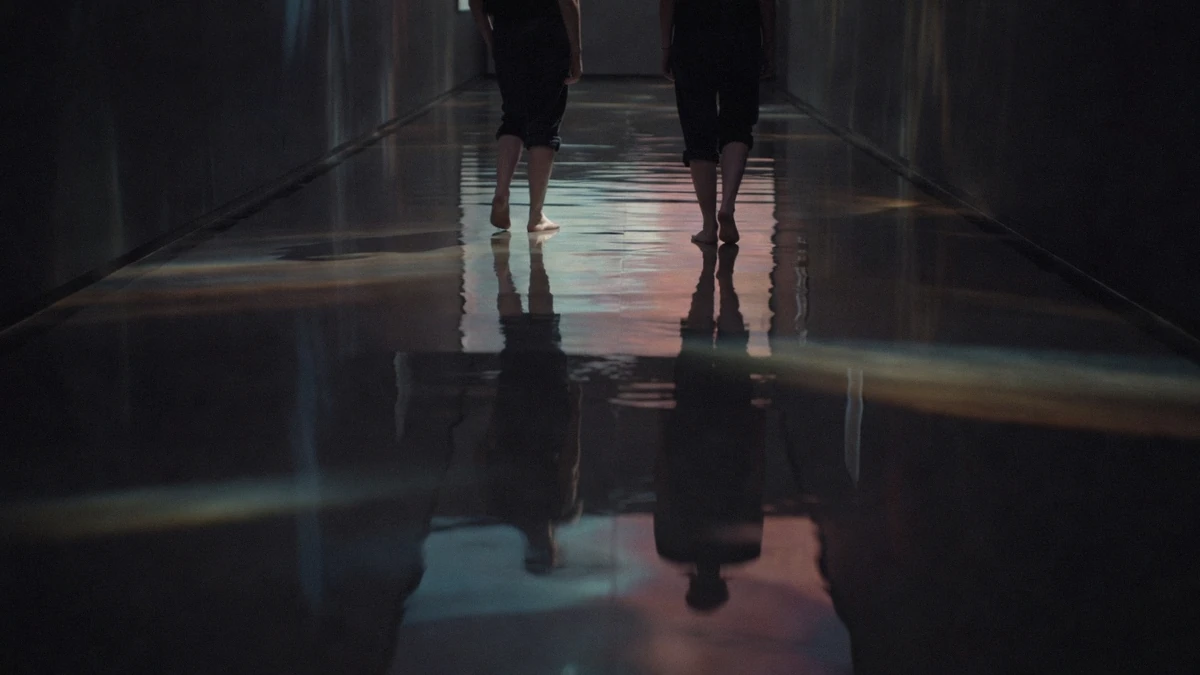
You take your shoes off at the entrance and your socks in the locker room, because several works are walked through in water that reaches knee height on an adult. Drawing on the Water Surface Created by the Dance of Koi and People is the room people come for, where projected koi swim around your legs and burst into flowers when they touch you. The Infinite Crystal Universe is a mirrored hall of hanging light points; Floating in the Falling Universe of Flowers is a domed room where people lie on the floor while flowers open overhead.
The garden half is newer and gets walked too fast. A moss garden of ovoid sculptures sits outside, and the Floating Flower Garden hangs thousands of living orchids that rise as you approach; the room smells strongest after dark, because many of those species partner with nocturnal insects. The Athletics Forest and the children's Catching and Collecting Forest are the physical half, added later. The venue's own published exhibition period runs to the end of 2027, which is the honest answer to whether it is permanent.
Azabudai: a museum that refuses to give you a map
The absence of a floor plan is not an oversight, it is the exhibit. The museum's own answer is that it is a world of art without boundaries and that no maps are provided so visitors experience the art in line with that concept. On the floor this means works do not stay put: a flock of projected birds leaves one room and appears in another, a river of light runs under a doorway and continues on the far side, two works meet in a corridor and interfere with each other. You find things by wandering and you lose them the same way.
Universe of Water Particles on a Rock where People Gather is the waterfall wall you can divert with your body. Bubble Universe is the mirrored sphere room most photographs come from. There is a tea house where flowers bloom inside the bowl as you drink, and a Sketch Ocean where a fish you draw is scanned and released into the projected sea. It sits on basement level one of Garden Plaza B, under a Mori development that opened in 2023, and the museum's own general information calls the term permanent rather than limited.
The Two Venues, Line By Line
Every figure comes off the venues' own ticket and visitor pages, read in Q3 2026: teamlabplanets.dmm.com and teamlab.art for Toyosu, teamlab.art/e/tokyo for Azabudai Hills. Dollar conversions are ours.
| Toyosu, barefoot | Azabudai Hills, the maze | |
|---|---|---|
| Adult entry | From $23.30 (¥3,600), and up to $31.10 (¥4,800) on the dates we read | From $23.30 (¥3,600), with a published range to $36.30 (¥5,600) |
| Teenagers | $18.14 (¥2,800), junior and senior high | $18.14 (¥2,800), ages 13 to 17 |
| Ages 4 to 12 | $9.72 (¥1,500); under threes free | $9.72 (¥1,500); under threes free |
| Priority pass | Premium Pass $77.80 (¥12,000) | Flexible Pass $77.80 (¥12,000), no fixed time |
| Hours | 08:00 to 22:00, last entrance an hour before closing | 08:30 to 21:00 standard, 22:00 on listed dates |
| At the door | Never sold, in any circumstance | Sold on site at a $1.30 (¥200) surcharge while stock lasts |
| Time to allow | 70 to 90 minutes inside, plus 15 for lockers and drying off | 75 minutes for one pass, two hours to wander, three with the tea house |
| Nearest station | Shin-Toyosu, one minute; the Metro exit is a ten-minute walk | Kamiyacho Exit 5, two minutes, connected underground |
Both venues price by date rather than by hour, so a quiet slot costs exactly the same as a busy one. That single fact is worth more than any discount: the first hour of the day at either is a different museum from the middle of a weekend afternoon, at the same fare.
The Clothing That Fails, Venue By Venue
This is the practical half of the decision and the half most guides skip. The two venues fail different outfits, and both publish the rules.
In Toyosu the enemy is water. You go barefoot, the water reaches knee height in places, and the venue's rule is that wet clothing cannot continue into the next artwork: staff ask you to change, and if you have nothing to change into they lend a towel and ask you to dry off. Long trousers that will not roll cleanly above the knee are the commonest mistake in the building, followed by tights, which have to come off in the locker room anyway.
What almost nobody knows before arriving is that the fix is free and unadvertised. Shorts are lent at no charge in sizes XS to 6L, on request from staff inside, and wrap skirts sit beside the mirrored-floor works because skirts and mirrored floors do not combine. Complimentary rental shoes exist for anyone whose sandals have no heel strap. None of this is mentioned at the point of sale, which is why a proportion of every group spends the second half of the route in a towel. The water is chlorinated, with sodium hypochlorite adjusted to standard, which the venue states in the same list as the barefoot rule.
One physical restriction follows from all that water: the koi room refuses anyone with an inseam under 40 centimetres, so most small children go through carried or in a front baby carrier with a guardian of 18 or over.
In Azabudai the enemy is light
You keep your shoes on here and nothing gets wet, but the museum refuses several things at the door that other museums would not notice. Flashing shoes, light-up bracelets and glow sticks are turned away, because they interfere with other visitors' view of light-based works, and that rule catches families with small children more often than anyone else. Drinks without caps, strongly scented items and fresh flowers are also refused. Food cannot come in at all, sweets and chewing gum included, though capped drinks can.
The mirrored floors are here too, so the same wrap skirts are kept beside the works where it matters. Free lockers take anything under fifty centimetres and everything larger, buggies included, goes to the luggage room. Photography and video are welcome at both venues, with no flash at either and nothing over thirty centimetres, so tripods, monopods and long selfie sticks stay in the locker.
Travel Time From The Centre, Which Is The Real Tiebreaker
The fares are within a few dollars of each other. The journeys are not, and the difference is most of an hour on a day that already has a timed booking in it.
Azabudai Hills is central. Kamiyacho on the Tokyo Metro Hibiya Line, Exit 5, is two minutes on foot and Roppongi-Itchome on the Namboku Line, Exit 4, is six, and the museum states that both are linked to the building by underground passage, so you can follow the signs the whole way without surfacing. In a Tokyo August, or in rain, that is not a small thing. Ginza is about ten minutes away on the Hibiya Line and the lattice tower in Shiba-koen is a fifteen-minute walk south.
Toyosu is out on reclaimed land in the bay. Shin-Toyosu on the Yurikamome, north exit, is one minute from the door and is the right answer; Shijoumae, also Yurikamome, is five minutes; Toyosu on the Metro Yurakucho Line, which is the station most visitors will actually reach fastest from central Tokyo, is a ten-minute walk from Exit 7. From Ginza it is four stops on the Yurakucho Line. The Yurikamome is an automated elevated line with a view over the bay, so arriving along it from Shimbashi is worth the extra time on the clock rather than a penalty.
What each journey lets you build around it
That geography decides the shape of the day more than the museum does. Toyosu is not on the way to anything, so it works as an anchor: an 08:00 or 09:00 slot, out by 10:30, then fifteen minutes on foot to Toyosu Market for a very late breakfast, checking first that the market is open, since it shuts on Wednesdays, Sundays and public holidays.
Azabudai works at either end of a day that is happening anyway. An 08:30 slot puts you back on the street by 10:30; a 19:00 slot ends in Roppongi for dinner. What neither venue tolerates is being stacked against another timed booking in the same half day, because both are one-way with no re-entry and neither will guarantee how long the queue at the gate takes.
Prices, Tiers And The Rule Nobody Reads Until It Is Too Late
Both venues price dynamically by date, both sell timed slots, and their cancellation and change rules are not the same. This is where money is actually lost.
Say it plainly first: there is no combined ticket, there has never been one, and neither ticket admits you to the other venue. Anything advertising both is two tickets sold together by a third party.
At Toyosu, tickets are sold online only and never at the door. A ticket bought on the official store can have its date and time changed up to three times, no later than two hours before the slot, and no ticket is refundable, ever. A ticket bought anywhere else cannot be moved at all, which is the real argument for the official store rather than the few yen of difference. Entry is only within the first thirty minutes of your slot.
At Azabudai, same-day tickets are sold through the official site if the date has not sold out, and on site at a $1.30 (¥200) surcharge while stock lasts. Weekend and holiday dates routinely sell out, so that is a fallback rather than a plan. A refund exists only if the museum has an unscheduled closure, and even then it does not cover your transport.
The discounts and the closures
The disability ticket at Azabudai is unusually open: $11.66 (¥1,800) for a certificate holder and one companion, the certificate may be issued by any country, and the Mirailo ID app is accepted in place of a physical card. Both people have to enter at the same time, because the certificate is checked at the gate. Toyosu also prices from $11.66 (¥1,800) with a certificate.
Neither venue has a weekly closing day, and both scatter their closures instead. Reading the two operators' own calendars in Q3 2026, Toyosu is shut on Thursday 1 October and Thursday 5 November 2026, and Azabudai on Tuesday 8 September, Tuesday 20 October and Tuesday 24 November 2026, with an early 17:00 close on 17 November and a run of 22:00 closings through October. Check the date rather than the day of the week, and compare every tier for both on the teamLab ticket page.
Which One, By Who Is Going
If you are a family with children between about six and twelve
the barefoot museum. It has the Athletics Forest and the children's catching and collecting rooms, and getting wet is the point at that age. Check the 40-centimetre inseam rule on the koi room first, and read the Tokyo with kids page for what else works.
If you have a child under about four
still Toyosu, but carried. Under-threes are free at both, the koi room admits small children only in a front carrier, and the maze has no children's zone, a dark uneven floor plan and a rule of one adult per five children.
If you are a couple with one free evening
the maze, at 19:00, with dinner in Azabudai Hills afterwards. It is central, nothing gets wet, and the tea house is inside the ticketed area, so it costs nothing to walk past and see whether there is a queue.
If you are going for photographs
the maze, and go at 08:30. The mirrored halls are the frames everyone recognises and they are ruined by a full room; because the fare is set by date, the empty hour costs exactly the same as the crowded one.
If you want the visit to be physical rather than visual
Toyosu, first slot of the day, and pair it with the fish market fifteen minutes away.
If you use a wheelchair
either, with a call ahead. Both ask you to transfer to a house chair for some works, both cap how many chairs are admitted at once, and the maze publishes its lift dimensions, a 1,000 millimetre entrance and a 1,600 by 1,350 millimetre car.
Ways Into Each Venue, Compared
Four cards, each linking to the seller's own calendar where the live grid shows which slots are still open. Ratings and review counts are the platform's own figures and the prices are the ones listed in Q3 2026.
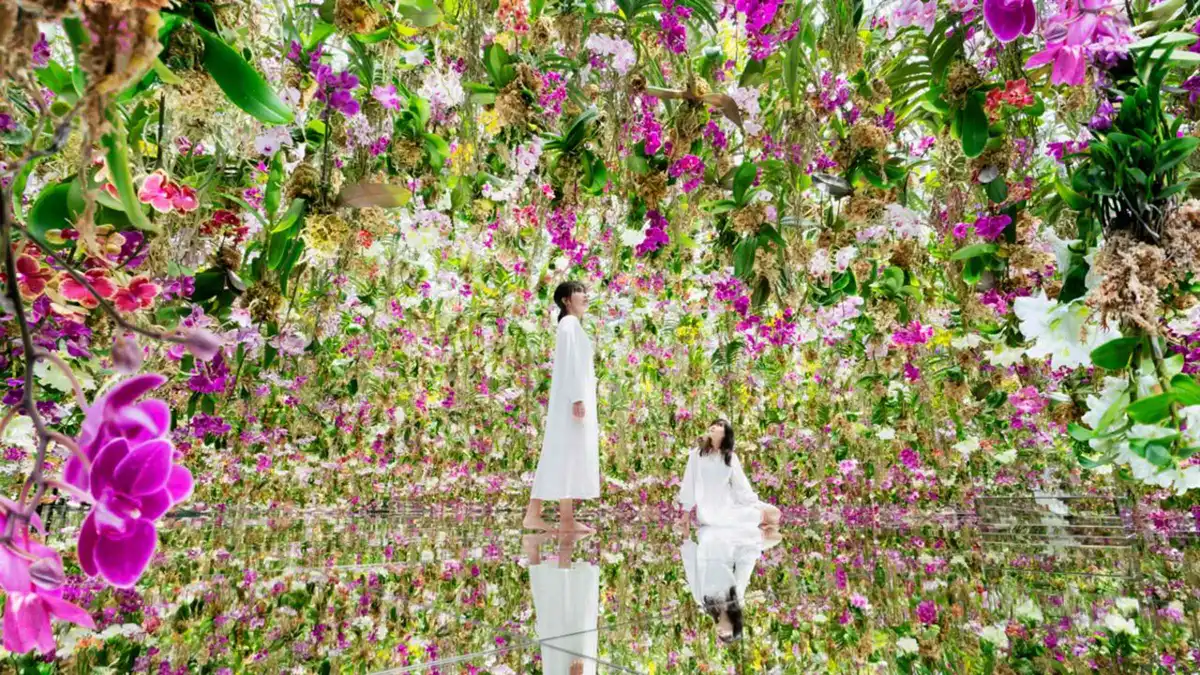 from $24.67
Tokyo: teamLab Planets TOKYO Digital Art Museum Entry Ticket
Entry ticket to teamLab Planets, a barefoot walk-through digital art museum in Toyosu with water rooms and mirrored floors. Self-guided, timed entry, official e-ticket emailed after booking.
Check Availability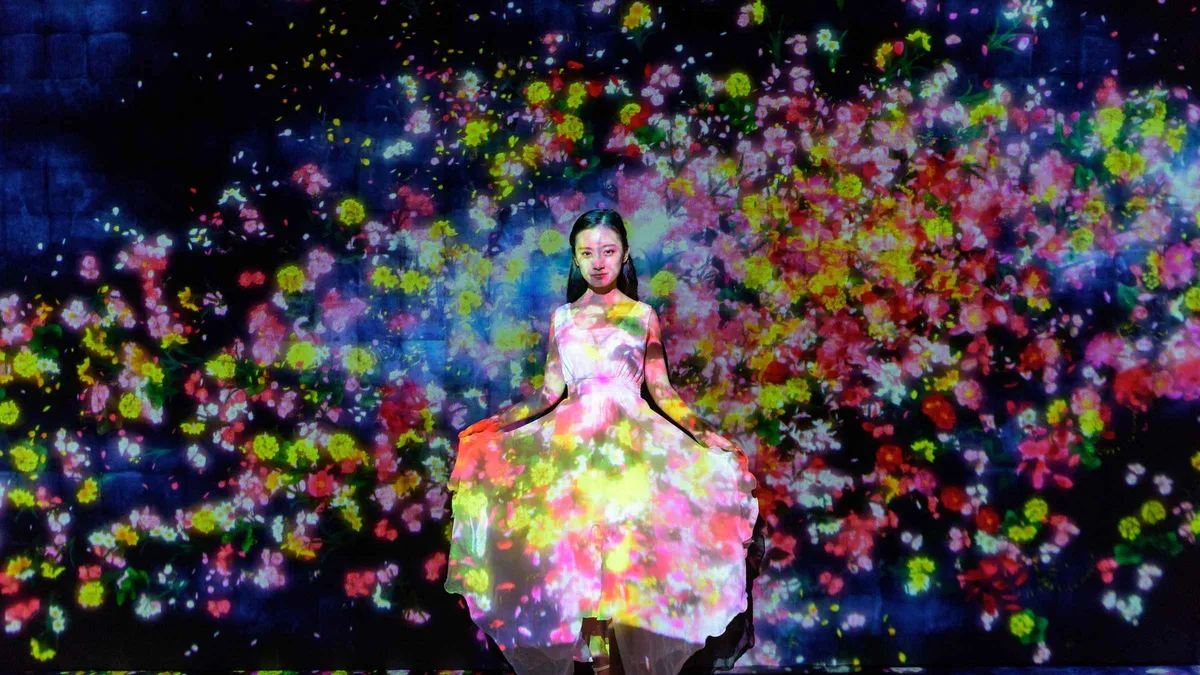 from $122.72
Tokyo: teamLab Planets & Toyosu Fish Market Guided Tour
Guided visit to Toyosu Market and its food stalls, followed by teamLab Planets, with skip-the-line entry and commentary in four languages. For travelers who want the market context a solo ticket skips.
Check Availability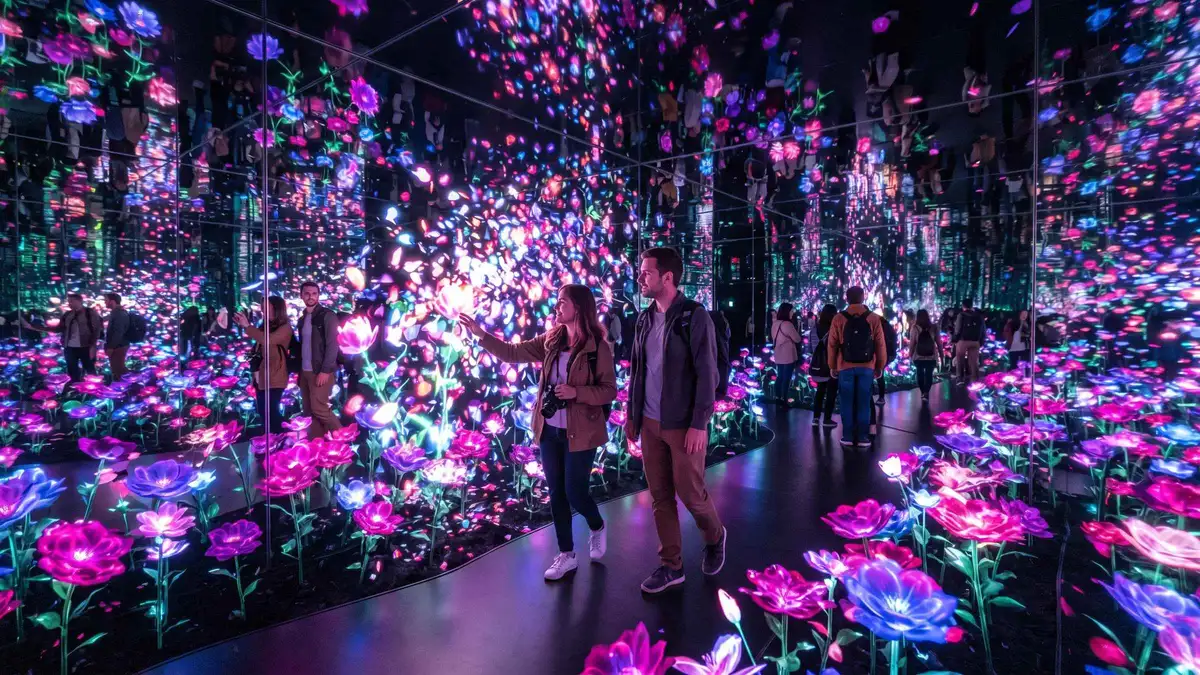 from $121.42
Tokyo: TeamLab Borderless & Imperial Palace History Tour
Pairs 1.5 hours inside teamLab Borderless with a guided walk through the Imperial Palace East Gardens and Nijubashi Bridge. Skip-the-line museum entry included. Suits travelers wanting modern art and Edo-era history together.
Check Availability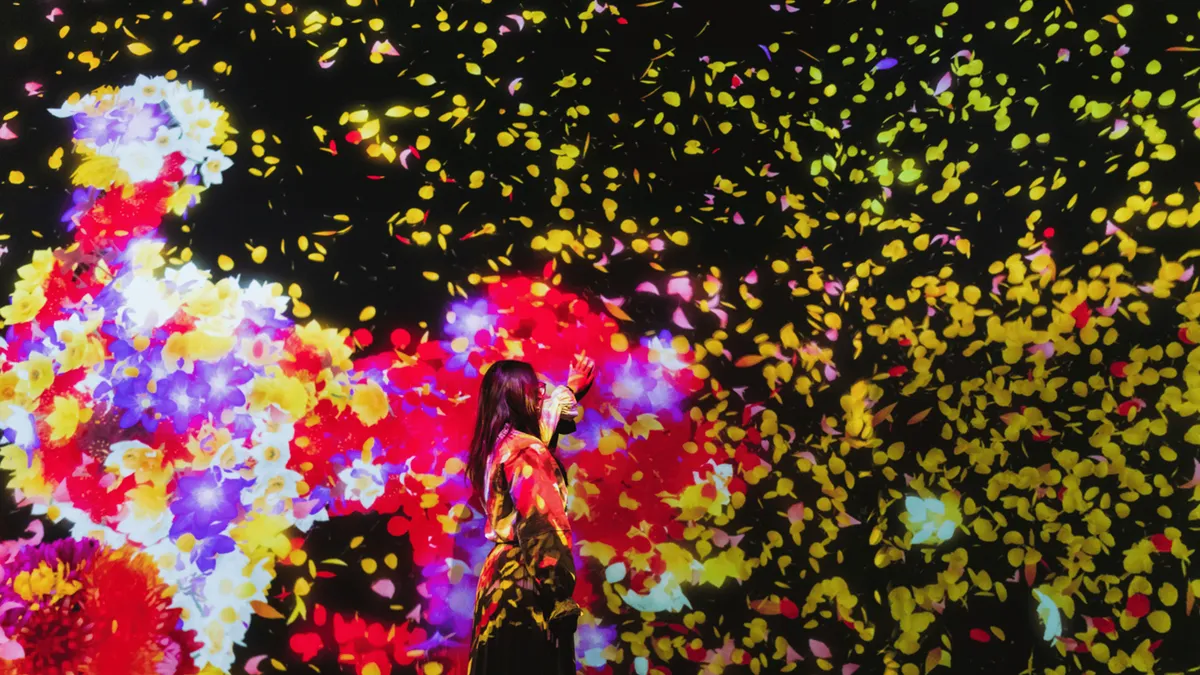 from $155.83
Tokyo: teamLab, Azabudai Hills & National Art Center Tour
Guided walk through Azabudai Hills' teamLab Borderless, then Roppongi Hills' public art and The National Art Center, Tokyo. Skip-the-line museum entry included. Suits travelers pairing digital art with architecture.
Check AvailabilityPrices, ratings and details are the platform's own, checked in Q3 2026; dollar figures are the listed prices — the platform bills in your account's currency.
The Questions People Ask Before Booking Either
Is there a combined ticket for both venues?
No. There is no combined ticket, no discount for doing both and no arrangement between the two sites, and neither ticket admits you to the other. They are separate purchases with separate timed slots, and anything sold as a pair is two tickets bundled by a reseller. Every tier for both is set out side by side on the teamLab ticket page.
Which one should a family with young children book?
The barefoot museum in Toyosu, for children old enough to enjoy getting wet, because it has a physical half built for them and a children's catching and collecting area. The catch is the koi water room, which refuses anyone with an inseam under 40 centimetres unless they are carried in a front carrier. The maze has no children's zone, dark low-ceilinged rooms, uneven floors and a rule of one adult per five children of elementary age or below.
What should I wear if I am doing both?
Shorts or trousers that roll cleanly above the knee for Toyosu, and no tights, because socks come off in the locker room and the water reaches knee height. Free rental shorts from XS to 6L and free wrap skirts are lent inside on request. For the maze, keep skirts away from the mirrored floors, where wrap skirts are also kept, and leave flashing shoes, light-up bracelets and glow sticks behind, since all three are refused at the door.
Which is quicker to reach from central Tokyo?
The maze, by a clear margin. Kamiyacho on the Hibiya Line is two minutes from the entrance and connected underground, and Roppongi-Itchome is six. The barefoot museum is out in the bay: one minute from Shin-Toyosu on the Yurikamome, but a ten-minute walk from Exit 7 at the Metro station most people will actually use. Which passes cover the Yurikamome, which is not a subway, is on the getting around page.
Which one is better for photographs?
The maze, for mirrored halls and the sphere room that most published images come from, and the barefoot museum for anything with water and reflection in it. The variable that matters more than the venue is the hour. Both price by date rather than by time of day, so the first slot in the morning is the same fare as the busiest afternoon and is the only reliable chance of a room without other people in it.
Can I buy a ticket at the door?
At the maze, sometimes: same-day entry is sold on site at a $1.30 (¥200) surcharge while stock lasts, and weekend and holiday dates routinely sell out. At the barefoot museum, never. That venue states that tickets are not sold on site in any circumstance and there are no machines at the entrance, so the entry ticket or the official store is the only way in.
Both Venues On Film, Before You Choose
Three walk-throughs that show what each visit feels like from the inside: a direct comparison, a family-focused reading of the same question, and a third opinion from people who did both.
TeamLab Planets vs Borderless (Tokyo, Japan)
The two venues cut against each other room by room, which is the fastest way to see that they are different in kind rather than in quality.
Video: Yellow ProductionsteamLab Tokyo with Kids: Planets vs Borderless - Which One's Best for Families?
The same decision made with children in tow, including how the water rooms and the dark halls actually work at different ages.
Video: Family Holiday DestinationsTeamLab Planets VS Borderless VS Biovortex | Which One is the BEST???
A third view from a visitor who did both, useful if you are still weighing the barefoot route against the maze.
Video: Hoang PhamVideos load from YouTube only when you press play.