 Visit Tokyo Guide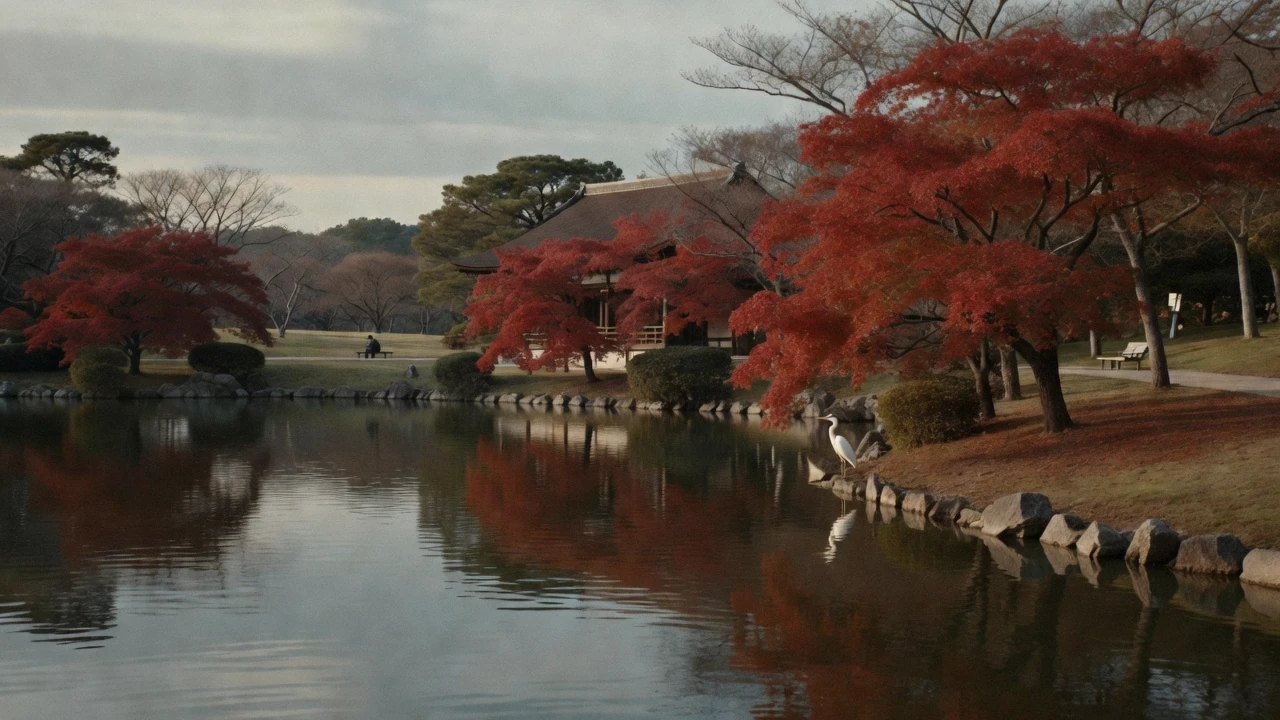
Shinjuku Gyoen
Shinjuku Gyoen is a national garden run by the Ministry of the Environment and open to the public since 1949: 58.3 hectares of former imperial ground on the border of Shinjuku and Shibuya wards, with a French formal garden, an English landscape garden and a Japanese strolling garden inside one fence. It is the rare green space in this city that charges admission, and the charge is the point, because it buys rules the free parks do not have. This page, part of our guide to visiting Tokyo, covers what entry costs, the closed day that is not the same as anybody else's, the greenhouse, the cherry season rules and which of the three gates suits your station; the wider list of what to see in the city is on the things to do hub, and the free alternative across town is the shrine forest.
Quick answer The fee, the closed day, the rules, how long to allow
Entry is $3.24 (¥500) for an adult, paid at the gate or with an advance e-ticket, and children of 15 and under go free. The garden opens at 09:00 every day except Monday, and closes at 16:30 in winter, 18:00 in most of the warm half of the year and 19:00 from the middle of June to the end of July.
Key takeaways
- The Monday closure is real and it moves to Tuesday when Monday is a public holiday. It is suspended entirely in two windows: the cherry blossom season and the November chrysanthemum show, when the garden opens seven days a week. The rest of the city's Monday closures follow different rules again.
- Alcohol is a banned item at the gate, along with pets, drones and bicycles. That single rule is why this garden is calm in cherry blossom season while the free parks are not; the free green spaces are where the parties happen.
- Three gates, three different stations. Shinjuku Gate is ten minutes from the south exit of the main station, Okido Gate is five minutes from Shinjuku-gyoenmae and puts you at the greenhouse door, and Sendagaya Gate is five minutes from Sendagaya. A private guide can join the dots if you want the district as well.
Key facts
Opening hours
| 15 March to 30 September | 09:00–18:00 |
|---|---|
| 11 June to 31 July | 09:00–19:00 |
| 1 October to 14 March | 09:00–16:30 |
| Greenhouse, 15 March to 10 June and 1 August to 30 September | 09:30–17:30 |
| Greenhouse, 1 October to 14 March | 09:30–16:00 |
Closed Mondays, or the following weekday when Monday is a public holiday, and 29 December to 3 January. The garden opens every day during the cherry blossom season, 25 March to 24 April, and during the Chrysanthemum Exhibition, 1 to 15 November
Admission
- Adult
- $3.24 (¥500); $2.59 (¥400) each for groups of 30 or more
- Reduced
- $1.62 (¥250) for students aged 16 and over and for anyone aged 65 and over. An annual passport is $12.96 (¥2,000) for adults and $6.48 (¥1,000) for high school students
- Free
- Children of 15 and under. Also free for a holder of a Japanese physical, intellectual or mental disability certificate plus one caregiver; assistance dogs are admitted
Planning it
- Time needed
- Not stated by the garden; our routing: 90 minutes for one loop of the three gardens, 2 to 3 hours with the greenhouse and a stop for tea
- Book ahead
- Optional — walk-up usually fine
- Address
- 11 Naito-machi, Shinjuku-ku, Tokyo 160-0014
Five ways to pay to get in, with the two official channels first. Admission and passport figures are the Ministry of the Environment's published rates, read in Q3 2026; the guided prices are what GetYourGuide listed on the same day.
There is only one price, so the question is not how much but where you buy it and whether the annual pass is cheaper than the number of visits you are actually going to make.
| Option | Price | What it covers | Where you get it | Book |
|---|---|---|---|---|
| Adult admission at the gateAlmost everyone. There is no reason to buy ahead unless you are coming on a spring weekend. | $3.24 (¥500); $1.62 (¥250) at 65 and over or student 16 and over; under 16 free | The whole garden, including the greenhouse and the exhibition rooms | Any of the three gates; a transport IC card is accepted at the entry gates | Official site |
| Advance e-ticketAnyone arriving at a busy hour or in cherry season, when the counter queue is the only queue in the place. | $3.24 (¥500), the same price as the gate | The same admission, scanned as a QR code at the gate reader | Asoview, operating the ticket on behalf of the Ministry of the Environment; valid six months from purchase | Official site |
| Annual passportAnyone staying in the city for months. Four visits pay for it, and it is not issued on free admission days. | $12.96 (¥2,000) adult, $6.48 (¥1,000) high school student | A year of visits from the date of issue, with your photograph on it | Ticket counters on open days, from 09:00 until an hour before closing | Official site |
| Private custom walking tour with a local guideVisitors who want the garden explained alongside the surrounding district rather than on its own. | $58.12 (about ¥9,000) | A guide for a half day, pointed wherever you like; garden admission is not included | GetYourGuide, rated 4.7 from 731 reviews | Check Availability |
| Evening food tour of the surrounding districtAnyone pairing an afternoon in the garden with dinner, since the garden shuts long before the district does. | $85.71 (about ¥13,200) | Fifteen dishes across four places, after the garden has closed for the day | GetYourGuide, rated 4.9 from 3,419 reviews | Check Availability |
Yen converted at ¥1,000 to $6.48. Nothing sells a guided tour of the garden itself. The garden runs its own free guided tours instead, including greenhouse walks and behind-the-scenes tours of the growing houses, announced on its own tour page rather than sold anywhere. The advance e-ticket is not a discount and not a fast track; it removes the counter queue, and that is all it claims to do.
What is actually bookable around Shinjuku Gyoen
None of these is a ticket to the garden, because admission is a $3.24 counter transaction and no operator resells it. What is bookable is a guide for the district around it and an evening after it closes. Ratings and prices are the platform's figures as listed in Q3 2026.
 from $58.12
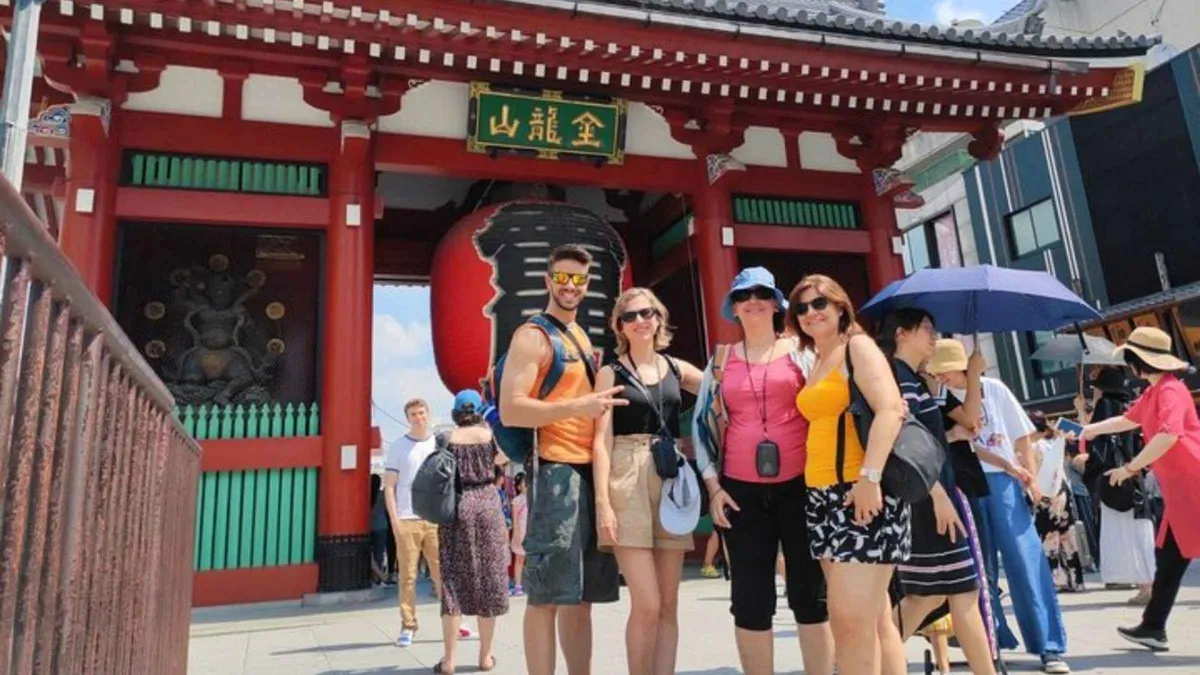
Tokyo: Private Custom Walking Tour with Local Guide
A private, fully customizable walking tour with a local guide who tailors the route to your interests, from landmarks to hidden neighborhoods, suited to families, couples or solo travelers wanting flexibility.
Check Availability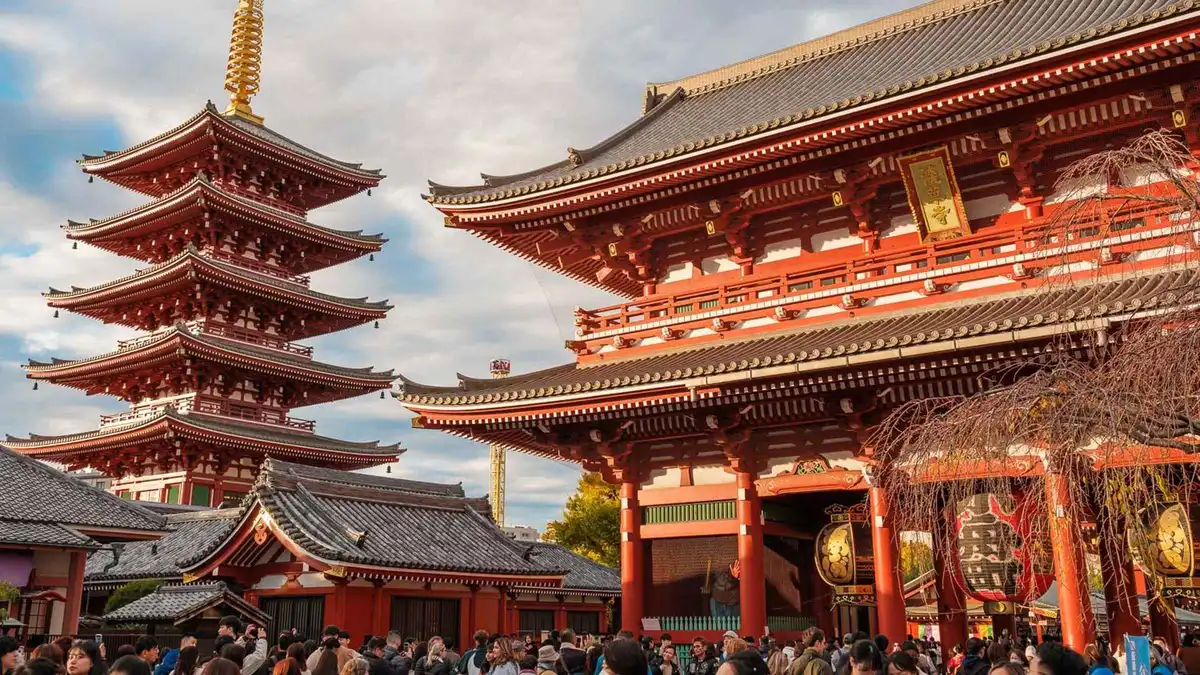 from $58.44
Tokyo: Private Walking Tour with a Local Guide
A private walking tour shaped around your own picks, from famous landmarks to quiet temples and local neighborhoods, with temple entrance fees on the agreed route and hotel pickup included.
Check Availability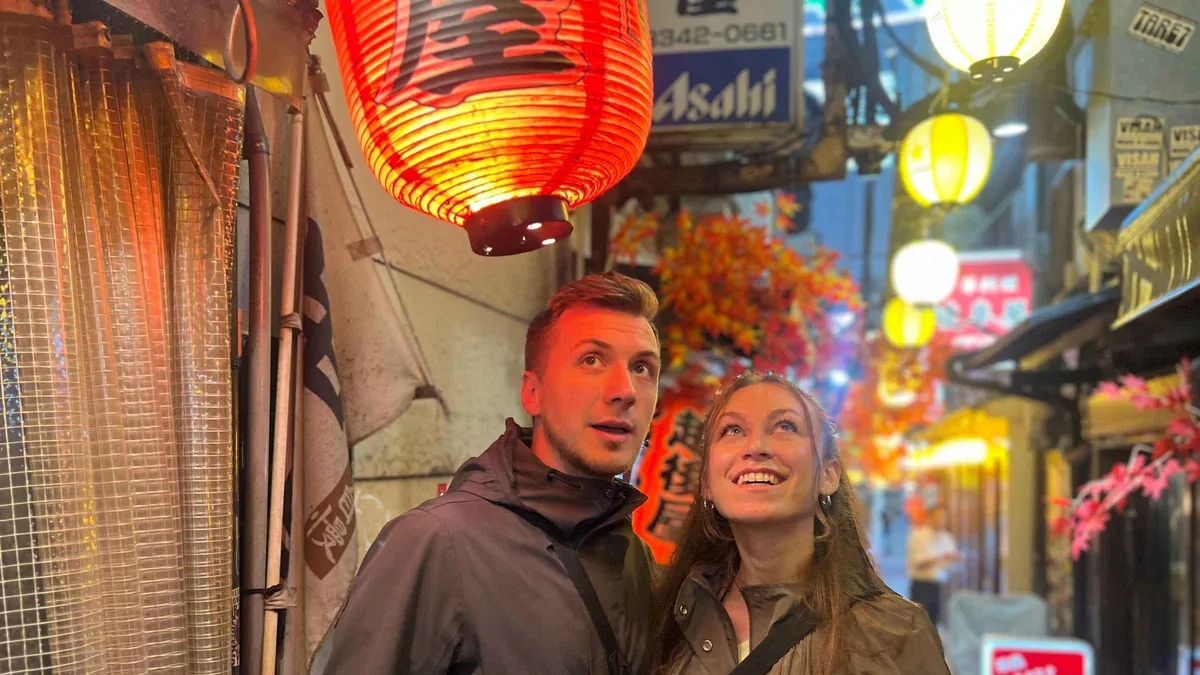 from $85.71
Tokyo: Shinjuku Food Tour (15 Dishes and 4 Eateries)
A three-hour small-group walk through Shinjuku's Omoide Yokocho and Kabukicho backstreets, stopping at four eateries for around 13 Japanese dishes and two drinks with an English-speaking local guide.
Check AvailabilityPrices, ratings and details are the platform's own, checked in Q3 2026; dollar figures are the listed prices — the platform bills in your account's currency.
What Shinjuku Gyoen Is: A Daimyo Garden That Became A National One
The garden has changed hands more often than almost anything else in the city, and every owner left something in it.
The ground was granted in 1590 by Tokugawa Ieyasu to a Naito lord for his Edo residence, and the Naito family finished a garden on it in 1772. After the Meiji Restoration the house and its grounds became an experimental agricultural station, then in 1879 the Shinjuku Imperial Botanical Garden. In 1901 the head gardener asked Henri Martinet of the national horticultural school at Versailles to remodel it as a landscape garden, and the layout you walk today opened in May 1906 with Emperor Meiji present.
Almost all of it burned in the 1945 air raids, with the Taiwan Pavilion the notable survivor, and it reopened to the public on 21 May 1949 as a national garden.
The numbers the garden publishes about itself
This is a big place by central Tokyo standards, and the figures explain why a quick look does not work.
- 58.3 hectares, or 145 acres, with a perimeter of 3.5 kilometres.
- About 10,000 trees, among them the tulip trees, sycamores, Himalayan cedars and bald cypresses that give the lawns their scale.
- About 900 cherry trees of roughly 70 varieties, which is why the blossom season here runs for weeks rather than days.
- 140 endangered plant species conserved inside the garden, which is part of its job as a member of the national botanical garden conservation network.
- Around 2,820,000 visitors in 2025, on the garden's own count.
The other thing to know is jurisdiction. This is not a city park. It passed to the Environment Agency in 1971 and to the Ministry of the Environment when that succeeded it in 2001, and it is managed day to day with the National Gardens Association.
That is why the rules are written the way they are, why the fee exists, and why a Monday closure applies to a garden at all.
Shinjuku Gyoen In Nine Dates
Nine dates that explain what you are walking through, in the order they happened.
-
1590
Tokugawa Ieyasu grants the land
The ground goes to a Naito daimyo for his residence in Edo. The garden's address, Naito-machi, still carries the family name.
-
1772
The Naito family completes a garden
The first deliberate landscape on the site, and the ancestor of the Japanese garden in the south of the grounds.
-
1872
It becomes an agricultural experiment station
After the Meiji Restoration the house and grounds are converted into the Naito Shinjuku Experimental Station.
-
1875
The first greenhouse
A modest glass building of 100 square metres, put up while the site was still an experimental station under the Ministry of Home Affairs.
-
1901 to 1906
Henri Martinet redraws the garden
The landscape architect from the horticultural school at Versailles is commissioned; the present layout opens in May 1906 with Emperor Meiji attending. The Japanese garden is developed into its present form in 1903.
-
1945
The air raids
Most of the garden and the greenhouse burn. The Taiwan Pavilion survives.
-
21 May 1949
It opens to the public
Rebuilt after the war and opened as Shinjuku Gyoen National Garden. This is the date the place became something anyone could walk into.
-
1958
A new greenhouse
Rebuilt as one of the largest in Asia at the time, then expanded repeatedly, and comprehensively remodelled in 2012 as an environmentally efficient conservation house.
-
1971 and 2001
Jurisdiction moves to the environment ministry
First to the Environment Agency in 1971, then to the Ministry of the Environment when it succeeded the agency in 2001, where it remains.
Dates from the Ministry of the Environment's own history, overview and greenhouse pages for the garden at policies.env.go.jp, read for this guide in Q3 2026, with the Naito grant and the 1949 public opening as recorded in the English Wikipedia article on the garden.
What To See: Three Gardens Inside One Fence
The reason to pay is that this is three designs rather than one park, and they are laid out so you cross between them.
The Formal Garden is the symmetrical one: two long plots of grass edged with rose beds and clipped hedges, some 500 rose bushes of 100 species, flanked by about 160 sycamores planted in eight straight rows. In late autumn those rows turn gold, and they are the best thing in the garden in November after the chrysanthemums.
The Landscape Garden and the Vista
North of the formal beds the ground opens into a wide lawn scattered with tulip trees and Himalayan cedars, with cherry trees around its edges. The sightline that runs from the Formal Garden straight through this lawn is called the Main Vista, and it was in Martinet's design from the beginning: the deepest and least obstructed view in the garden, and the reason the lawn is not planted across. It is also the one place in central Tokyo where you can see the towers of the district over a horizon of grass rather than between buildings.
The Japanese garden, the teahouses and the pavilion
The southern third is a strolling garden around the Upper Pond, originally created as an imperial duck habitat and brought to its present form in 1903. In it stand the Chinese-style Kyu-Goryo-Tei, the pavilion that survived the war, and two teahouses, Rakuu-Tei and Shouten-Tei. Shouten-Tei serves matcha and Japanese sweets with a view over the pond, and there is a Starbucks by the Middle Pond for anyone who would rather have coffee.
The chrysanthemum exhibition held here each November continues an imperial tradition and is the second of the garden's two seven-day-a-week seasons.
- The Old Imperial Rest House, Kyu-Gokyu-Sho, is open on garden days and free to enter.
- The Shinjuku Gyoen Museum inside the grounds covers the garden's history with audio and visual displays, included in your admission.
- The Information Center at the Shinjuku Gate holds the National Parks Discovery Center, with a theatre and an art gallery, also included.
How Much Time To Give Shinjuku Gyoen
The garden publishes no visit length, so these three routings are ours, built from the 3.5-kilometre perimeter and the positions of the three gates.
The variable is which gate you come in by, because the three gardens sit in a line and you will not want to walk back. Enter at Shinjuku Gate and the sequence runs formal, landscape, Japanese, and you leave at Sendagaya. Enter at Okido and you hit the greenhouse first, which is the right order on a hot or wet day and the wrong one on a fine afternoon.
| Routing | What you get | What it skips | Door to door |
|---|---|---|---|
| The short visit | In at Shinjuku Gate, the Formal Garden, the Main Vista across the lawn, out the same way | The Japanese garden, the greenhouse and both teahouses | About 60 minutes including the ticket counter |
| The full loop | All three gardens end to end, the greenhouse, the Old Imperial Rest House and a stop at a teahouse, entering at Shinjuku Gate and leaving at Sendagaya Gate | Nothing, though the last half hour is lawn rather than incident | Two and a half to three hours, more in blossom season |
| With a guide | A private guide at $58.12 covers the garden and the district around it; the garden's own free guided tours of the greenhouse are announced on its tour page and cost nothing | The private tour does not include the $3.24 admission, which you pay at the gate | Half a day, of which the garden is roughly two hours |
Hours, The Closed Day And The Two Seasons That Suspend It
Three sets of opening hours, one closed day that moves, and two windows a year when the closed day does not apply. All of it is from the ministry's own visitor information page, read in Q3 2026.
Note the last entry as well as the closing time: the gates stop admitting thirty minutes before the garden closes, and in a place with a 3.5-kilometre perimeter that half hour matters more than it sounds.
| Period | Open | Last entry | Greenhouse |
|---|---|---|---|
| 15 March to 10 June | 09:00 to 18:00 | 17:30 | 09:30 to 17:30, last entry 17:00 |
| 11 June to 31 July | 09:00 to 19:00 | 18:30 | 09:30 to 18:30, last entry 18:00 |
| 1 August to 30 September | 09:00 to 18:00 | 17:30 | 09:30 to 17:30, last entry 17:00 |
| 1 October to 14 March | 09:00 to 16:30 | 16:00 | 09:30 to 16:00, last entry 15:30 |
| Closed | Mondays, or the next weekday when Monday is a public holiday, plus 29 December to 3 January | n/a | Closed on the same days as the garden |
One thing worth checking against older guides
The hours above are what the ministry publishes now. Several widely read pages, including the encyclopedia entry for the garden, still print an older set that closed the garden at 17:30 in the warm season and 16:00 in winter. If you are working from a guidebook, you have half an hour more than it thinks in summer and half an hour more in winter too.
Check the official page before you plan a late arrival, because this is exactly the sort of figure that changes without an announcement.
The exceptions to the Monday closure
The garden opens every day, Mondays included, through the cherry blossom season from 25 March to 24 April, and through the Chrysanthemum Exhibition from 1 to 15 November. Those are the only two annual suspensions. Outside them, a Monday visit is not possible, which makes this one of the traps of a short Tokyo trip: the free parks are open and this one is not, and it does not share the closed day of the government building observatory or of the imperial gardens either.
The Greenhouse: A Thousand Kinds Of Plant, And A Reason To Come In The Rain
It is included in your admission, it is directly inside the Okido Gate, and it is the answer to a wet afternoon in this city.
The present glass building holds about 1,000 kinds of plant on display across roughly 2,750 square metres, and around 2,700 varieties in total once the growing houses behind the scenes are counted. The exhibits are laid out by habitat: tropical lowland and mountain plants, the flora of Okinawa, and an arid-region section. It is warm, it is dry, and it is the only part of the garden that works in weather.
It has been growing plants here since 1875
The first greenhouse on the site was a 100-square-metre glass box built in 1875, when the garden was still an agricultural experiment station. A heated Western-style house followed in 1892, which made orchids and other tropical plants possible, and in the early twentieth century a great many hybrids carrying the name of the district were bred here. Some of those crosses, including ones registered as Cattleya Shinjuku and Laelia Shinjuku, are still on display.
The 1945 raids destroyed the lot; the replacement opened in 1958 as one of the largest greenhouses in Asia at the time, and the current building is its 2012 remodelling as a conservation facility.
The garden's staff run free guided tours of the greenhouse each month, and separate tours behind the scenes into the growing houses that are normally closed, covering the cultivation of rare orchids and endangered plants. Dates go up on the garden's guided tours page rather than being sold anywhere, so there is nothing to book and nothing to pay beyond the $3.24 admission.
The Rules Here Are Not The Rules In A Tokyo Park
This is the part of the page that will change your plan. The garden publishes a long list of prohibited items and prohibited activities, and the list is enforced at the gate.
Alcohol is a banned item. Not discouraged, not restricted to certain areas: it is first on the garden's list of things that may not be brought in, alongside pets other than assistance dogs, plants, bicycles, drones, insect nets and cages, household rubbish and dangerous articles. If your picture of blossom season in Tokyo involves a blue tarpaulin and a crate of beer, that picture belongs in a free park and not here.
What you may not do once you are inside
The prohibitions go well beyond drink, and they are the reason the lawns look the way they do.
- No ball games, badminton, frisbees, boomerangs, kite-flying or rope-jumping; no roller skates, scooters or skateboards; no radio-controlled aircraft or cars.
- No jogging except on the marked route, never in a group of ten or more, and not at all during the cherry blossom season including the spring special opening from 25 March to 24 April.
- No bonfires, portable stoves or anything with a flame; no musical instruments, loudspeakers or whistles.
- No smoking anywhere at all, electronic cigarettes included, and that covers the promenade and the car park as well as the garden.
- No tents or parasols. The single exception is a children's tent with sides of 150 centimetres or less, in the Kids Area only, between 7 May and 31 October, to keep small children out of the heat.
- No occupying a bench or a patch of lawn for a long stretch, and no swimming or paddling in the ponds and the moat.
The photography rule that catches people out in spring
During the busiest periods, meaning the cherry blossom season and the chrysanthemum exhibition, you may not bring professional camera equipment in to photograph or film specific people. Taking pictures for money is prohibited at any time of year, as are paid workshops of any kind, from photography to yoga to sketching. If you are planning a portrait session under the blossom, this is not the garden for it, and the rule is published in English on the garden's own page rather than being a matter for interpretation at the gate.
Five Things Most Visitors Do Not Know About Shinjuku Gyoen
All five come off the garden's own published pages, and each one changes something practical about the visit.
- The closing time is later than most guides say. The ministry now publishes 18:00 in the warm season and 16:30 in winter, where the widely copied older figures are 17:30 and 16:00; a summer evening here is a full hour longer than a guidebook from a few years ago will tell you [policies.env.go.jp visitor information, read in Q3 2026]. - The annual pass pays for itself in four visits. It costs $12.96 (¥2,000) against a $3.24 single, is issued at the ticket counters with a photograph taken on the spot, and cannot be issued on a free admission day [policies.env.go.jp visitor information]. - A transport IC card works at the gate. The garden accepts the same card you tap into the subway with, which is not true of every small attraction in this city [policies.env.go.jp visitor information]. - There are coin lockers at all three gates, at ¥300 and ¥500, plus free wheelchairs available at each gate and at the service centre without a reservation, which makes this an unusually easy stop between a hotel and a train [fng.or.jp access page and universal design page]. - The gravel is deliberate, and the garden says so. The paving in the Formal Garden and the Japanese Traditional Garden is part of the historic landscape design, and the garden states publicly that it is still working out how to make those paths easier for wheelchair users without losing it; a universal design map marks every slope, step and difficult surface [policies.env.go.jp universal design page].
At Shinjuku Gyoen: What To Do, And What Not To
Every line here is a decision argued somewhere above, compressed into the form you can act on that morning.
Do
- Check the day of the week first: Monday is closed, and Tuesday is closed instead when Monday is a public holiday
- Buy the advance e-ticket if you are coming on a spring weekend, and tap the QR code at the gate reader
- Enter at Shinjuku Gate and leave at Sendagaya Gate, so the three gardens come in order and you never walk the same path twice
- Go straight to the greenhouse in bad weather; it is inside the Okido Gate and included in the price
- Take the free wheelchair from any gate if you need one, and download the universal design map before you go
- Leave the bag in a gate locker at ¥300 or ¥500 rather than carrying it round 3.5 kilometres
Don't
- Don't bring alcohol; it is a prohibited item at the gate and this is not a hanami party garden
- Don't plan to jog here in blossom season, and never in a group of ten or more at any time of year
- Don't bring a tent, a parasol or a portable stove; the only exception is a small children's tent in the Kids Area in the warm months
- Don't arrive half an hour before closing: the gates stop admitting thirty minutes early and the greenhouse closes earlier still
- Don't book a professional photo shoot under the cherry trees; paid photography is banned and pro equipment is restricted in peak season
- Don't smoke anywhere, including the promenade and the car park, and that includes electronic cigarettes
Every rule above is published in English on the garden's own rules and visitor pages, read in Q3 2026.
The Three Gates, And Which Station Suits Each
Shinjuku Gate, Okido Gate and Sendagaya Gate are on three different sides of the garden, and picking the wrong one adds a twenty-minute walk. Station-to-gate times below are the garden's own.
The default is Shinjuku Gate, because that is where the Information Center and most of the ticket counters are and because it opens onto the Formal Garden. But it is also the furthest from a subway exit if you are coming underground, and the ten-minute walk from the main station's south exit runs through the busiest pedestrian ground in Japan.
| Gate | Nearest station and exit | Walk | Use it if |
|---|---|---|---|
| Shinjuku Gate | JR, Keio or Odakyu, Shinjuku Station south exit | 10 minutes | You are arriving on a JR line, or you want the Information Center and the Formal Garden first |
| Shinjuku Gate | Tokyo Metro Marunouchi Line, Shinjuku-gyoenmae, exit 1 | 5 minutes | You are on the Marunouchi Line and want the standard route through the garden |
| Shinjuku Gate | Fukutoshin Line Shinjuku-sanchome E5, or Toei Shinjuku Line C1 and C5 | 5 minutes | You are coming from the south of the city, including from the shopping districts |
| Okido Gate | Tokyo Metro Marunouchi Line, Shinjuku-gyoenmae, exit 2 | 5 minutes | You want the greenhouse first, or it is raining and you want it at all |
| Sendagaya Gate | JR Chuo-Sobu Line, Sendagaya Station | 5 minutes | You are finishing here and heading east, or starting from the Japanese garden end |
Two practical notes. Barrier-free routes from each of those stations to each gate are published by the garden, including from the Marunouchi and Fukutoshin exits with lifts. And do not drive: the car park has 200 spaces, entry runs from 07:30 to 21:00, and a visitor pays ¥600 for the first two hours up to a daily maximum of ¥2,900, which is a great deal more than the train costs. The transport page has the fares and the cards.
Shinjuku Gyoen map: the three gates and what is next door
The three entrances, the greenhouse and the places within a short walk of the garden fence.
Gate positions are from the garden's own access page and OpenStreetMap; walking times are the garden's published figures where it gives them, and our estimates otherwise.
Next stop from the garden gate
Which gate you leave by decides what you do next, which is worth deciding before you go in.
Shinjuku
Out of the north gate and into the loudest district in the city. The district guide covers the alleys and the food streets, and an evening food tour starts after the garden has shut for the day.
10 min walk from Shinjuku GateTokyo Metropolitan Government Building
The free observation decks on the west side of the station. The observatory keeps its own closed days, which are not the garden's Monday, so the two make a reliable pair.
About 10 minutes by train and footMeiji Jingu
The free version of a walk in the trees, open every day of the year and from sunrise. The shrine forest has no admission, no closed day and no rules about tents, because nobody picnics in it.
About 15 minutes by trainShinjuku Gyoen questions
Is Shinjuku Gyoen free?
No. Adult admission is $3.24 (¥500), which is what separates it from the free parks nearby. Students of 16 and over and visitors of 65 and over pay $1.62 (¥250), children of 15 and under go free, and a holder of a Japanese disability certificate enters free with one caregiver. If you want green space at no cost, the free things to do page lists the alternatives.
What are Shinjuku Gyoen opening hours?
09:00 to 18:00 from 15 March to 30 September, 09:00 to 19:00 from 11 June to 31 July, and 09:00 to 16:30 from 1 October to 14 March. Last entry is always thirty minutes before closing, and the greenhouse opens at 09:30 and shuts earlier than the garden. Several guidebooks still print an older, earlier set of closing times.
Is Shinjuku Gyoen open on Monday?
No, except in two windows a year. It closes on Mondays, or on the Tuesday when Monday is a public holiday, and from 29 December to 3 January. It opens every day during the cherry blossom season from 25 March to 24 April and during the Chrysanthemum Exhibition from 1 to 15 November. The rest of the city's closures are on the Monday page.
Can you drink alcohol in Shinjuku Gyoen?
No. Alcohol heads the garden's list of items that may not be brought through the gate, along with pets other than assistance dogs, drones and bicycles. Tents, parasols and portable stoves are banned too, and smoking is prohibited everywhere including the car park. That is the trade the $3.24 buys: no parties, and lawns you can actually sit on.
Do you need a reservation for Shinjuku Gyoen in cherry blossom season?
Possibly. The garden warns that during the cherry season, when it opens seven days a week from 25 March to 24 April, entry on weekends, national holidays and other busy days may require an advance reservation. Check the official page for the year you are travelling, and buy the advance e-ticket in any case; it is the same $3.24 and it removes the counter queue.
How long do you need at Shinjuku Gyoen?
The garden states no figure. Ours: 60 minutes for the Formal Garden and the lawn if you come in and go out by the same gate, and two and a half to three hours to walk all three gardens with the greenhouse and a teahouse stop. The perimeter is 3.5 kilometres, so a full loop is a real walk rather than a stroll.
What is Shinjuku Gyoen known for?
Cherry blossom, and the length of its season. About 900 trees of roughly 70 varieties bloom in sequence from the early-flowering kinds in February to the double-petalled yaezakura in the second half of April, so the garden has blossom for weeks after the standard Somei Yoshino front has passed. It is also known for the greenhouse, the November chrysanthemum exhibition and for being three garden styles in one enclosure.
Where The Garden Fits In A Tokyo Day
It is a morning or a late afternoon, and it is the block of calm that makes the rest of a day in this part of the city survivable.
The sequence that works is garden first, district after. Be at a gate at 09:00, walk the three gardens in order, come out at Sendagaya or back at Shinjuku Gate around midday, and go and eat. The reverse order does not work in winter, when the gates stop admitting at 16:00 and the sun is gone by the time you have finished lunch.
In the middle of summer the garden runs to 19:00, and an hour on the lawn at the end of a hot day is the best use of $3.24 in this city.
Two notes for a fixed schedule
Two planning notes. The Monday closure means this is not a filler for a day when the museums are shut; it is shut too, and the Monday page covers what is not. And if you are fitting it into a fixed schedule, the two-day itinerary is where a garden of this size belongs, because on a single day it competes with things that only open once.
For blossom timing across the city rather than in one garden, the best time to visit page has the month-by-month picture.
Shinjuku Gyoen on Film: the Lawns, the Ponds and the Greenhouse
Three walks that show the scale the photographs never do, and how differently the same 58 hectares read in blossom season and in bare winter. Watch one and the 3.5-kilometre perimeter stops being an abstraction.
Best Gardens in Tokyo: Shinjuku Gyoen
A guided introduction to the three garden styles and how they fit together inside one fence.
Video: Happy In JapanShinjuku Gyoen Holiday Walk, 4K Tokyo Japanese Garden Tour
A recent walk through the Japanese garden and the ponds at the southern end of the grounds.
Video: Real Japanese GardensShinjuku Gyoen National Garden, Tokyo Walk in 4K
The full loop at walking pace, useful for judging how far apart the three gates really are.
Video: Tokyo unseenVideos load from YouTube only when you press play.
Reviewed Q3 2026 (July–September 2026); next review Q4 2026. Prices, hours and terms are set by the venue or operator and confirmed at checkout.
We may earn a commission if you book through one of our links, at no extra cost to you. Full affiliate disclosure