 Visit Tokyo Guide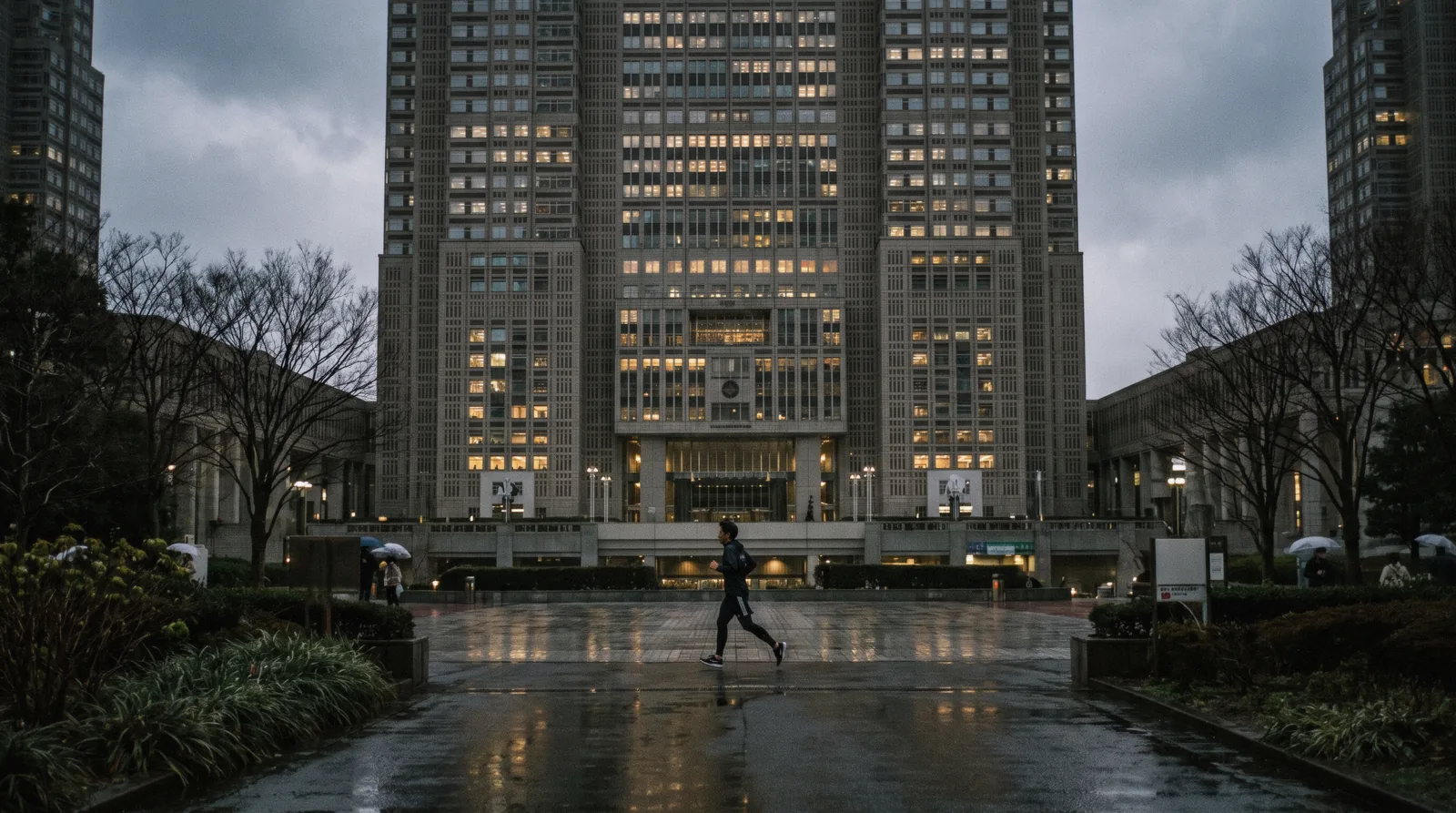
Tokyo Metropolitan Government Building
The Tokyo Metropolitan Government Building is the city's seat of government and, on the 45th floor of each of its two towers, the only high viewpoint in central Tokyo that charges nothing. Kenzo Tange designed it, it was finished in December 1990 at a cost of ¥157 billion of public money, and its 48 storeys made it the tallest building in Japan until 1993. The two observatories sit at 202 metres, take no bookings, and close on different days from each other, which is the single fact that decides whether your visit works. This page, part of our Tokyo guide for people who arrive on their own, sets out which tower is open when, what the queue actually does, what you can see from each compass point, and how the free view measures against the three paid decks on the tickets index.
Quick answer Which tower, what hours, the queue, and what you see
Both observatories are free, sit at 202 metres on the 45th floor of the two towers, and take no bookings at all. The south deck admits visitors from 09:30 to 21:30 and clears at 22:00; the north deck admits from 09:30 to 17:00 and clears at 17:30, except on days the south deck is closed, when the north stays open until 22:00 in its place.
Key takeaways
- The closure days are staggered on purpose, so one deck is almost always working: the south shuts on the first and third Tuesday of the month, the north on the second and fourth Monday. That makes this one of the few high viewpoints that survives the city's Monday closures intact.
- There is no ticket to buy and nothing to compare on price, so the honest comparison is against the paid decks: the rooftop at Shibuya and the Skytree observation decks buy height, a timed slot and a designed experience. This buys a good west-facing panorama for nothing. The deck comparison below puts the four side by side.
- Come on a cold, clear afternoon between December and February if Mount Fuji is the point; the city's own page names those months as the ones when the mountain is visible most often. An evening walking tour of the surrounding backstreets picks up where the lift puts you down.
Key facts
Opening hours
| South Observatory, entry | 09:30–21:30 |
|---|---|
| South Observatory, room closes | 09:30–22:00 |
| North Observatory, entry | 09:30–17:00 |
| North Observatory, room closes | 09:30–17:30 |
| North Observatory on days the south deck is closed | 09:30–22:00 |
Closed South Observatory: the first and third Tuesday of each month. North Observatory: the second and fourth Monday. When that day falls on a public holiday the deck opens and closes the following day instead. Both decks close 29 to 31 December, 2 and 3 January, and on building inspection days. On the Sunday of the Tokyo Marathon in March the decks open from about 11:00
Admission
- Adult
- Free
- Reduced
- Free
- Free
- Everyone. The Tokyo Metropolitan Government charges no admission to either observatory and issues no ticket
Planning it
- Time needed
- Not stated by the operator. Our routing: 45 minutes on the deck, plus the 20 to 30 minutes the city itself says the queue takes
- Book ahead
- Optional — walk-up usually fine
- Address
- 2-8-1 Nishi-Shinjuku, Shinjuku-ku, Tokyo 163-8001
Four ways to arrive at the 45th floor, with the two free official routes first. Admission and hours are the Tokyo Metropolitan Government's own, read in Q3 2026 on its observatory page; the guided prices and ratings are what GetYourGuide listed on the same day. Nothing on this table resells the view, because nothing can.
There is nothing to buy here, so the only question is whether you want the view on its own or the district around it explained by somebody who lives in it.
| Option | Price | What it covers | Where you get it | Book |
|---|---|---|---|---|
| South Observatory, walk-inAnyone who wants the view after dark. It is the only free deck in central Tokyo open in the evening. | Free | The 45th floor of the south tower, 202 metres up, plus the gift shop and the Tocho Omoide Piano | The observatory lift in the first-floor lobby of Main Building No. 1; no ticket, no reservation | Official site |
| North Observatory, walk-inDaylight visitors, and anyone who turns up on a first or third Tuesday and finds the south deck dark. | Free | The same height in the other tower, with the cafe and shop on the floor | The same first-floor lift lobby; open until 17:30, or until 22:00 when the south deck is closed | Official site |
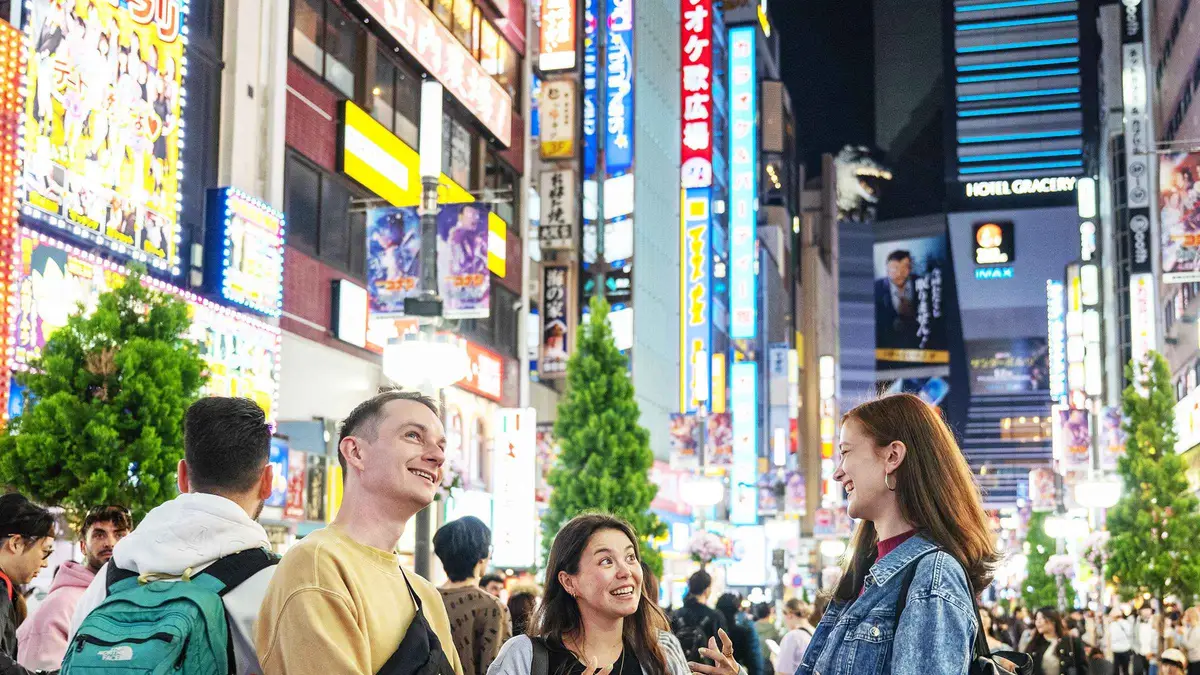
| Shinjuku nightlife and backstreets walking tour, 1.5 hoursAnyone finishing on the deck at 20:00 with no idea what to do next in a district this large. | $22.21 (about ¥3,400) | The alleys east of the station after dark, on foot with a guide; the deck itself is not included | GetYourGuide, rated 4.8 from 393 reviews | Check Availability |
| Shinjuku food tour, 15 dishes across 4 eateries, 3 hoursVisitors treating the free deck as the opening act of a Shinjuku evening rather than the whole of it. | $85.71 (about ¥13,200) | Dinner, moving between four places in the district below the towers | GetYourGuide, rated 4.9 from 3,419 reviews | Check Availability |
| Private walking tour with a local guide, 2 hoursAnyone who wants the west side of Shinjuku explained rather than simply walked through. | $58.44 (about ¥9,000) | A guide for two hours, pointed wherever you like across the city | GetYourGuide, rated 5.0 from 617 reviews | Check Availability |
Yen converted at ¥1,000 to $6.48; the yen figures beside the tour prices are approximate, because the operator prices those in dollars. No operator sells access to either observatory, and any listing that appears to is selling a walking tour that passes the building. The observatory information line, 03-5320-7890, answers on weekdays from 10:00 to 17:00 in Japanese only.
What Is Bookable Around The Free Decks
None of these is a ticket to the observatory, because there is no ticket. They are the guided ways into the district the lift looks down on. Prices and ratings are the platform's own figures as listed in Q3 2026.
 from $22.21
Tokyo: Shinjuku Nightlife & Secret Backstreets Walking Tour
A 90-minute evening walk through Shinjuku's Kabukicho, Golden Gai and Omoide Yokocho with a local guide, covering the district's red-light-district history and a stop at Hanazono Shrine.
Check Availability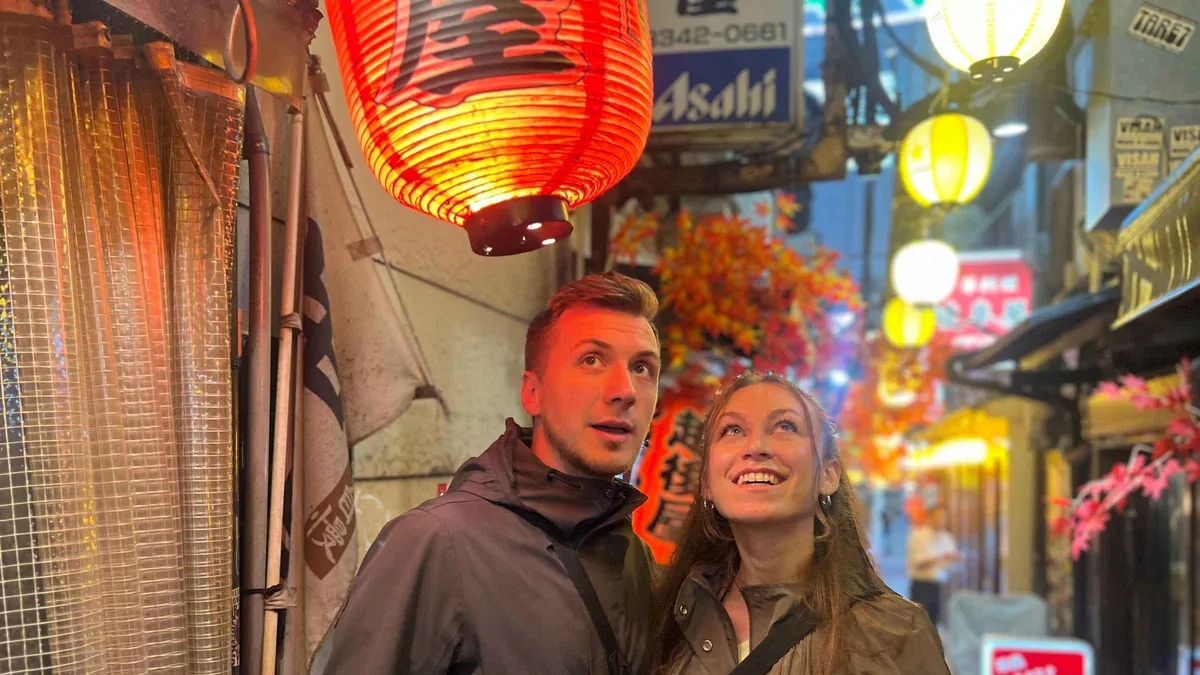 from $85.71
Tokyo: Shinjuku Food Tour (15 Dishes and 4 Eateries)
A three-hour small-group walk through Shinjuku's Omoide Yokocho and Kabukicho backstreets, stopping at four eateries for around 13 Japanese dishes and two drinks with an English-speaking local guide.
Check Availability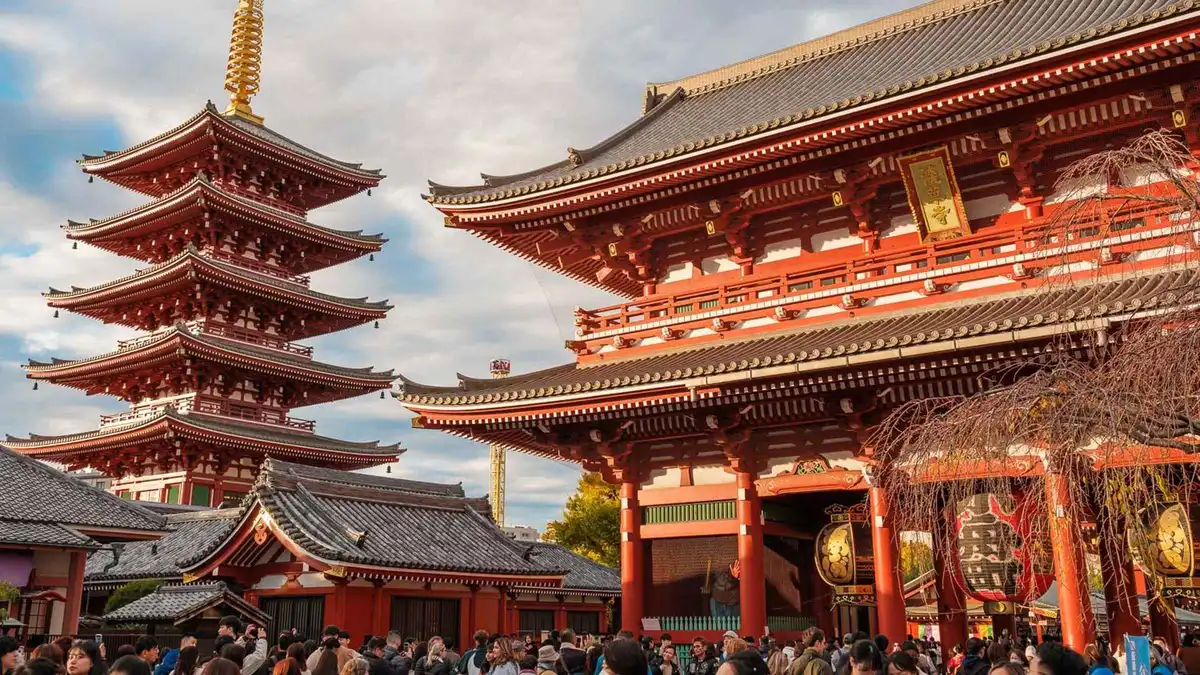 from $58.44
Tokyo: Private Walking Tour with a Local Guide
A private walking tour shaped around your own picks, from famous landmarks to quiet temples and local neighborhoods, with temple entrance fees on the agreed route and hotel pickup included.
Check Availability from $58.12
Tokyo: Private Custom Walking Tour with Local Guide
A private, fully customizable walking tour with a local guide who tailors the route to your interests, from landmarks to hidden neighborhoods, suited to families, couples or solo travelers wanting flexibility.
Check AvailabilityPrices, ratings and details are the platform's own, checked in Q3 2026; dollar figures are the listed prices — the platform bills in your account's currency.
What The Building Is, And Why The View Is Free
This is a working government headquarters that happens to have two of the best free rooms in the city on its 45th floor, and the reason it is free is written into what the decks are for.
The Tokyo Metropolitan Government is the authority that runs the special wards, cities, towns and villages making up the Tokyo Metropolis, and this complex of three buildings is where it sits. The tallest of the three, Main Building No. 1, is 48 storeys and splits into two separate towers at the 33rd floor, which is why there are two observatories rather than one. Kenzo Tange designed it to read like an integrated circuit while borrowing the silhouette of a Gothic cathedral, and when it opened it was described as the largest city hall in the world.
The Tokyo Metropolitan Government's own English page states the purpose of the decks in a sentence that no commercial operator would write: they are places for visitors to deepen their understanding of Tokyo and of the metropolitan government's policies while enjoying the view. That is the whole business model. There is no ticket because there is no product; the room is a piece of civic infrastructure with a panorama attached, and the gift shop and cafe are concessions inside it rather than the reason it exists.
- Roof height 242.9 metres, 48 floors above ground and three below.
- Both observatories on floor 45, at 202 metres.
- Completed December 1990 at a cost of ¥157 billion of public money.
- Tallest building in Japan from 1991 until the Yokohama Landmark Tower passed it in 1993, and tallest by roof height in Tokyo until Midtown Tower in 2007.
- Floor area 195,764 square metres across the complex.
Two decks, one building, and the part people miss
Almost every account of this place treats the observatory as one attraction. It is two rooms in two towers, reached from the same first-floor lift lobby by two different lifts, with different hours, different closing days and different tenants on the floor. The south deck holds the gift shop TOKYO Mikke! and the Tocho Omoide Piano, an upright anybody may play; the north deck holds the cafe and shop SOCOCOCO and can be booked out for private events in the evening through the concession that runs it.
Walking to the wrong lift is the commonest way to waste twenty minutes here.
The Building In Eight Dates
The tower's own history, from the city hall it replaced to the projection show that now runs on its face.
-
1957
The Yurakucho city hall opens
Kenzo Tange's earlier city hall, in what is now Chiyoda; the Tokyo International Forum stands on the site today.
-
April 1988
Work starts in Nishi-Shinjuku
On reclaimed ground in the planned tower quarter west of the station, itself built over a filled reservoir.
-
December 1990
Main Building No. 1 is completed
Forty-eight storeys, 242.9 metres to the roof, ¥157 billion of public money, splitting into two towers above the 33rd floor.
-
1991
The metropolitan government moves in
The tower becomes the tallest building in Japan, and the two 45th-floor observatories open free to the public.
-
1993
The height record goes to Yokohama
The Yokohama Landmark Tower passes it; the Tokyo roof-height record survives here until Midtown Tower in 2007.
-
November 2021
The south deck reopens with the piano
The Tokyo Metropolitan Government announces the reopening of the South Observation Deck together with the Tocho Omoide Piano, which anybody may play.
-
February 2024
Guinness World Records certifies the facade show
Tokyo Night & Light, projected across 13,904 square metres from the 4th floor to the 32nd, is recognised as the world's largest permanent architectural projection-mapped display.
-
April 2026
The piano gains an evening slot
The operator adds a 19:00 to 21:00 playing window on south-deck open days, so the instrument now runs against the night view rather than only in daylight.
Construction, height and record dates from the Wikipedia article on the building, read in Q3 2026; the 2021 south-deck reopening, the 2026 piano window and the projection-show figures from the Tokyo Metropolitan Government's own pages at english.metro.tokyo.lg.jp, yokoso.metro.tokyo.lg.jp and gotokyo.org, all read the same day.
North Or South: Which Tower Is Open, And When
This is the decision the page exists for. The two decks are not interchangeable, and the calendar that separates them is published only as a pair of monthly rules rather than as a list of dates. Hours and closure rules below are the Tokyo Metropolitan Government's own, read in Q3 2026.
Read the row for the day you are going, not for the deck you have heard of. The south deck is the one almost every guide names, because it is the one open at night; the north deck is the one that saves the trip when the south is dark.
| Deck | Entry window | Room closes | Closed | What is on the floor |
|---|---|---|---|---|
| South Observatory | 09:30 to 21:30 | 22:00 | First and third Tuesday of the month | Gift shop TOKYO Mikke!, open 09:30 to 22:00; the Tocho Omoide Piano |
| North Observatory | 09:30 to 17:00 | 17:30 | Second and fourth Monday of the month | Cafe and shop SOCOCOCO, open 09:30 to 17:30, telephone 03-5989-0244 |
| North Observatory on a south-deck closure day | 09:30 to 21:30 | 22:00 | Not applicable | The same cafe, staying open to 22:00 to cover the evening |
| Both decks | Not applicable | Not applicable | 29 to 31 December, 2 and 3 January, and building inspection days | Nothing; the whole lobby closes with them |
Two rules sit under that grid and both catch people out. The first is the holiday shift: when a first or third Tuesday, or a second or fourth Monday, falls on a Japanese public holiday, the deck opens that day and closes the following weekday instead. So a trip planned around a calendar of Tuesdays can still meet a shut door on a Wednesday. The second is that the closures are staggered deliberately, and the north deck extends to 22:00 precisely on the days the south is out, which means the building as a whole almost never loses its evening view.
There is one annual exception worth knowing if you are here in early March. On the Sunday of the Tokyo Marathon the decks open from about 11:00 rather than 09:30, because the course runs past the building and the plaza is given over to the start. The city announces it on the same observatory page each year.
The days nobody publishes in advance
Building inspection days are the gap in the schedule. The metropolitan government reserves them for statutory checks of the tower's systems, closes both decks and the car park with them, and announces each one on its own news feed rather than on a published annual calendar. One recent example, a Saturday in May, took the whole of Main Building No. 1 out of service for an electrical inspection.
There is no way to see them a month ahead; the only reliable check is the observatory page itself, or the closure account the city runs on X at @tocho_tenbou, which it names as the place sudden weather closures are posted.
How Much Time To Give The Observatory
The metropolitan government publishes no suggested visit length, only a queue estimate. Three honest routings, built from that queue figure and the size of the room.
The room is a single circular floor with windows all the way round, a shop, a cafe and, in the south tower, a piano. There is no route through it and nothing to read but the photographic panels naming what you are looking at, so the time it takes is the time you choose to stand there.
| Routing | Door to door | What it gets you | What it skips |
|---|---|---|---|
| The look | About 50 minutes | The queue at its published 20 to 30 minutes, one full circuit of the windows, the panels on the compass points that matter to you | The cafe, the shop, the piano, and any wait for the light to change |
| The full visit | About 90 minutes | The same, plus a coffee at the window, the gift shop and time to sit through the change from daylight to lit city | The projection show downstairs, which starts after the deck queue has built |
| The evening | About 2.5 hours | The south deck from around 19:00, the piano in its 19:00 to 21:00 window, then Tokyo Night & Light on the facade from the plaza below | Nothing on this building; it is the version that uses all of it |
The queue figure is the operator's own and it is unusually candid: the observatory page states that visitors are lining up 20 to 30 minutes to get in, and that the wait varies with the weather and the hour. It also publishes a live three-colour reading, blue for a wait of 0 to 5 minutes, yellow for 5 to 30 and red for over 30, which is the single most useful thing to check on a phone before you cross the plaza. Our own routing from the two: arrive in the first hour after opening for blue, or after 20:00 on the south deck, when the queue has thinned and the city is fully lit.
What You Can See From 202 Metres, By Compass Point
The city names four directions on its own observatory page, and each one carries a different landmark. Photographic panels round the window edge do the same job in the room, and a QR guide called TOKYO SKY GUIDE turns 32 of those spots into text in your own language with no app to install.
North-east is the direction people photograph without knowing what they are looking at: the Skytree stands alone on that side of the city, 634 metres of it, with the low roofs of the old east wards spread underneath. South-east looks over the national garden and the forest of Meiji Jingu, the two green blocks that interrupt the grid. South-west is the near view, the Shinjuku Park Tower and Tokyo Opera City close enough to read their floors.
West is the one people come for.
Mount Fuji, and the months it appears
The metropolitan government's own page is specific about this and does not oversell it. Fuji lies due west, and the page names December to February as the stretch when the temperature is low, the air is clear and the mountain can be seen on many days. It does not publish a percentage, and neither will we.
What follows from it is a plan: if the mountain is the reason you are coming, take the north deck on a cold, bright winter afternoon rather than the south deck at night, because the north closes at 17:30 and that is when the light is on the right side of the sky anyway. Between June and September, expect haze and treat the mountain as a bonus.
What the free deck does not give you
It is one room of windows, and the windows do not open. There is no open-air section, no glass floor, no ramp climbing higher into the structure, and photography with a tripod is not permitted, which the city states plainly on the same page. If you want the wind on your face, that is the open rooftop in Shibuya and it costs money.
If you want the height that makes buildings look like a model, that is the Skytree. This is a working government building with a very good window, and it is honest about being exactly that.
The Free Deck Against The Three Paid Ones
Four high viewpoints in central Tokyo, with the deck heights, the adult prices and the closing times each operator publishes, all read in Q3 2026. Prices are the online adult rate where the operator sells one; the free rows have no ticket to price.
| Deck | Adult price | Open until | Best for |
|---|---|---|---|
| Metropolitan south deck, 202 m | Free | 22:00, last entry 21:30 | A night panorama at no cost, and the only free deck in the centre open after dark |
| Metropolitan north deck, 202 m | Free | 17:30, or 22:00 on days the south deck is shut | Daylight, the cafe, and Fuji on a clear winter afternoon |
| Shibuya Sky rooftop, 229 m | $17.50 (¥2,700) online to 14:59, $22.00 (¥3,400) from 15:00 | 22:30, last admission 21:20 | Open air, the sunset slot, and the crossing seen from directly above |
| Skytree Tembo Deck, 350 m | From $11.66 (¥1,800) online | 22:00 on standard days | Height, the east half of the city, and a second level at 445 to 450 metres |
| Tokyo Tower main deck, 150 m | $9.72 (¥1,500) | 23:00 | The latest closing of the five, and the tower itself as the thing you came to see |
The reading we would give a first-time visitor: if your trip holds one high view, pay for the rooftop in Shibuya or the Skytree, because the timed slot removes the queue and the designed experience is what you remember. If it holds two or three, one of them should be this, and it should be the evening one. Full ticket detail for the paid decks is on the tickets index.
Tokyo Night & Light: The Free Show On The Way Out
Do not leave the plaza when you come down. After sunset the building's own face becomes the attraction: Tokyo Night & Light projects across 13,904 square metres of the facade, from the 4th floor to the 32nd, and in February 2024 Guinness World Records recognised it as the world's largest permanent architectural projection-mapped display. It runs nightly, year round, in several short performances from sunset until roughly 21:30 to 21:45, and the programme is made by Japanese and international artists and changes, so two visits are not the same show.
It costs nothing, takes no ticket and needs no reservation. The practical consequence is that the best use of this building is a single evening rather than a daytime tick: up the south lift at about 19:00, forty minutes at the window while the grid lights up, back down, then stand in the plaza with the show on the wall above you. Add dinner in the alleys of Shinjuku afterwards and the whole sequence has cost the price of the meal.
The city publishes the current schedule on its own site rather than in a fixed timetable, because the number of performances shifts with sunset. Check it the day you go; the observatory page links it.
Five Things Most Visitors Do Not Know About This Building
Each of these is on an official page and almost never in a guidebook.
- There is an upright piano on the south deck that anybody may play, in three windows a day, 10:00 to 12:00, 14:00 to 16:00 and 19:00 to 21:00. The lid stays closed, the music stand cannot be used, and the operator asks that you do not post video of another player without asking them first. (Tokyo Metropolitan Government observatory page, read in Q3 2026.)
- The north deck can be hired. The concession that runs the cafe up there takes bookings for private events and parties in the room, through its own site rather than through the metropolitan government. (Tokyo Metropolitan Government observatory page, read in Q3 2026.)
- A QR view guide called TOKYO SKY GUIDE runs in the room in several languages, covering 32 named spots, and needs no app: the panels round the windows carry codes your phone camera reads. (Tokyo Metropolitan Government observatory page, read in Q3 2026.)
- On weekends and public holidays the second-floor entrance to the building is locked and you have to walk round to the main first-floor door, which is the reason a visitor occasionally reports the building 'closed' when the decks are open. (Tokyo Metropolitan Government observatory page, read in Q3 2026.)
- There is a decorative bamboo rake, a kumade, on display in the middle of the second floor. They have been sold at Tori-no-ichi festivals since the Edo period as charms for good fortune and good business, and this one is large enough to stop people on their way to the lift. (Tokyo tourism page for the building at gotokyo.org, read in Q3 2026.)
One negative finding belongs here too. The metropolitan government publishes no baggage or security screening rule for observatory visitors on any page we could reach, and its own visitor-notice page for the decks returned a 404 when we checked. The only restriction it does print on what you carry is that photography with a tripod is not permitted.
At The Observatory: What To Do, And What Not To
Six decisions you can act on before you leave the hotel.
Do
- Check the live congestion colour on the observatory page before you cross the plaza; blue means under five minutes and it changes through the day.
- Work out which deck is open for your date first, then plan the hour around it rather than the other way round.
- Take the north deck if Mount Fuji is the point, on a cold clear afternoon between December and February.
- Stay in the plaza afterwards for the projection show, which runs nightly from sunset until about 21:45.
- Use the 1st-floor main entrance at weekends and on public holidays, when the 2nd-floor door is locked.
- Ask a security guard for the lift or a loan wheelchair if stairs are a problem; the building says it provides both, including a powered chair for anyone able to operate it.
Don't
- Do not try to reserve. The city states that neither advance nor group reservations are accepted, and no operator can sell you one.
- Do not bring a tripod, which the operator asks visitors not to use in either room.
- Do not treat the two decks as one place; the wrong lift at 18:00 is a closed door on the north side.
- Do not plan the visit around a monthly Tuesday or Monday without checking the holiday shift, which moves the closure to the next weekday.
- Do not drive to it after 22:00 expecting to leave; the building car park runs 08:00 to 22:00 and you cannot get a car out afterwards.
- Do not come here for the sunset expecting open air. The windows are sealed, and the open rooftop deck across town is the one that is not.
Every item above is from the metropolitan government's own observatory and building-visit pages, read in Q3 2026.
Getting There, And The Way In
The building sits in the tower quarter west of Shinjuku Station, and the difference between the two ways of reaching it is about nine minutes of walking.
The short way is Tochomae Station on the Toei Oedo Line, whose Exit A4 is signposted at one minute on foot from the tower lobby. The Oedo Line reaches it from Shinjuku Station in a single stop, and from Roppongi, Iidabashi and Ueno-okachimachi without a change. The long way is JR Shinjuku Station, from which the metropolitan government's own access page gives about ten minutes on foot from the West Ticket Gate, through the underground concourse and up into the plaza.
There is also a Toei bus loop from the underground bus stands at the west exit, running weekdays only, with a stop named for Main Building No. 1.
| From | Route | Time | Fare |
|---|---|---|---|
| Shinjuku Station | Toei Oedo Line, one stop to Tochomae, Exit A4 | About 5 minutes with the walk to the platform | $1.17 (¥180) adult, $1.15 (¥178) by IC card |
| Shinjuku Station, West Ticket Gate | On foot through the concourse | About 10 minutes | Nothing |
| Shibuya | JR Yamanote to Shinjuku, then Oedo Line one stop | About 15 minutes | JR fare plus $1.17 (¥180) |
| Asakusa | Toei Asakusa Line to Daimon, change to the Oedo Line for Tochomae | About 35 minutes | One Toei fare, $2.14 (¥330) band or below |
| Shinjuku Station, west exit bus stands | Toei loop bus, weekdays only, alight at Main Building No. 1 | About 10 minutes | Toei bus flat fare |
Inside the building, both observatories are reached by dedicated observatory lifts from the first floor of Main Building No. 1, and there is no other route up. On closed days for the government itself, which means Saturdays, Sundays and public holidays, the second-floor entrance is locked and everybody uses the first-floor main door. The building provides a barrier-free route between the first and second floors for anyone who cannot manage stairs or an escalator, and lends both manual and powered wheelchairs, which you request from a guard at an information corner or at the observatory reception.
Fares above are the operators' own bands, read in Q3 2026; the ladder behind them is on the getting around page.
Tokyo Metropolitan Government Building map: the lift lobby and what is next door
The tower, the station exit that serves it, and the three places within a short walk. Station and park pins are placed at the station or park centre, not at a specific door.
Building coordinates from Wikidata item Q111973 and the station coordinate from Wikidata item Q246186, both read in Q3 2026.
Next Stop From The Tower Lobby
Walk minutes are our estimates from the coordinates above.
Shinjuku
The district the deck looks down on. Ten minutes east through the concourse and you are at the busiest railway station on earth, with the alleys of Omoide Yokocho on this side of the tracks and Golden Gai on the other. The Shinjuku guide sorts which alley is which and what a cover charge does.
10 min walkShinjuku Gyoen
The green rectangle you can see to the south-east. Entry is $3.24 (¥500), it closes on Mondays when the decks do not, and it shuts long before the south deck does, so it belongs in the morning of the same day rather than the evening. The garden page has the three gates and their stations.
25 min walkMeiji Jingu
The other forest on that side of the window, free to enter and open every day of the year, with hours that move month by month with sunrise. It pairs naturally with the deck on a west-side day; the shrine page carries the month-by-month table.
20 min walk, or two stopsTokyo Metropolitan Government Building Questions
Is the Tokyo Metropolitan Government Building observation deck really free?
Yes, both of them, with no ticket issued and no reservation taken. The metropolitan government's English page lists the admission cost as free and its Japanese observatory page repeats it, adding that advance and group reservations are not accepted. Nothing is sold in connection with the view; the only things you can pay for on this page are guided walks of the district below.
Which is better, the north observatory or the south observatory?
The south, if you are coming after about 17:00, because it is the one that stays open to 22:00 with last entry at 21:30, and it holds the piano and the gift shop. The north, if you want daylight, a coffee at the window or the best chance of Mount Fuji, since it closes at 17:30 and the mountain reads best in cold afternoon light. On days the south deck is shut, the north takes over its evening hours, so the choice makes itself.
What day is the TMG observation deck closed?
There is no single closed day, which is the point of the design. The south deck closes on the first and third Tuesday of each month and the north on the second and fourth Monday, with each shifting to the following weekday when that day is a public holiday. Both close from 29 to 31 December and on 2 and 3 January, and on statutory building inspection days that are announced only shortly beforehand. It survives the Monday museum closures that shut most of the city's collections.
How long is the queue for the free observation deck in Tokyo?
The operator publishes the figure itself: visitors are lining up 20 to 30 minutes, varying with the weather and the time of day. It also runs a live three-colour indicator on the observatory page, blue for a wait under five minutes, yellow for five to thirty and red for over thirty. Check it before you cross the plaza, and treat the first hour after 09:30 as the reliably blue one.
Can you see Mount Fuji from the Tokyo city hall view?
Sometimes, and the city is honest about the odds without publishing a number. Fuji lies due west, and the metropolitan government's own page names December to February as the months when the air is cold and clear enough for the mountain to be visible on many days. Between June and September, plan for haze. If Fuji is the reason you are going, take a bright winter afternoon and use the north deck before it closes at 17:30.
Is there anything to do at the building besides the observatory?
Three things, all free. The first floor has a Tokyo tourist information centre, a shop of regional specialities and capsule-toy machines; the second floor has a large ceremonial kumade rake on display; and after sunset the facade carries Tokyo Night & Light, the projection show Guinness World Records certified in February 2024 as the world's largest permanent architectural projection-mapped display. The evening version of this visit uses all three and still costs nothing.
Where The Free Deck Fits In A Tokyo Day
It is an evening stop, not a morning one, and it belongs at the end of a west-side day rather than in the middle of one. The reason is arithmetic: the south deck runs until 21:30 for entry and nothing else free in the city does, so spending daylight here uses up an hour that a garden, a shrine or a museum would use better. Put the shrine forest and the national garden in the daylight, eat in the district, then come up in the dark.
On a single day in the city, it is the free replacement for a paid rooftop, and the one-day plan uses it exactly that way. On a longer stay it is the second high view rather than the first: take a paid deck once for the height and the open air, and take this one on the night you would rather spend the money on dinner. The two-day plan puts it at the end of the west day, which is where it works best.
One last piece of sequencing. The projection show on the facade starts at sunset and runs to about 21:45, and the deck queue is at its shortest in the last hour before it closes. So the order that wastes nothing is deck first at around 19:00, then the plaza for the show, then dinner. Reversed, you arrive at the lift at 21:35 and find it shut.
The Free Observation Decks On Film
Three walk-throughs of the same lift lobby and the same 45th floor, filmed at different hours, so you can see what the room actually looks like and how long the queue was on the day.
Tokyo Metropolitan Government Building | All About + SECRET FLOOR !!
A full walk from the ground-floor lobby to the 45th floor, including the parts of the building most visitors walk past.
Video: phil and chem45th Floor Observatory Tokyo Metropolitan Government Building Walking Tour
An unedited circuit of the observatory windows, which is the closest thing to standing in the room before you go.
Video: Video Street View JapanTokyo From Above | Free Observatory at the Metropolitan Government Building
The view itself, filmed at dusk, showing what the west and north-east windows give you as the city lights come on.
Video: The Unlock JourneyVideos load from YouTube only when you press play.
Reviewed Q3 2026 (July–September 2026); next review Q4 2026. Prices, hours and terms are set by the venue or operator and confirmed at checkout.
We may earn a commission if you book through one of our links, at no extra cost to you. Full affiliate disclosure